










































Group ANC: Using behavior science to improve responsive maternal and newborn care
Summary:
Antenatal care (ANC) is an important intervention to reduce maternal and neonatal mortality. Evidence shows that in many settings, ANC does not meet women's and health providers' needs and expectations for responsive, respectful, and supportive care and environments. Our program introduced a group-based model of ANC, co-created with stakeholders (health providers, pregnant women and local health officials) using behavior science methods, that is more responsive to the needs of women and providers. MSH implemented this contextualized group ANC model in Uganda, Kenya, and Guatemala, where women met in cohorts over the course of their pregnancy to share experiences, learn essential health information, and build social support. Results indicate that group ANC improved women's experience of care, increased health literacy, improved practice of healthy behaviors, and created opportunities for social support. Group ANC is emerging as a promising innovation to enhance women's experiences during pregnancy and childbirth. Based on our successful adaptation of this model in several settings, we expect group ANC will help improve the quality and use of formal services by supporting responsive, standards-based care and fostering trust and a sense of community.
Background/Objectives:
Increasing pregnant women's attendance at ANC can prevent, identify, and treat life-threatening conditions; prepare women for pregnancy and childbirth; and encourage the use of facility-based services. However, poor quality of care that is not responsive to local cultural needs and women's preferences has been shown to discourage women from accessing and continuing ANC in many low-resource settings. The purpose of MSH's group ANC project is to improve the quality and use of ANC services. We redesigned the service delivery model to address key barriers to care using behavioral science design methods that meet population needs and preferences
Description of Intervention and/or Methods/Design:
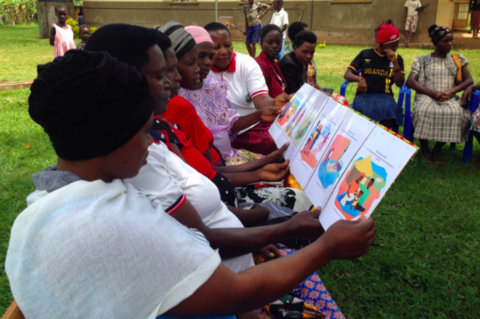
Through behavioral science and human-centered design (HCD), we tailored ANC services to be responsive to women's needs during pregnancy without overburdening health providers. Working with local stakeholders (pregnant women and health providers), design experts co-design and adapt a group ANC model for small group discussions and health education communication tools appropriate for the local context. Pregnant women are assigned to a cohort with women of similar gestational age during their first ANC visit. Trained facility nurses and/or midwives facilitate small group discussion to share experiences, essential health information, and self-care practices and enhance social networks within the group. Monitoring and evaluation through implementation research assessed whether group ANC has an effect on improving the quality of ANC being provided, increasing retention in facility-based ANC, and positively affecting women's practice of healthy behaviors in pregnancy and postpartum. The model has been implemented in Uganda, Kenya, and Guatemala.
Results/Lessons Learned:
Results from Kenya and Uganda (not yet available for Guatemala) indicate that group ANC had positive effects on healthy behaviors and social support. In Kenya, data showed that group ANC increased retention in ANC care for all women, including young and adolescent women. In both countries, women and stakeholders positively viewed this new approach as a better way of providing ANC that is more responsive to local preferences. They noted improvements in interactions between health care providers and women, more and improved counseling to pregnant women, increased feelings of empowerment to ask questions and speak freely, and strengthened social networks and enhanced social cohesion among women through encouragement and support. Women reported improved health literacy and identified how the practical information and tips (i.e., taking supplements, how to clean the baby's navel, setting aside money for childbirth) they learned helped them enact healthy behaviors.
Discussion/Implications for the Field:
Using behavioral science with HCD to co-create a group-based ANC model reflects an important change in how ANC services are delivered and organized and how health providers and women interact with one another. The model presented promising results to improve social support and influence women's health literacy, while at the same time improving the quality and coverage of ANC. The process promoted inclusion of women's needs in service delivery. It allowed providers to see the value in providing better care and developing relationships with women. Further modifications are needed to address challenges and ensure sustainability and scalability.
Abstract submitted by:
Cara Endyke Doran - Management Sciences for Health (MSH)
Shafia Rashid - MSH
Felipe Lopez - MSH
Fredrick Makokha - MSH
Kate Ramsey - MSH
Sara Weinstein - MSH
Approved abstract for the postponed 2020 SBCC Summit in Marrakech, Morocco. Provided by the International Steering Committee for the Summit. Image credit: Kate Ramsey/MSH