
























Development action with informed and engaged societies

After nearly 28 years, The Communication Initiative (The CI) Global is entering a new chapter. 

Following a period of transition, the global website has been transferred to the University of the Witwatersrand (Wits) in South Africa, where it will be administered by the Social and Behaviour Change Communication Division. Wits' commitment to social change and justice makes it a trusted steward for The CI's legacy and future. 

On the transfer, co-founder Victoria Martin expressed her pleasure to see this work continue under Wits' leadership, knowing that co-founder Warren Feek (1953–2024) would have felt deep pride in The CI Global's Africa-led direction. 

As Wits, we honour the team and partners who sustained The CI for decades and look forward building from that strong base. This includes co-founders Warren Feek (1953-2024) and Victoria Martin as well as La Iniciativa de Comunicación (CILA), which continues independently at lainiciativadecomunicacion.com with links to The CI Global site. We are also eager to forge new partnerships and entertain new ideas as we consider how best to contribute to social and behaviour change in our rapidly evolving environment.

If you are joining the International Social and Behaviour Change Communication (SBCC) Summit in Panama, please join Wits and CILA on Monday, 22 June, to share your thoughts and suggestion for the relaunch of the Communication Initiative. We will be in Pacifica 5 from 12-1:25 for the Refuel, Reflect, and Renew Lunch Series: The Communication Initiative: celebrating a driving force for Communication for Social Change and the way forward. We will reflect on the legacy of Warren Feek and family in creating the Communication Initiative, consider the contributions of CI over the years and then turn our attention towards the future in this dynamic session. 

If you are unable to join us in Panama, we still want to hear from you. Please contribute your thoughts by following this link: https://redcap.link/CommunicationInitiative2026 or reaching out to ci_surveys@commint.com

You can also follow the QR Code:

 https://redcap.link/CommunicationInitiative2026

Time to read
less than
1 minute
Read so far

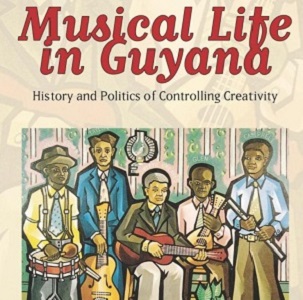
Musical Life in Guyana: History and Politics of Controlling Creativity (Caribbean Studies Series)
0 comments
Image

Musical Life in Guyana is the first in-depth study of Guyanese musical life. It is also a richly detailed description of the social, economic, and political conditions that have encouraged and sometimes discouraged musical and cultural creativity in Guyana. The book contributes to the study of the interactions between the policies and practices by national governments and musical communities in the Caribbean.

Vibert C. Cambridge explores these interactions in Guyana during the three political eras that the society experienced as it moved from being a British colony to an independent nation. The first era to be considered is the period of mature colonial governance, guided by the dictates of "new imperialism," which extended from 1900 to 1953. The second era, the period of internal self-government and the preparation for independence, extends from 1953, the year of the first general elections under universal adult suffrage, to 1966, the year when the colony gained its political independence. The third phase, 1966 to 2000, describes the early postcolonial era.

Cambridge reveals how the issues of race, class, gender, and ideology deeply influenced who in Guyanese multicultural society obtained access to musical instruction and media outlets and thus who received recognition. He also describes the close connections between Guyanese musicians and Caribbean artists from throughout the region and traces the exodus of Guyanese musicians to the great cities of the world, a theme often neglected in Caribbean studies. The book concludes that the practices of governance across the twentieth century exerted disproportionate influence in the creation, production, distribution, and consumption of music.