











































Understanding the Health System Barriers and Enablers to Childhood MMR and HPV Vaccination among Disadvantaged, Minority or Underserved Populations in Middle- and High-income Countries: A Systematic Review
Bar Ilan University (Essa-Hadad, Gorelik, Edelstein); University of Groningen (Vervoort, Jansen)
"Health professionals and policymakers need to consider the specific cultural context of the target populations they are working with when implementing vaccine programmes."
Within European countries, wide disparities in childhood vaccine uptake remain among different populations, with minority ethnic and religious groups, Traveller communities, and migrants and asylum seekers often experiencing lower vaccine uptake than the general population. The Immunization Agenda 2030 (IA2030) places equity in vaccination as one of the core strategic pillars. However, barriers to access and utilisation of immunisation services exist. As part of a European Union (EU)-funded project, RIVER-EU (Reducing Inequalities in Vaccine uptake in the European region - Engaging Underserved communities), this systematic review was conducted to understand health system barriers and enablers to measles, mumps, and rubella (MMR) and human papillomavirus (HPV) child vaccination among disadvantaged minority populations in middle- and high-income countries in Europe or elsewhere. The idea behind focusing on MMR and HPV vaccines, rather than vaccination in general, is to allow for the identification of vaccine- and context-specific factors, as well as more generic and universal ones.
The researchers searched Medline, Cochrane, CINAHL, ProQuest, and EMBASE for articles published from 2010 to 2021. Following title and abstract screening, full texts were assessed for relevance, and 28 articles met all inclusion criteria. The studies were conducted in 8 countries, including the United States (n = 14), United Kingdom (n = 5), Canada (n = 3), Netherlands (n = 2), Poland (n = 1), Sweden (n = 1), Australia (n = 1), and Norway (n = 1). Study quality was appraised using Critical Appraisal Skills Program checklists. Data extraction and analysis were performed.
Health system barriers and enablers to vaccination were mapped to the 6 World Health Organization (WHO) health system building blocks, including:
- Service delivery: For example, healthcare providers (HCPs) and parents cited limited time for vaccine discussion as a hurdle. US Black, Latino, and Brazilian minorities expressed concerns about community-based delivery of HPV due to privacy issues, inappropriate setting to ask questions, and discomfort engaging with unknown HCPs. Minorities expressed the lack of culturally appropriate translated educational materials available for both MMR and HPV vaccines, resulting in a lack of awareness and knowledge regarding the vaccine and ultimately parents' decision to vaccinate. Despite some groups reporting greater trust in the healthcare system in their new country of residency, many still expressed a lack of trust in the healthcare system as a barrier to vaccination.
- Health workforce: Language barriers hindered patient-provider communication, impacting vaccination decisions. Interpreters were sometimes reported as having limited vaccine knowledge, which made answering questions and adequate translation difficult. HCPs lacked training around vaccination needs were not always familiar with immigrant service polices and reported inadequate cultural understanding, making it difficult to understand the population's needs and offer practical recommendations. Lack of HCP recommendation was a major reason for non-vaccination.
- Health information systems: HCPs reported a lack of vaccination documentation for immigrants and refugees as a barrier. Effective reminder and recall systems were a vaccine enabler to MMR vaccination, as reported by English Gypsies, European Roma, and Irish Travellers in the UK. Face-to-face communication and reminders from general practitioners were considered even more effective to reaching communities and gaining their trust. Intrinsic HCPs characteristics, such as trustworthiness and good collaboration with interpreters working with minorities, were vaccine enablers.
- Medical products: Perceived safety and efficacy of vaccines greatly affect uptake and acceptance levels. There were mixed findings in terms of parents' perceptions and attitudes towards vaccination. Some minorities perceived MMR vaccination as unnecessary and ineffective, and conservative minorities, such as Somali mothers in the Netherlands, who do not believe multiple sexual partners or premarital sex socially or culturally acceptable, considered the HPV vaccine unnecessary, feeling they were not susceptible to HPV.
- Financing: For populations facing daily socio-economic challenges, vaccination was not a priority amidst competing demands. Offering MMR and HPV vaccinations for free or subsidised is reported as a major enabler by both parents and providers.
- Leadership and governance: Lack of national policy and guidelines for refugees, particularly regarding catch-up vaccines, hinders child vaccination. Minority, migrant and Traveller communities reported feelings of discrimination from workers in the health system due to their status. Cultural and religious support plays an important role in encouraging vaccination. For example, in the Netherlands, religiously framed messages (in this instance, Islam) positively influenced Turkish and Moroccan parents' decision to vaccinate.
These blocks, influenced by numerous factors, are strongly interlinked. The researchers suggest that health policymakers should recognise that minimising these barriers could positively impact vaccination programmes across contexts, irrespective of the specific vaccine or population group. However, certain barriers are specific to particular vaccines and populations, influenced by cultural and social norms, directly affecting the vaccine's acceptability. "Tailoring approaches to encourage vaccination based on the unique needs of each population is crucial, as a one-size-fits-all approach is ineffective in these circumstances."
Based on the review's findings, recommendations to promote MMR and HPV vaccination among disadvantaged, minority populations include:
- Ensure educational materials and health services are provided in the minority population's native language and in a culturally appropriate manner, by health professionals who have received adequate cultural competence training.
- Develop simple, clear guidelines to help new immigrant and minority groups access the new healthcare system.
- Make vaccinations widely available, easily accessible, and at no cost (or highly subsidised) to the community.
- Set up automatic reminders and recall systems to facilitate vaccination processes.
Table 3 in the paper further details and maps the recommendations to the WHO building blocks.
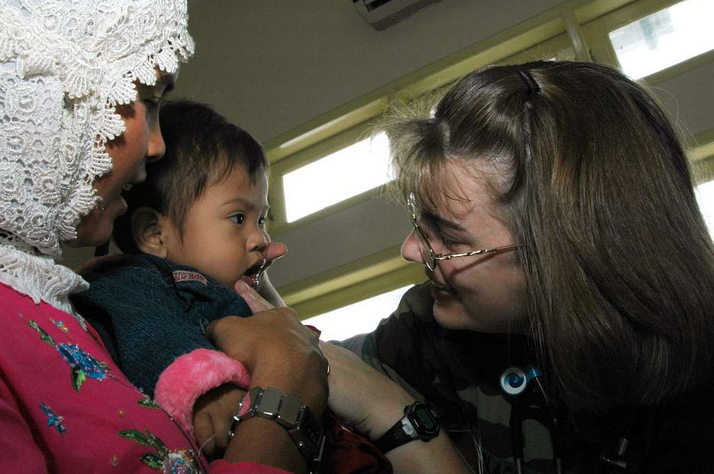
European Journal of Public Health, 1-7 https://doi.org/10.1093/eurpub/ckad232. Image credit: Public Domain Media
- Log in to post comments