











































Barriers and Enablers to Vaccination in the Ultra-Orthodox Jewish Population: A Systematic Review
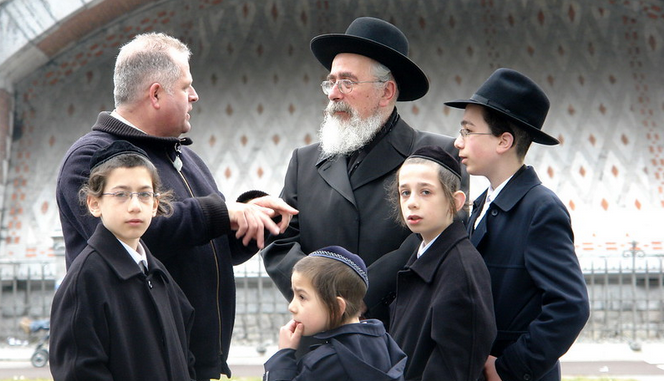
"...interventions using an exclusively religious framing are unlikely to be effective and highlight the need to develop and sustainably implement tailor-made interventions that match actual barriers..."
The Jewish Ultra-Orthodox (UO) population is an under-vaccinated minority group that has been disproportionally affected by outbreaks of vaccine-preventable diseases (VPD) such as measles and polio. Underlying reasons remain poorly characterised. This study systematically reviews the literature regarding barriers and enablers for vaccination in the UO population around the world. This review may support the development of effective interventions in the field, as developing effective tailored interventions requires that the vaccination determinants specific to each group is understood.
The researchers systematically reviewed the literature from 1995 to 2021 for primary research in English. They assessed included publications (9 qualitative and 7 quantitative studies from the 125 studies identified) for quality and extracted relevant data based on the 5As taxonomy:
- Access (the ability of individuals to be reached by, or to reach, recommended vaccines) - Access barriers included scheduling difficulties, inconvenient opening hours, and logistical difficulties related to having multiple young children. Although these systemic barriers affect the entire population, they are particularly detrimental to populations who initially have difficulty reaching out.
- Acceptance (the degree to which individuals accept, question, or refuse vaccination) - Several studies noted safety and side-effects concerns as barriers to vaccination uptake among UO groups. Safety concerns stemmed from a decrease in trust in the medical establishment in general and ranged from hesitancy to complete opposition to vaccines. In some cases, those reporting complete opposition to vaccinations also described a loss of trust in the rabbinical establishment. The main enabler related to acceptance one was the pro-vaccination stance of rabbinic leadership in UO groups. The cooperation between religious and health authorities around interventions to encourage vaccinations illustrate this stance.
- Awareness (the degree to which individuals have knowledge of the need for, and availability of, recommended vaccines and their objective benefits and risks) - Insufficient knowledge about the importance of vaccine and timely vaccination and the perception of being shielded from infections because of seclusion from wider society were key awareness barriers. In terms of awareness enablers, receiving an oral explanation about vaccines from the medical staff was enabling.
- Affordability (the ability of individuals to afford vaccination, in terms of both financial and non-financial costs) - Even in the context of freely available vaccines, competing priorities such as work and housework commitments constituted indirect affordability barriers: UO mothers must simultaneously manage many personal and professional responsibilities, making prioritising vaccination a challenge.
- Activation (the degree to which individuals are nudged toward vaccination uptake) - One barrier is the fact that mothers receive information about their child's vaccinations only when they are already at the clinic and not before, which makes it difficult for them to prepare for further vaccination. Mainstream religious leadership's support for vaccination can activate UO people toward vaccination, although recent studies suggest that their influence on vaccination behaviour is decreasing and the influence of anti-vaccination messages is growing.
A number of interventions specifically designed to increase vaccine uptake in UO communities were shown to be effective, especially following outbreaks. Examples include collaborative campaigns with UO religious leaders and stakeholders and improved vaccine accessibility. For example, following the 2018 Jerusalem measles outbreak, a collaborative campaign with religious leaders along with the extension of maternal child health clinics (MCHC) hours was associated with an increase in measles, mumps, and rubella (MMR) vaccine uptake from 76.3 to 96.1% within 30 weeks in intervention neighbourhoods.
The studies included in this review consistently show that the relatively low vaccine coverage in UO populations does not stem from theological opposition to vaccination. The "Gedoley hador" (the most respected and influential rabbis) support vaccination, and their endorsement were an important part of intervention programmes. Mothers who considered themselves anti-vaccination were aware they were acting contrary to rabbinical opinion, exemplifying awareness that the prevailing religious position supports vaccinations. Human papillomavirus (HPV) may be a notable exception, not because of theological opposition per se but because of the perception that an orthodox lifestyle, where early marriage and a single lifetime sexual partner is the norm, eliminates the risk of HPV infection.
As described here, individual decision-making contrary to rabbinical opinion "is a new phenomenon that inscribing itself in a broader change process within the UO community", including factors such as community growth, exposure to the internet, and the growth of civil leadership alongside rabbinical leadership. "These changes are diversifying the UO population and challenging centralized authority. In the context of vaccination, mothers exposed to the Internet may balance rabbinical opinion with online information to make a decision. Because of low science and IT [information technology] literacy in this population..., young UO parents may struggle to evaluate the reliability and legitimacy of information they encounter online, with direct implications for vaccine confidence."
In conclusion, "vaccination decision making processes among the ultra-orthodox communities are becoming more diverse, complex and individual, highlighting heterogeneity and change within the community." Thus, the findings of this review show that future intervention programmes should be tailored to the community and address evolving barriers to vaccination. Rabbinical endorsement is important but no longer likely to be sufficient. One example of an intervention method that could help is collaboration with welfare UO organisations that the community members trust and that can provide services in designated clinics within the community.
Frontiers in Public Health 11:1244368. doi: 10.3389/fpubh.2023.1244368. Image credit: CharlesFred via Flickr (CC BY-NC-SA 2.0 Deed)
- Log in to post comments