










































Understanding Communication Pathways to Foster Community Engagement for Health Improvement in North West Pakistan
Northumbria University (Lhussier); University of Central Lancashire (Lowe, Westaway, Dykes, McKeown); Abaseen Foundation (Munir, Tahir); Khyber Medical University (Zaman)
"This article responds to calls to document with greater clarity community participation strategies used in health promotion research in order to maximise translation potential to other contexts."
This paper describes a community engagement process undertaken to ascertain the focus, development, and implementation of an intervention to improve iodised salt consumption in rural communities on the outskirts of Peshawar in North West Pakistan. Here, the mixed population of local Pakistanis and long-term Afghan refugees are mostly from the Pukhtoon ethnic group, with a traditionally tribal and patriarchal culture. A May-July 2012 baseline survey of 1,043 local households showed that 97% of households did not use iodised salt and reported not to understand its benefits. To address issues like this, in a country where approximately half of the population of 200 million is affected with iodine deficiency disorders, a Wellcome-Trust-funded project was conducted as part of a long-term collaboration between the Abaseen Foundation Pakistan (AFPK), a locally operating non-governmental organisation (NGO), and United Kingdom (UK)-based universities in an effort to improve health, wellbeing, and education in Pakistan.
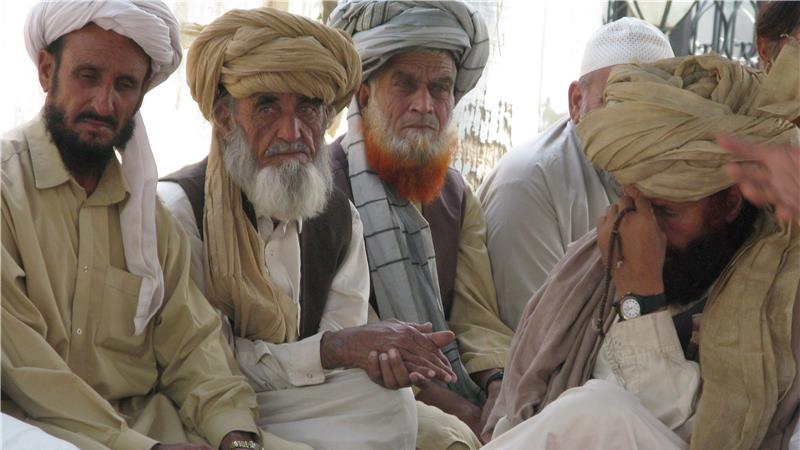
This multicomponent awareness raising campaign promoting the benefits of iodised salt to improve knowledge, attitudes, and practices revolved around the role of the Jirga in engaging the community in health improvement. The Jirga is a traditional informal structure that gathers men respected within their community and acts in a governing and decision-making capacity in the Pukhtoon culture. Representation in the Jirga is based on alliances, lineage, patronage, and/or cultural value orientations, and is thus fluid and topic-specific. The Jirga system had a dual purpose for the study: to access men from the community to discuss the importance of iodised salt, and as an engagement process for the intervention. The following steps were used to explore the naturally occurring communication and influence channels in the local communities to ensure effective engagement:
- Step 1: Drawing on principles of ethnography, qualitative data were collected through: (i) the calling by AFPK of 7 Jirgas between March 2012 and June 2013, as well as one-on-one interviews with 4 Jirga members, a focus group discussion (FGD) with 9 Jirga members, and semi-structured interviews with 8 of the wives of Jirga members, and (ii) FGDs that were conducted with community members to gain a greater understanding of the knowledge related to iodised salt, its intake and local availability, and the role of different stakeholders in promoting its use.
- Step 2: The intervention, a multi-component community awareness raising campaign, was implemented over a 4-month period from June to September 2013. FGD data was crucial for understanding barriers to the use of iodised salt, and helped in designing the intervention. To activate the key levers to decision-making in the community, the campaign included: the design and distribution of leaflets and posters at the mosque, Hujra (informal meeting place for men), health centres and schools, to shopkeepers and informal healthcare providers, and to households, brick kilns, and communal areas. Health education sessions were also given to groups (Jirga members, healthcare providers, schoolteachers) and individuals through door-to-door visits. In addition, a radio interview with the Pakistan-based project lead was broadcast on the local radio station.
- Step 3: A survey of local shopkeepers was undertaken prior to the start of the intervention and during the intervention to collect data about the types and quantity of salt sold, as well as its storage, packaging, and pricing. Further monitoring of sales was conducted on a monthly basis.
- Step 4: The intervention was evaluated: Quantitatively, based on salt sales figures (pre- and post-intervention) and through the urinary iodine concentration (UIC) of school boys aged 6–12 years taken at 3 time points, and qualitatively, using a post-intervention semi-structured questionnaire to collect data on knowledge, attitudes, and practices towards iodised salt and its use. The evaluation has been published separately; click here for access. In short, at baseline, 2.6% of households reported use of iodised salt. During the intervention, sales of salt labelled as iodised increased by 45%; however, this was not reflected in an increased UIC. Therefore, whilst the intervention was successful in terms of raising awareness and changing behaviours, issues remain regarding adequate iodisation by local producers and appropriate storage of salt.
A number of themes emerged from the data in step 1 pertaining to the decision-making processes in the family, communication channels in the community, and then more precisely in and around the Jirga. A few salient points to emerge include:
- Community members are grouped by gender and placed in order of decreasing decisional power. If the male head of family is alive, he has the power to make all family related decisions without consulting any family member. The older he is, the wiser he is considered to be and the less likely it is that his decisions are disputed. This key decision-making role meant that project organisers ensured men were engaged in the iodised salt awareness raising activities. However, it became clear that older women do communicate with and sometimes question older, wiser men.
- In terms of communication channels beyond the family: men hold regular informal meetings; religious leaders are highly regarded in all matters, including health; and women can talk to women of their own age and standing and occasionally speak to men, who can then spread the message through their male networks. Lines of communication in the community depend on a person's standing within the family or community, but also on particular venues. For example, Imams influence people's behaviours through their communications at the mosque (in the actual mosque and through loudspeakers for the benefit of the whole community), which is mostly attended by men, young people (including boys), and the elderly. Because of their visibility, shop owners, radio stations, and schoolteachers have a role in the dissemination of a health promoting message, too.
- Participants described how the function of Jirgas had evolved from mostly being about conflict resolution to including a greater emphasis on social aspects of community life. What emerged is that the most likely effective engagement channels are those that are built on levers of age, gender, and education - i.e. the Jirga works because it gathers men who are respected in the community on the basis of their status related to age, wealth, "wisdom", and education level. Because of the respect commanded by Jirga decisions, it became clear that only an intervention engaging Jirga members would challenge deeply embedded cultural misconceptions about iodised salt - e.g., fear that iodised salt may lead to birth control.
Iodised salt is thus used here as a case example for future engagement and health improvement interventions in culturally specific settings. This paper sought to bring together two research strands (Jirga and community engagement) in light of limitations that have been identified in the literature of strategies to improve the demand for health services in resource-limited settings. These include a lack of understanding of three fundamental influences on the decision-making environment: gendered decision making norms, multigenerational dialogue, and appropriate communication. "Within this particular socio-cultural context, the Jirga exemplifies elements of what we would recognise as deliberative democracy and addresses some of the three limitations above." The researchers discuss some of the literature on community engagement, citing for example O'Mara-Eves et al.'s comparison of the effectiveness of four models of community engagement: (i) When the health need is identified by the community and they mobilise themselves into action; (ii) Where the need for an intervention is driven from outside of the community, but community insiders are consulted over its development; (iii) Where the need for an intervention is driven from outside of the community, but community insiders collaborate over its development; and (iv) Where the community is involved in the delivery of the intervention only. The researchers explain: "we engaged with the Jirga first and foremost, in order to determine the focus of the intervention. This was a combination of models: 1 (the initial survey established areas of need), 2 (iodised salt consumption was chosen as a topic because it was achievable in the timescale and funding limitations of this project) and 3 (Jirga and other community members advised on the most effective lines of communication). Maximising the potential of these influential entry points into the community was key in ensuring the intervention success. Once the focus of the intervention was decided, groups were consulted over the best ways to ensure effectiveness (model 2), and local outreach workers delivered some of the intervention, as did Imams, health care workers and shop keepers (model 4). Beyond this, this intervention also built on long standing and trusting relationships between AFPK workers and the local community."
In conclusion: "Whilst gendered decision-making processes are well acknowledged, and in one respect our data confirm this, a more complex hierarchy of decisional power has been highlighted. The concept of 'wisdom', an amalgamation of age, experience and education, presents important possibilities that should be maximised in future health improvement efforts....[T]he driving modus operandum throughout the project was one of interactive participation. This process of maximisation of local cultural knowledge prior to, and as part of, a community engagement effort in order to understand the levers of influence and communication is one that has application well beyond the particular setting of our study."
BMC Public Health 2016 16:591. DOI: 10.1186/s12889-016-3222-7; and emails from Monique Lhussier to The Communication Initiative on July 29 2016 and February 21 2017. Image credit: AP
- Log in to post comments