










































An Ethnographic Exploration and an Evaluation of the Potential of the Jirga for Community Engagement in Research in North-west Pakistan
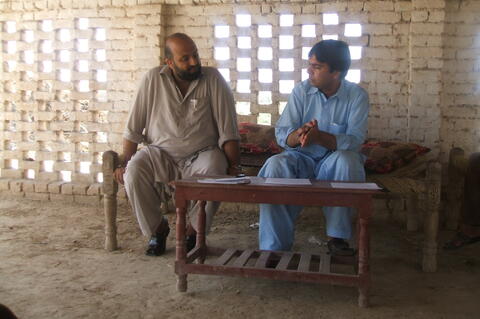
This initiative utilises a local, culturally embedded means of community engagement to undertake research in North West Pakistan. Jirga is a Pashtun term for a decision-making assembly of male elders. It constitutes a traditional process of communication, discussion, and debate that operates primarily in the border tribal regions in North West Pakistan and Afghanistan. Commenced in October 2011 with Wellcome Trust funding, this 2-year project is led by Dr. Nicola Lowe at the University of Central Lancashire (UCLan) with a team of collaborators at UCLan, Northumbria University, and Khyber Medical University in Pakistan, and is facilitated by the Abaseen Foundation Pakistan. The project is designed to generate understanding about the mechanisms of the Jirga system as a culturally embedded process for community engagement and to explore its potential for community engagement in research. The study is taking place in two communities in Khyber Pakhtunkhwa (KPK) Province and one community in Frontier Region (FR) Peshawar in Federally Assisted Tribal Areas (FATA) of North West Pakistan.
In the initial exploratory phase, the project draws on ethnography that is informed and infused by the concepts of culture and enculturation. Ethnography is an interpretive methodology that provides descriptions, formulates understanding, and attempts to explain the cultural knowledge of a group of people. The research takes place in "natural" settings, where people's actions and accounts are studied in everyday contexts. The ethnographer observes behaviour but moves beyond this to enquire about the meaning of the observed behaviour. To achieve this level of understanding, it is necessary to participate in people's lives over an extended time period, watching what happens, listening to what is said, and asking questions. Hence, the aim of the project is to explore and document the operation of the Jirga, including membership criteria, community consultation, and decision-making processes. Members of the Pakistan research team are observing Jirga meetings and holding one-to-one interviews with Jirga members and their wives. By understanding how and why Jirgas work in the local context, it is anticipated that this model could be adapted for research and to other contexts.
In order to explore the potential of the Jirga model to stimulate public discourse about research, in the second phase, the Pakistan research team is conducting focus groups discussions with Jirga members and lady health workers, as well as those for whom the (new) public discourse is geared toward (women). The focus groups consist of 8-12 participants and are facilitated by members of the Pakistan research team.
The third phase of the project involves an evaluation of the use of the Jirga to shape the research agenda locally and to engage the community in research activities. In consultation with the Jirga in one of the KPK communities, key public health concerns of the community will be identified. Then an intervention will be agreed upon to improve community health and wellbeing that will be implemented for several months and then evaluated. Early research findings identify the following potential interventions that:
- Address infant and young child feeding
- Promote the uptake of iodised salt
- Explore substance abuse
To date, no firm decision has been made on the choice of intervention, as analysis of the focus group discussion transcripts is incomplete. At the end of the project, research findings on the Jirga model for community engagement in research will be shared with policy makers, researchers, and practitioners, as well as Jirgas at the local level.
Children, Health, Nutrition
Organisers explain that, in a context of chronic rural poverty, the impact of social, economic, and cultural factors, such as poor access to primary health care, education, potable water and nutrition, and gender inequalities, is hindering the attainment of Millenium Development Goals (MDGs) by 2015. Hence, it is essential that sustainable intervention strategies are devised to improve community health and wellbeing. However, in this context, there are considerable challenges to engage community members in a research agenda. Traditionally, the Jirga is used for conflict resolution, information dissemination and gathering, alliance building, a forum for problem-solving, and a means of peace keeping. Representation in the Jirga is based on alliances, lineage, patronage, and/or cultural value orientations and is thus fluid- and topic-specific. Dr. Nicola Lowe states that: "Without the consent of community leaders and representatives through this system, it would have been impossible to conduct research, as they enable the full collaboration of local communities."
Abaseen Foundation, Khyber Medical University, Northumbria University, University of Central Lancashire, UCLan, Wellcome Trust
"International Engagement Awards: Projects funded in 2011" [PDF]; Abaseen Foundation website, November 15 2012; and emails from Nicola Lowe to The Communication Initiative on November 15 2012 and December 13 2012.
- Log in to post comments