Philippine Public Transparency Reporting Project (PPTRP)
PPTRP is based on the observation that the internet and social media provide new opportunities to communicate, teach, learn, reach out, link up, and mobilise. Fighting corruption "simply needs people coming together to see that the public interest is constantly and fully served." The Pera Natin To! website is designed to provide ordinary people with the chance to report and share their stories and experiences of public corruption, secrecy, waste, and mismanagement. "From discussion and debate come ideas and solutions." Ideas for citizen action to secure accountability and transparency are offered here. For example, people are urged to: get involved with an existing public watchdog group or help set up a new local group and demand to sit in on local government meetings; learn to ask the right question and press for a proper answer from local administrators and elected officials about local public finances; find out about recent and forthcoming public procurement calls in their area, particularly ones involving infrastructure projects; and/or understand and get involved in the procurement process.
The website features articles, basic information on corruption and transparency, and online petitions. Discussions in the PPTRP forum focus on question such as: How can we best fight corruption?
PPTRP has designed its own campaigns, and participation is encouraged through the PPTRP website. For example, a campaign to protest and stop the practice of politicians putting their name and faces alongside publicly funded projects and services urges people to share their voice online, saying, "Dear politician, Unless you personally used your own private money, I want you to stop putting your name and photo on or alongside projects that are paid out of public funds. It is wrong and unacceptable. We are all watching. Pera Natin 'to!" Another campaign advocates for public monitoring of lifestyle checks on all public officials and civil servants. Organisers ask for public participation as they write to relevant agencies and institutions to access the Statement of Assets and Liabilities of Net Worth (SALNs). "We intend to start publishing these online. We will not comment on them or write stories about them - we will just make them publicly available. We will also publish the correspondence between the Philippine Public Transparency Reporting Project and the government bodies holding them."
Alongside anti-corruption reporting, public education, and sustained media training, the project will root a series of joint media and civil society groups in the countryside working together to build local understanding and engagement in public spending, budgeting, and procurement processes.
Democracy and Governance, Rights.
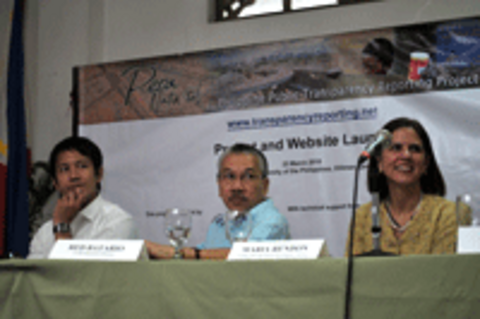
The March 23 2010 launch held at the University of the Philippines in Diliman, Quezon City, was reportedly extensively covered by the national print and broadcast media and from as far afield as Australia and South Korea. Amongst those present at the launch was Solita Monsod, a former director of the National Economic and Development Authority, who warned that the country was losing the war against corruption. She said, "The Philippines is in the twilight zone where laws, rules and regulations are ignored or broken, where lack of transparency is the rule rather than the exception....[W]e are not winning the battle as shown by indicators like the Global Corruption Barometer." According to organisers, an estimated 20% of the national budget is lost each year to graft and corruption. The Philippines remains one of the most corrupt countries in the world, according to Transparency International.
"This project is about information, education, engagement and action for transparency and accountability," said PPTRP director Alan Davis. The project also aims to foster collaboration - not competition - in building a constituency rooting for stronger public transparency through communication, debate and dialogue, he said.
IWPR, NUJP, CCJD, and MindaNews. Funding support from the United States Agency for International Development (USAID) and the American Bar Association Rule of Law Initiative.
Email from Alan Davis to The Communication Initiative on March 29 2010; "Disgusted with Pols' Mansions? Take Pix, Send to This Group", by Philip Tubeza, The Philippine Daily Inquirer, March 24 2010; and PPTRP website, April 1 2010.