










































Global Public Health Communication in an Interconnected World: Enhancing Resilience to Health Crises
News Deeply
"The right message at the right time from the right person can save lives. When we don't have these three things together, people die."
This report brings together insights and perspectives from experts in communication, public health, and emergency responses, in order to distil lessons learned and contribute to knowledge around public health communication in times of crisis. The report is based on proceedings hosted at the Bellagio Center in October 2015 by KYNE and News Deeply, supported by The Rockefeller Foundation, which brought together 18 experts to discuss and synthesise noted shortcomings of public health communications during recent crises, systematically documenting lessons learned. News Deeply also conducted interviews with participants, as well as external reviews with community organisations and leaders, to inform the body of the report.
The report first outlines the high stakes of communication failures noting that misunderstanding, miscommunication, and false information can cost lives, making the point that "global health stakeholders need to build more proactive and collaborative strategies towards communication, particularly in such times of crisis." To highlight the ways in which communication can help or hinder a public health crisis response, three case studies from different regional contexts are discussed: the 2013-15 Ebola crisis in West Africa, the SARS epidemic of 2003 in Singapore, and the 2015 Legionnaires' disease outbreak in New York City. Each case study details best practices, challenges, results, and lessons learned, providing insight into applicable, scalable actions that could leverage public health communication during future crises. For example, one case study outlines how BBC Media Action produced and aired radio programming (interviews, call-in shows, drama, etc.) throughout West Africa during the most recent Ebola outbreak, and used the mobile chat messaging service WhatsApp on a scale never seen before in any global health emergency. "The team at BBC Media Action learned a great deal about good working practice in the midst of an emergency, including the importance of building links among local media and community leaders, health experts, religious leaders, traditional leaders, and civil society.
The report shares a wide range of expert insights from the Bellagio meeting and from additional interviews conducted with community leaders and public health professionals. These insights look at critical needs and opportunities around improving public health communication, outline key challenges, and address the ways in which they can begin to be tackled. According to these experts, building trust at the community levels requires organisations to better understand values, practices, priorities, and existing leadership within a given community. The experts also provided insights on collecting and scaling up best practices in communication, in managing social media for mass public engagement, and improving the impact of mainstream media coverage. For example, there is "a critical need to invest in training and capacity building for journalists, particularly toward enhancing knowledge about science, medicine, data, and public health."
A number of insights into the use of enhanced technologies and platforms are also discussed. For example, during the Ebola response in West Africa, mHealth platforms were deployed in the field, allowing messages, updates, and advice to reach front-line health workers and citizens. Other platforms such as mHero - a fusion of the open-source, USAID-funded iHRIS health workforce information system software and the UNICEF-developed and supported RapidPro - enhanced communication between front-line health workers, governments, and organisations, building directly upon technologies and systems already in use. It is also noted that, "in crisis settings, simple internet forums can reach more people than sophisticated technology: internet forums such as Healthcare Information for All (HIFA), which brings together 15,000 health workers globally, and the infectious diseases forum PRO MED have been valuable resources for ministries of health and clinical staff during the Ebola outbreak, and should continue to be as we move forward."
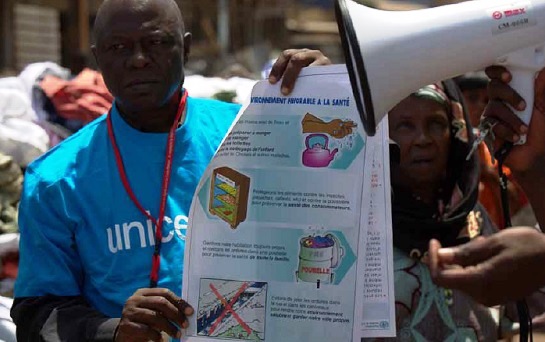
Other insights focus on methodologies for community engagement, such as Communicating with Communities (CwC), which focuses on "the provision of information and the means to communicate as a form of humanitarian assistance. In the context of a public health crisis, it refers to activities where an exchange of information is used to save lives, mitigate risk, enable greater accountability, shape the response, and support the communication needs of people." Lessons learned from West Africa's Ebola outbreak showed that many civil society groups, community leaders, and religious leaders reported feeling excluded from conversations around effective messaging in their own countries. As a result, citizens had few trusted sources to turn to, traditional wisdom was overlooked, and false narratives ballooned.
Based on the expert insights gathered, the following recommendations are intended to provide a roadmap for a more resilient and effective public health communication framework:
- "Redefine communication as a critical form of aid and an essential part of resilience, based on preparedness as well as response. As part of this mindset shift, invest in research and evaluation of best practices in public health communication.
- Build the architecture of a new communication system, constructed on a currency of trust and inclusion, accounting for rapid change and a high volume of digital and analog content flow.
- Create a global health communication advisory board, representing, and accountable to, the world's largest organizations, and with designated channels for enhanced collaboration, communication, and sharing among responders.
- Invest in community partners and treat community organizations, leaders, and local media as long-term assets. Ensure that community leaders are included in response coordination from day one. Support humanitarian agencies to work in concert with media development organizations and local media.
- Build trust with local communities through networks and affiliations, forged in times of relative calm and in accordance with the principles of resilience. Enlist the help of trusted and respected figures to help communicate vital public health messages.
- Increase transparency and create designated channels for translating scientific and expert knowledge for policymakers. Involve expert crisis communicators in developing such frameworks.
- Embrace strategic communication, integrating best practices from the private sector, drawing from the fields of marketing, public relations, and strategic communication to shape more effective public outreach efforts.
- Map the architecture of some of the most innovative tech platforms and mobile technology, while also utilizing simple, low-tech solutions that have been proven to impact at scale on the ground."
Rockefeller Foundation website on May 23 2016.
- Log in to post comments