










































Flattening the Curve on COVID-19: How Korea Responded to a Pandemic Using ICT
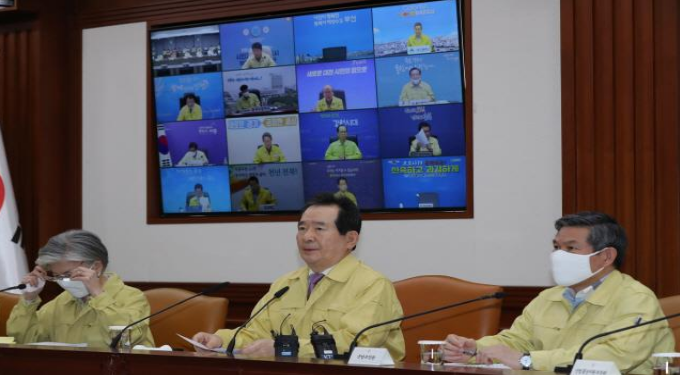
"[W]e should together make best efforts to turn the crisis into opportunity and make the best use of the cutting-edge ICT technologies in forefront of fight against COVID-19. We should also work together by making every information gathered on COVID-19 readily available to all."
Korea flattened the curve on COVID-19 in a 20-day period without enforcing extreme measures that restrict freedom and movement of people. This paper, which is the result of a collaboration between a group of Korean government ministries and agencies, credits information and communication technology (ICT) for this success. In a spirit of global cooperation and based on the belief that COVID-19 information is a public good, the paper summarises Korea's use of ICT in response to COVID-19 from January to April 15 2020.
The Korean experience shows that:
- ICT supports social distancing. Examples:
- The Cellular Broadcasting Service (CBS) enables government agencies to transmit emergency alert text messages on natural or man-made disasters to cell phones through mobile telecom carriers in Korea. Municipalities throughout Korea use the CBS to inform the public of the movement paths taken by confirmed patients and other related information. Residents who receive COVID-19 emergency texts can quickly check if they have been anywhere that overlaps with the movement of a confirmed patient, allowing them to get tested quickly if necessary.
- The Korean government has supported remote working by, for example, creating a website to provide information about companies offering solutions and their products, setting up a Global Virtual Private Network (GVPN), and disseminating information about cybersecurity guidelines and recommendations.
- To support remote education, as schools were closed, the Korean government began offering science content online, IPTV and pay TV provided real-time educational content, and 36,000 smart tablets were donated to children in low-income families. The Seoul Metropolitan Office of Education (SMOE) also established an educational infrastructure with the view to implementing a stable system of remote education that will be introduced nationwide.
- The government temporarily permitted doctors to perform telemedicine starting in end of February 2020 as part of preventive measures to avoid group contagion in vulnerable facilities, including medical institutions and nursing homes. Several startups have begun to develop telemedicine service mobile applications (apps), among other apps being created (e.g., "Coronavirus Map").
- The Korean government is supporting predictive research on the spread of COVID-19 carried out by Korean researchers by identifying and sharing data that can be used by researchers within the scope of data protection and also by helping researchers establish a professional network.
- ICT locates COVID-19 with speedy testing. The test-kits for COVID-19 quickly became widely available and played a major role in eliminating uncertainties in the early stages of the viral spread. One of the reasons behind Korea's rapid development of diagnostic kits is that companies invest in fostering a research and development (R&D) environment based on ICT, such as big data and artificial intelligence (AI), which allowed the use of research resources available on global online platforms of the World Health Organization (WHO) and other international organisations. In Korea, 5 diagnostic reagent companies have obtained emergency use approval. Such efforts are supporting K-Walk-Thru, a collective name for testing facilities adopted by Korea that allow quick collection of samples as subjects walk through the station with minimal contact. Also, AI supports researchers and healthcare professionals in the diagnosis and screening of patients with severe symptoms and in developing appropriate responses.
- ICT quickly traces COVID-19. The Korean government has used ICT to prevent the spread of COVID-19 via travelers entering the country. An example of this is the self-diagnosis app developed by the government to monitor symptoms of inbound travelers while also providing them prompt medical advice. Also, the government-developed self-quarantine safety app is designed to support the monitoring of those under self-quarantine. Furthermore, the COVID-19 Epidemiological Investigation Support System was developed to support epidemiological investigations (contact tracing) through the application of City Data Hub under the National Strategic Smart City R&D Program. Jeju-do, as the southernmost island of Korea, only has 7 epidemiological investigators, and it was a time consuming task to trace patient contacts through memory-based patient statements and CCTV recordings. To overcome such a challenge, Jeju-do launched a campaign on February 24 2020 to have its citizens voluntarily record their whereabouts on their smartphones using Google Timeline. In all these efforts, according to the report, "Prompt support system[s] for data-driven COVID-19 epidemiological investigation has been established, and strong security measures have been put in place to ensure data privacy."
- ICT facilitates COVID-19 treatment. The use of AI for COVID-19 research is expected to reduce the time required to develop appropriate medicines, as AI can learn and make deductions based on the virus and other medical data. For example, one company used deep learning algorithms to predict the interaction of drug and protein and to propose a candidate medicine for the coronavirus. Another company used a pre-trained deep learning-based drug-target interaction model called Molecule Transformer-Drug Target Interaction (MT-DTI) to identify commercially available drugs that could act on viral proteins of SARS-CoV-2. An AI-driven drug discovery startup using bioinformatics and pharmacogenomics for incurable and rare diseases has been developing platforms to find candidate substances to treat COVID-19 more efficiently.
- ICT flattens the curve on COVID-19 through provision of information. Examples:
- On February 5 2020, the Korean government established an official website on COVID-19, where all relevant information is available for the public. Key information such as the accumulated count by region and number of tests performed is summarised and provided as visualisation data on the main page of the website. Information on providing overseas travel history, finding COVID-19 screening centres, detecting infection early, using epidemiologic surveys, and isolating the close contacts of a patient is also provided.
- Real-time data of publicly-distributed face masks is provided to people through apps and web services in an effort to reduce confusion and inconvenience while increasing distribution efficiency.
- Because of online sales of agricultural and marine products under a regular distribution network, there has not been panic-buying in Korea, according to this report.
- The Korean government is implementing measures to enhance response to scams, as phishing (by phone) and smishing (by SMS, or text messaging) attacks are on the rise, preying on fears of COVID-19. The government has enhanced the scam alert system in cooperation with the 3 major telecommunications service providers: Alert texts are sent out on a regular basis to inform all citizens of cases of scams and coping methods.
In conclusion, the government of Korea hopes this study will be a small but meaningful contribution to the international COVID-19 response, especially in developing countries. However, "COVID-19 countermeasures taken by the Korean government will not be conclusive nor the Korean case cannot be a universal key for all countries' fight against COVID-19."
"New Report: How Korea Used ICT to Flatten the COVID-19 Curve", ICTworks, April 22 2020 - accessed on April 23 2020.
- Log in to post comments