










































Diffusion of Innovation Theory: The Adoption Curve
"In every society there are specific segments of the population that try a new product or adopt a new behavior at different stages. Early adopters are quick to try a new product before anyone else while laggards are the last to try something and may not try it at all. In this short video we introduce you to each of these different types of people in society and explain why they try new things when they do."
Diffusion of innovations is a theory that seeks to explain how, why, and at what rate new ideas and technology spread. It was developed by Everett Rogers in 1962. This animated video from the conservation organisation Rare uses drawings and narration to explore the 5 adopter groups in Rogers' theory, suggesting that, if you want to promote the adoption of a new behaviour, market to each adopter group individually, using distinct channels.
In brief, the groups include: (i) innovators - the first to learn about and adopt new ideas. They are risk-taking and adventurous and are the ones to introduce new ideas to the larger population, because they tend to share their experiences with their friends and communities. (ii) early adopters - this is also a small segment of the population. Highly respected, their endorsement plays a key role in motivating others to "cross the chasm". Two-thirds of the population fall into early or late majority groups, as follows: (iii) early majority - they take their time to make decisions and adopt an innovation only when they are convinced that it is the new status quo. (iv) late majority - they are approach an innovation with scepticism and want it to be well tested before they risk trying it. The last group is (v) laggards - they are hard to reach with marketing campaigns and have limited exposure to media. They wait until an innovation is completely mainstream before adopting it, or may never adopt it.
The video contrasts social media, which spread very fast, with many people adopting it to, on the other hand, use of solar power, which may take decades to be adopted.
In short, the video suggests that communicators consider diffusion of innovation theory and tailor communication channels and messages to each group; this will improve chances of cataylsing widespread adoption.
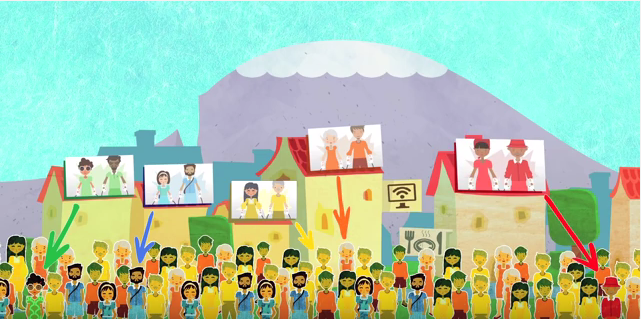
Rare YouTube Channel, June 21 2016.
- Log in to post comments