
























Development action with informed and engaged societies

After nearly 28 years, The Communication Initiative (The CI) Global is entering a new chapter. 

Following a period of transition, the global website has been transferred to the University of the Witwatersrand (Wits) in South Africa, where it will be administered by the Social and Behaviour Change Communication Division. Wits' commitment to social change and justice makes it a trusted steward for The CI's legacy and future. 

On the transfer, co-founder Victoria Martin expressed her pleasure to see this work continue under Wits' leadership, knowing that co-founder Warren Feek (1953–2024) would have felt deep pride in The CI Global's Africa-led direction. 

As Wits, we honour the team and partners who sustained The CI for decades and look forward building from that strong base. This includes co-founders Warren Feek (1953-2024) and Victoria Martin as well as La Iniciativa de Comunicación (CILA), which continues independently at lainiciativadecomunicacion.com with links to The CI Global site. We are also eager to forge new partnerships and entertain new ideas as we consider how best to contribute to social and behaviour change in our rapidly evolving environment.

If you are joining the International Social and Behaviour Change Communication (SBCC) Summit in Panama, please join Wits and CILA on Monday, 22 June, to share your thoughts and suggestion for the relaunch of the Communication Initiative. We will be in Pacifica 5 from 12-1:25 for the Refuel, Reflect, and Renew Lunch Series: The Communication Initiative: celebrating a driving force for Communication for Social Change and the way forward. We will reflect on the legacy of Warren Feek and family in creating the Communication Initiative, consider the contributions of CI over the years and then turn our attention towards the future in this dynamic session. 

If you are unable to join us in Panama, we still want to hear from you. Please contribute your thoughts by following this link: https://redcap.link/CommunicationInitiative2026 or reaching out to ci_surveys@commint.com

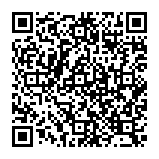
You can also follow the QR Code:

 https://redcap.link/CommunicationInitiative2026

Time to read
1 minute
Read so far

Exchange/AfriAfya HIV/AIDS Communication Workshop

0 comments
Learning 'how to communicate more effectively making the most of limited resources' was the way one participant at this eight-day training workshop on communication, documentation and facilitation skills described the outcome. Organised by the Kenyan-based AfriAfya network and the UK-based Exchange programme (which in early 2006 was subsumed into Healthlink Worldwide), the workshop was help in Kikambala, near Mombasa, Kenya October 22-29 2002. More than 30 participants attended, coming from various facilities around the country.
Communication Strategies

Designed to operate in two parts, the workship first upgraded the skills of 12 facilitators in effective communication, documentation and facilitation approaches. These 12 then planned and ran the second part of the workshop for a further 20 participants drawn from AfriAfya field centres throughout Kenya.

Among the activities undertaken during the workshop were opportunities to meet with a group of community health workers and with young people from the Kikambala area to discuss their knowledge, attitudes and practices around HIV/AIDS and family planning. The findings from those discussions helped participants to identify possible ways of improving communication and documentation.

Development Issues

HIV/AIDS, Family Planning.

Key Points

The workshop focused on how to improve communication around HIV/AIDS. It drew on participants' experience of HIV/AIDS communication and documentation in their communities. It explored:

  • characteristics of good and bad communication
  • challenges faced at community level when communicating around HIV/AIDS
  • the importance of face-to-face communication
  • effective interviewing skills
  • how to prepare and undertake a field visit to identify knowledge, attitudes and practices among specific members of a community
  • how to analyse and present findings from field research to a variety of different audiences using different formats and methods
  • how to critically assess different communication and documentation materials
  • why and how to document experiences and lessons
  • how to make and test effective, appropriate and low cost communication materials


AfriAfya is an African Network for Health Knowledge Management and Communication. It was set up in April 2000 by a consortium of Kenya-based health agencies to explore ways to harness information and communication technologies (ICTs) to improve community health in rural and other marginalised settings. The Network is currently working with financial support from the Rockefeller Foundation and the Partner Agencies.

Exchange (which in early 2006 was subsumed into Healthlink Worldwide) is a networking and learning programme that facilitates effective health communication. Based in the UK, it is supported by the UK Department for International Development (DFID). Kenya is one of its focus countries.

Sources

Healthlink Worldwide website ; and email from Daphne Kouretas to The Communication Initiative on October 5 2006.