










































Chanjo Ya Rushwa Campaign
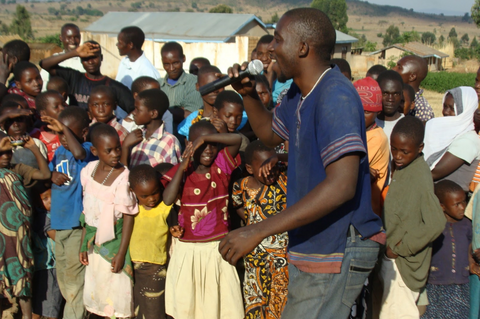
Initiated by the Swedish Programme for ICT in Developing Regions (Spider), the Chanjo Ya Rushwa campaign combined music, mobile phones, and social media to raise public awareness of the corruption affecting the country and to give ordinary people a voice. The campaign, which took place between September 2011 and August 2012, was carried out by Jua Arts Foundation for the Children with Vitali Maembe and the Spirits, a Tanzanian band known for its Afro-fusion music and challenging lyrics.
The programme objectives and related activities included:
- creating awareness, educating, and inspiring Tanzanians to collectively tackle corruption, selfishness and laziness;
- carrying out the Chanjo campaign in all of Tanzania;
- distributing Chanjo music and material over the Internet and mobile phones;
- creating on-line platforms for debate and documentation;
- making more people aware of the scope of the corruption crisis; and
- in the long term, reducing corruption in society.
The Vitali Maembe and the Spirits band performed live in public places in towns and villages around the country. The tour was documented with photo and video, as well as through the Chanjo Blog, Facebook, and other media. Photos and impressions from the campaign were posted on a project blog, and the performers highlighted news on their Facebook pages. Audiences were encouraged to share the songs on mobile phones and to call local radio stations to have them played. The Chanjo album is available for free download, released through a Creative Commons License.
Since the campaign started on October 19 2011, Chanjo has covered 7 regions: Rukwa, Mbeya, Iringa, Morogoro, Dodoma, Singida and Tabora. A total of 23 performances reached at least 7,840 people. According to Spider, for villagers this has been a rare opportunity to speak out about corruption and to be entertained.
On November 10 2011, while performing in the Nzega Tabora region, two plainclothes officers interrupted the concert and took Vitali Maembe to the local police station (where an official from The Prevention and Combating of Corruption Bureau (PCCB) joined them. Maembe’s own story was immediately published on the Chanjo blog. After Maembe's release, the band decided to take a short break in the tour and focus their efforts on social media.
Democracy, Education
Chanjo Blog, Project information on Spider website, and Tour update from the Chanjo ya Rushwa campaign on December 18 2011.
- Log in to post comments