Development action with informed and engaged societies

After nearly 28 years, The Communication Initiative (The CI) Global is entering a new chapter. 

Following a period of transition, the global website has been transferred to the University of the Witwatersrand (Wits) in South Africa, where it will be administered by the Social and Behaviour Change Communication Division. Wits' commitment to social change and justice makes it a trusted steward for The CI's legacy and future. 

On the transfer, co-founder Victoria Martin expressed her pleasure to see this work continue under Wits' leadership, knowing that co-founder Warren Feek (1953–2024) would have felt deep pride in The CI Global's Africa-led direction. 

As Wits, we honour the team and partners who sustained The CI for decades and look forward building from that strong base. This includes co-founders Warren Feek (1953-2024) and Victoria Martin as well as La Iniciativa de Comunicación (CILA), which continues independently at lainiciativadecomunicacion.com with links to The CI Global site. We are also eager to forge new partnerships and entertain new ideas as we consider how best to contribute to social and behaviour change in our rapidly evolving environment.

If you are joining the International Social and Behaviour Change Communication (SBCC) Summit in Panama, please join Wits and CILA on Monday, 22 June, to share your thoughts and suggestion for the relaunch of the Communication Initiative. We will be in Pacifica 5 from 12-1:25 for the Refuel, Reflect, and Renew Lunch Series: The Communication Initiative: celebrating a driving force for Communication for Social Change and the way forward. We will reflect on the legacy of Warren Feek and family in creating the Communication Initiative, consider the contributions of CI over the years and then turn our attention towards the future in this dynamic session. 

If you are unable to join us in Panama, we still want to hear from you. Please contribute your thoughts by following this link: https://redcap.link/CommunicationInitiative2026 or reaching out to ci_surveys@commint.com

You can also follow the QR Code:

 https://redcap.link/CommunicationInitiative2026

Time to read
1 minute
Read so far

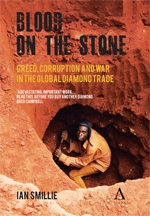
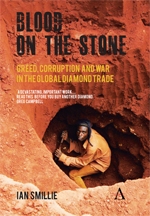
Blood on the Stone

0 comments
Image
Book/Journal/Video Subtitle
Greed, Corruption and War in the Global Diamond Trade
Publication Date

Africa’s diamond wars took four million lives. They destroyed the lives of millions more and they crippled the economies of Angola, the Congo, Liberia, and Sierra Leone. The biggest UN peacekeeping forces in the world—in Sierra Leone, Liberia, the Congo, and Côte d’Ivoire ― are the legacy of “conflict” or “blood diamonds.”


Blood on the Stone tells the story of how diamonds came to be so dangerous. It describes the history of the great diamond cartel and how it gradually lost control of the precious mineral, as country after country descended into anarchy and wars fueled by diamonds. The book describes the diamond pipeline, from war-torn Africa to the glittering showrooms of Paris, London, and New York. It describes the campaign that began in 1999 and which eventually forced the industry and more than 50 governments to create a global certification system known as the Kimberley Process, aimed at wringing blood diamonds out of the retail trade. It concludes with a sobering assessment of the certification system, which soon became hostage to political chicanery, mismanagement and vested interests. Too important to fail, the Kimberley Process has been hailed as a regulatory model for Africa’s extractive minerals. Behind the scenes, however, it runs the risk of becoming an ineffectual talk shop, standing aside as criminals re-infest the diamond world.


Blood on the Stone is about the cartel, the warlords, the gun runners and the shadowy traders who populated Africa’s bloody diamond wars, and a faltering, decade-long effort to clean up an entire industry.


ISBN 978-0-85728-963-6
e-ISBN 978-1-55250-498-7


THE AUTHOR
Ian Smillie has lived and worked in Africa and Asia as a teacher, consultant, investigator and writer. For the past ten years his focus has been blood diamonds, the wars they fuelled and a scheme designed to stop them. This has taken him from the jungles of West Africa to the backstreets of Antwerp and a war crimes tribunal in The Hague, where he was the first witness in the trial of Liberian warlord Charles Taylor. He was a leading NGO participant in the Kimberley Process from its inception until he resigned in 2009. Ian Smillie was appointed to the Order of Canada in 2003.