











































Africa Regional Strategy on Antimicrobial Resistance Communications and Advocacy
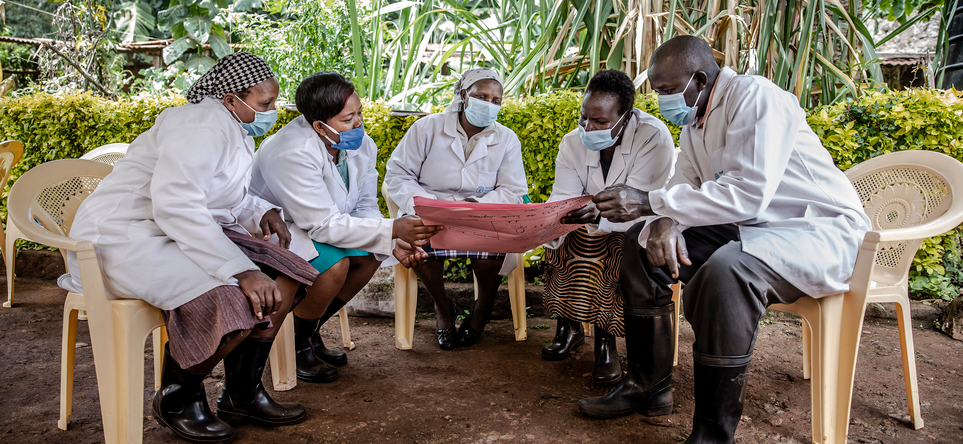
"Minimizing the emergence and spread of AMR requires a coordinated, focused multisectoral and multinational effort."
Humans, animals, and plants share many similar germs, which, when harmful, need to be combated and prevented at the national, regional, and global levels. Antimicrobial resistance (AMR) occurs when germs, including bacteria, viruses, fungi and parasites, change over time and no longer respond to antimicrobials (antibiotics, antivirals, antifungals, and antiparasitic agents), making infections harder to treat. During the African continental World Antimicrobial Awareness Week (WAAW) 2020, the African Union (AU), World Health Organization (WHO), Food and Agriculture Organization of the United Nations (FAO), World Organisation for Animal Health (WOAH), and the United Nations Environment Programme (UNEP) signed a joint communique committing to unite to fight AMR. This strategy document was developed to serve as a guide for African countries to improve awareness of AMR and its consequences in Africa, to promote careful use of antimicrobials among key stakeholders, and to support countries to communicate on AMR in a consistent manner.
A regional strengths, weaknesses, opportunities, and threats (SWOT) analysis of AMR communication in the African region identified high antimicrobial use (AMU), low literacy on the implications of AMU, and limited or weak awareness campaigns. In light of this, the specific objectives of the strategy are to:
- Improve awareness on AMR and its consequences in Africa; and
- Promote careful use of antimicrobials among key stakeholders.
The vision: "With stakeholder awareness established, improving governance and capacity or changing grassroots behaviour will become more effective, by way of tailored interventions such as training, consultations or behaviour change activities. A Region-wide coordinated AMR education, awareness and good practices campaign will enhance public awareness and form the foundation for other communications activities."
The document offers a stakeholder analysis ov various groups who have a role to play in AMR risk mitigation and an outline of specific communication targets for each group. For example, although the involvement of civil society organisations (CSOs) in AMR has been limited to date, CSOs have a long history of transforming public, animal, plant, and environmental policies and practices through advocacy, education, and community organisation. Engaging CSOs in AMR can ensure that civil societies utilise their capacity for advocacy and their experience to encourage governments to take action on AMR.
Next, the document shares recommendations from an online discussion entitled "Improving Communications for Antimicrobial Resistance (AMR) in Africa: How Should We Move Forward?" (June 2-30 2020). Some guidelines include:
- Keep the message simple.
- Consistently use the term antimicrobial resistance (AMR).
- Make AMR more relatable and tangible as an issue.
- Deliver targeted communication.
- Build multisectoral collaboration.
- Engage the media.
- Hold physical workshops.
- Clearly link the communication to the desired behaviour change.
- Ensure communication in the local language.
After discussing various channels to spread the message, the document provides a multi-page communication and advocacy table. It concludes with tips on evaluating communication efforts.
Publishers
FAO website, November 1 2023. Image credit: ©FAO/Luis Tato
- Log in to post comments