











































3 Ways To Create Buy-In for True Customer-Centric Design
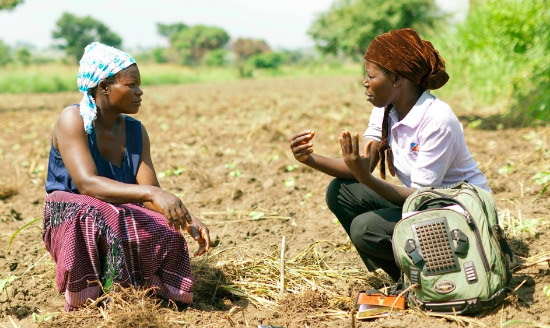
Author: Elizabeth Drachman, June 23 2015 - The “Customer Centric Design for Ag Programs” breakout session at this year’s ICTforAg conference sounded like a simple one. We design programs to help farmers – of course they should be “customer-centric.” Right?!
Well, apparently, no. All too often the programs we design don’t actually fully take farmers’ needs into consideration. In our rush to design a winning proposal, we use simple ethnographics or read reports and base our tech on that.
But performing actual useful customer-centric design research can be a tough sell, not only with our clients or donors, but even within our own organizations.
User-centric design, UX, human-centered design - or whatever cool name you want to give it - goes beyond traditional market research. The panelists leading this breakout session agreed that, in the end, doing proper customer-centric design yields better results.
UX is better than market research
“When we used a UX approach, we learned what barriers exist, we learned about motivations - none of this was in our proposal,” says panelist Alejandro Solis who works for DAI [Development Alternatives, Inc.] on the CATIE-led [Tropical Agricultural Research and Higher Education Center ] and USAID-funded Regional Climate Change Program (RCCP). Solis says the UX approach allows the project make prototypes easily and quickly. “We test our apps with those actors we know and then we can adapt from there.”
Panelist Amitabh Saxena makes the point that true UX is “end to end.” “A lot of design thinking is just the design, but many programs need full hand holding all the way. Market research doesn’t go deep enough because they don’t have sector expertise,” says the Managing Director of Digital Disruptions.
Start internally
Grameen Foundation’s Whitney Gantt says winning over your own people is the first step. For Grameen, the foundation has an internal user design working group, or practice, that advocates for the method and shares lessons learned from the field. “We have learned a lot about iteration,” she says. “Getting your product into people’s hands and see how they use it - then adapt from there.”
Show me the money
User design is “not a cheap process - and it can be very time-consuming,” adds Solis. “It’s a long observational process, but you get quality insights that you cannot get otherwise. If you invest a bit more into this process to get these insights, you will save money in the development phase. That’s another way to get buy-in.”
It helps of course when you have in-house talent. Solis says the RCCP team has developers on hand who can make constant tweaks to the project’s ICT [informatoin and communication technology] tools.
Look into the mirror
The Grameen Foundation uses internal processes to show organizations not only how they can design the perfect product but how they too need to adapt their own internal structure to successfully implement the project. “We also have to work with the owner of the business that is selling or providing the service to the end users,” says Whitney. “The product needs to be usable for them as well.”
A similar point was made later in the day at ICTforAg: If we as purveyors of products aren’t also users of the product, how can we possibly advocate for said product?
Elizabeth Drachman is Communications Manager at DAI [Development Alternatives, Inc] and manages the @DAIGlobal Twitter account.
Click here to access this ICTWorks/Inveneo blog, originally published on the ICTworks website.
Image credit: ICTWorks
- Log in to post comments