










































"We Are the Heroes Because We Are Ready to Die for this Country": Participants' Decision-Making and Grounded Ethics in an Ebola Vaccine Clinical Trial
College of Medicine and Allied Health Sciences (COMAHS), University of Sierra Leone (Tengbeh, Leigh); University of Bath (Enria); London School of Hygiene and Tropical Medicine (Smout, Mooney, Callaghan, Ishola, Watson-Jones, Greenwood, Larson, Lees); Mwanza Intervention Trials Unit (Watson-Jones)
"Taking subjective assessments seriously...not only helps us understand possible tensions between clinical and social ethics but also to see what determines participation in a vaccine trial where vaccine hesitancy is prevalent."
This paper analyses participant motivations for volunteering for an Ebola vaccine trial, EBOVAC-Salone, and to consider the implications of such motivations for clinical research ethics and community engagement in trials in low-resource settings. The discussion is based on research carried out in Kambia, Sierra Leone, between August 2015, as the trial was being set up and as the epidemic was ongoing but reaching its final stage, and July 2016, as the second stage of the trial had begun for adult participants and four months after the last official declaration of the end of the epidemic. Through ethnographic methods, interviews, and life narratives, the researchers explored the subjective experiences of participants in the early stages of this trial. They asked why, in an environment of fear, rumours, and mistrust, Kambians volunteered to take part in the trial.
In so doing, they build on existing literature on research ethics in resource-poor settings to consider how experiences with the health emergency caused by Ebola in West Africa can help shape ethical approaches that take social, political, and economic contexts seriously. The paper reviews some of this literature, as well as existing research on immunisation programmes and risk communication, which offers a framework for thinking through motivations.
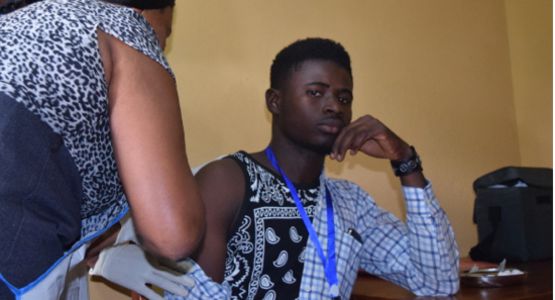
The project used qualitative research methods to explore community and participant perceptions and experiences of the trial. The methods included: ethnographic observation in Kambia's social grounds like attaya bases (tea shops), market places, and local bars, as well as in the vaccine clinics, to learn about participant experiences; exit interviews (200) conducted at the trial clinics with study participants immediately after visits; in-depth interviews (42) and life narratives (4) with participants; focus group discussions with both trial participants (4) and community members (4); and key informant interviews (31) to explore community and participant perceptions and experiences of the EBOVAC-Salone trial.
The research revealed that one common rumour about EBOVAC-Salone was that the vaccine was a form of "slow poison" that might give participants Ebola or another unknown disease. The trial's requirement that participants give blood between eight and ten times similarly meant that the fears about blood stealing that emerged during the outbreak were easily transferred to the vaccine trial. In addition, tensions emerged around the "incentives" offered for taking part in the trial.
The researchers find that rumours are not simple misunderstandings but, rather, reflective of people's social and political realities, ranging from mistrust of a dilapidated national healthcare system to ambivalence about the role of international actors in Sierra Leone's affairs. Mistrust of clinical research in Kambia has deep roots in the history of failed promises from the Sierra Leonean healthcare sector. The epidemic, in other words, did not generate, but exacerbated a profound sense of mistrust of healthcare facilities, health professionals, and Western intervention.
Next, the paper describes how, in Kambia, rumours and anxieties informed how participants understood the risks they were taking. In participants' reflections on their decision-making processes, four main themes emerged:
- Altruism: The notion of sacrifice, used by several participants, was emblematic of the convergence of altruism with a perception of high risks associated with the study. The language of sacrifice was used in particular by those who saw themselves, and were recognised by others, as leaders in the community, such as pastors and imams, traditional heads, and other respected personalities. The idea that leaders should be the first to "sacrifice" for their communities was supported by assertions that if community leaders put themselves forward for this study and came out unscathed, others would join.
- Curiosity and hope: When talking with study participants specifically about their decision to take a vaccine with uncertain consequences, some emphasised an element of curiosity and a wish to explore something new and potentially dangerous. Many sought certainty in religion and explained their participation through faith in a higher power. Others pinned their hope on a tentative expression of trust in the government as gatekeepers of research.
- Health seeking and beliefs about the vaccine's powers: Especially after the epidemic was declared officially over, some participants' motivations were rooted in a more generalised belief that the trial and the vaccine itself symbolised an ideal of good health and that participating therefore meant taking care of one's health. The health-checks that participants had to undergo to determine their eligibility for the study were often perceived to be of higher value than the vaccine itself, and the provision of free healthcare for non-chronic conditions for those involved in the trial was a significant motivation for Kambians to join.
- Expectations and notions of exchange: An often-cited reason for joining the trial was a kind of perceived opportunity, expressed in terms of expectations about what might happen once the vaccine trial was over. These expectations were deeply rooted in notions of reciprocity, which suggested that one could reasonably expect altruistic behaviour or bravery to be rewarded in the future.
In reflecting on these findings, the researchers suggest that, even when participants dismissed rumours that emerged during the epidemic, mistrust informed their estimations of the level of risk they faced. "[P]articipants' self-reported motivations for joining reveal their efforts to create alternative, socially shared narratives based on hope, optimism and a sense of commitment to one's community. Community engagement teams and trialists cannot predict the acceptability of clinical research. However, they can take social acceptability seriously by engaging with rumours as social commentary, understanding how they shape fears but also how they are challenged through the creation of alternative narratives....Taking seriously fears and perceptions of risk alongside notions of hope, altruism, and expectations of exchange, helps us paint a more complex picture of motivation and choice somewhere between pure volunteerism and the participant as paid labour. Discussions of the practical ethics of incentivising participants for joining a clinical trial in low-income settings rarely take into account the intangible motivations (e.g. status) that shape individual decisions for taking part."
The researchers stress in the discussion section how the grounded ethics approach their research has illustrated takes emotional and belief-driven factors into account and considers how value is socially created at both the individual and collective level. This has implications for practical matters of securing informed consent and "contemplating how clinical trial protocols and ethical standards might interact with the realities of political economy in the places where they occur. The hope that participants held regarding employment by the trial might seem entirely misplaced in a resource rich context, but in Sierra Leone where the formal wage employment rate is below 10% and where employment is seen as being gained through recognition and reciprocity, this takes on a different meaning....Understanding these dynamics can help make clinical trial protocols and ethical guidelines more socially relevant, ensuring that the fundamental principles that underpin research ethics are reflected in practice."
In conclusion, "the reasons outlined by the EBOVAC-Salone participants emphasise the need to consider what motivates individuals to take part in a clinical trial, taking into account that these reasons are socially situated and context-specific. In particular, research during and after the outbreak revealed how perceptions of risk are influenced by social engagements with the epidemic. This has important implications for how we think about research ethics across vastly different settings and how we design mechanisms for participant recruitment and messaging."
Social Science & Medicine Volume 203, Pages 35-42. DOI: https://doi.org/10.1016/j.socscimed.2018.03.008. Image credit: Alexandra Donaldson
- Log in to post comments