










































Attitude and Subjective Wellbeing of Non-compliant Mothers to Childhood Oral Polio Vaccine Supplemental Immunization in Northern Nigeria
World Health Organization, or WHO (Umeh, Nomhwange, Shamang, Zakari, Musa); Kaduna State Ministry of Health (Dogo); Emergency Operations Centre, or sEOC (Gugong); Kaduna State Primary Health Care Agency (Iliyasu)
"Negative attitude to OPV supplemental immunization has likely influence on mothers' immunization seeking behaviors and may contribute to non-compliance to OPV supplemental immunization in Northern Nigeria."
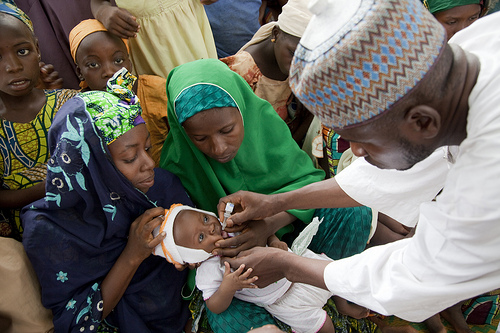
The purpose of the study was to determine the role of mothers' attitude and subjective wellbeing on non-compliance to oral polio vaccine (OPV) supplemental immunisation in Northern Nigeria. In that country, routine immunisation (RI) is fraught with many challenges, including negative attitude to immunisation and neglect of health promotion and disease prevention activities, with OPV 3 coverage in Northern Nigeria less than 80%. The failure of RI has led to OPV supplemental campaigns, and this strategy has met with stiff resistance and high numbers of non-compliance from parents, clerics, and some opinion leaders in many communities in Northern Nigeria. The boycott of polio vaccination in mostly northern communities in 2003, due mainly to unsubstantiated safety concerns and politics, was a major setback in interrupting wild poliovirus (WPV) circulation in Nigeria.
Participants for the study were randomly sampled from a line-list of non-compliance households over 3 campaigns of OPV supplemental immunisation campaigns, and a compliant group of comparable size, socioeconomic status, ethnicity, language, age, and setting was also randomly sampled from the same settlement (Risaga, an urban community). A non-compliance household was defined as one where a caregiver had refused OPV during at least one supplemental immunisation campaign and remained unresolved at the time of this research was eligible. An equal number of 198 non-compliant and compliant mothers took part in the study, from 94 out of 462 non-compliant settlements.
Attitude was measured with VACSATC (Vaccine Safety, Attitudes, Training and Communication) & SUBI (Subjective Wellbeing Inventory) measures. VACSATC is based on 10 core themes: source of information; experience; refusal; doubts; safety; future; trust; satisfaction; health importance; and understanding of vaccination. SUBI is a 40-item measure that assesses 11 factorial dimensions: general well-being-positive affect; expectation-achievement congruence; confidence in coping; transcendence; family group support; social support; primary group concern; inadequate mental mastery; perceived ill-health; deficiency in social contacts; and general well-being-negative affect.
The research showed a significant difference in mean scores between the non-compliant and compliant group on overall scores on VACSATC 10 items measure of mothers' attitude to childhood OPV immunisation (M = 18.9 non-compliant, compared to 26.5 compliant group; p < 0.05). Non-compliant mothers were least satisfied with immunisation services and more likely to refuse vaccines offered them due to doubts and worries about vaccine safety. On subjective well-being, the study showed there was no significant difference in the mean scores of the SUBI measure (M = 77.4 non-compliant, compared to 78.0 compliant; p > 0.05). This may be due to the fact that the non-compliant households and the comparable compliant households were sampled from the same settlement.
Respondents' main sources of information about vaccination include: health worker, radio, television, mosque announcement, traditional leaders, town announcers, newspapers, posters/leaflets, banners, relatives/neighbours, Voluntary Community Mobilizers (VCMs), and Polio Survivors Groups (PSGs). The most common source of information about vaccination was radio (non-compliant 38.8% and compliant 39.0%). Anecdotal evidence showed that most households have radio in the homes, and most health related information is disseminated to the people using the local radio stations. The most trusted source of information was the health worker in (36.0%) and (38.2%) of non-compliant and compliant groups, respectively (M = 1.24 non-compliant, and 1.30 compliant group; p > 0.05).
Looking ahead, the researchers suggest that "The government in collaboration with partners and experts should support intervention studies to fully understand factors that may be responsible for non-compliance to childhood OPV supplemental immunization in Northern Nigeria and beyond. These interventions may include one-on-one talking therapy/counseling for a mother or group of mothers in a settlement/community on the benefits, side effects, costs, accessibility and other concerns about childhood OPV supplemental immunization. The counseling/communication should combine behavioral approaches/modified Cognitive Behavioral Therapy (CBT) directed systematically at the core negative attitude through gradual and sequential unraveling of the negative thoughts, biases and dysfunctional assumptions about childhood OPV supplemental immunization rendered by a trained nurse or social worker."
BMC Public Health (2018) 18: 231. https://doi.org/10.1186/s12889-018-5126-1. Image credit: News in Africa
- Log in to post comments