










































A Narrative Engagement Framework to Understand HPV Vaccination Among Latina and Vietnamese Women in a Planned Parenthood Setting
University of California (Hopfer, Garcia, Duong); Planned Parenthood (Russo); California State University (Tanjasiri)
Disparities in cervical cancer and human papillomavirus (HPV) vaccination persist among Vietnamese and Latina women in the United States (US). Contending that health communication studies aimed at identifying indicators of health disparities are needed, this group of researchers used narrative communication theory to engage women in an effort to increase awareness about the availability of HPV vaccination among historically underserved Vietnamese and Latina young adult women.
Narrative is defined here as "linguistic construction of significant experiences, or talk organized around significant or consequential experiences with characters undertaking some kind of action....Narrative inquiry allows us to expand our understanding of the context and environment in which women's vaccine decisions are made. Narrative communication theory emphasizes attending to how stories are told, what language is used by women in their decision stories, and what people, conversations, and experiences they include in their stories to explain the degree to which various determinants are weighted among young adults when making health decisions - in this case vaccinating."
Through a partnership with Planned Parenthood of Orange and San Bernardino Counties (PPOSBC) in Southern California, US, the researchers conducted in-depth interviews with young adult Latina (n = 24) and Vietnamese (n = 24) women ages 18 to 26 years, and PPOSBC staff (n = 2). They purposively sampled vaccinated women to elicit HPV vaccine decision narratives to uncover data on motivators, cultural values, and implicit vaccine attitudes. Unvaccinated women were interviewed to identify barriers. Women were also asked to discuss their observations of men's HPV vaccine attitudes.
Vaccine decision narratives included:
- Mother-daughter narratives: When asked to describe their decision to vaccinate, 63% (n = 15) of Latina and 46% (n = 11) of Vietnamese women included conversations with their mothers and described ways in which their mother-daughter relationship influenced their vaccine decisions.
- Practitioner recommendation of HPV vaccination: Among vaccinated Latina women, 38% (n = 6) explicitly cited provider influence as the primary reason they chose to vaccinate, while 81% (n = 13) of the vaccinated Vietnamese women's decision stories included descriptions of conversations with a health care practitioner as the reason for vaccinating.
- Independence narratives among Vietnamese women: Several women talked about their belief in the value of protecting themselves, being accountable for their own health, and valuing their independence to make decisions about their own health - even when this clashed with their family's views.
- HPV (un)awareness narratives: Misconceptions and unawareness about HPV were evident in women’s stories, including confusing HPV with HIV, not knowing that HPV is a sexually transmitted infection, and thinking that HPV testing is readily available.
- School exposure to HPV knowledge: Women (33% of Vietnamese and 17% of Latina) included in their vaccine decision stories learning about HPV and the vaccine in school settings.
Barriers to vaccinating included trust in partner HPV status, and family silence and stigma about sexual health. Related to the latter issue, Latina women in the study recognised a gap in family communication about sexual health. Although they perceived high parental concern about unplanned pregnancies, they stated parents do not communicate appropriate prevention measures. Women also stated they believe that parents prioritise unplanned pregnancy prevention above HPV cancer prevention, another health topic that is not discussed among family.
Latina and Vietnamese women described their impressions of low HPV awareness among men, and their impressions that men would be unlikely to act on preventive health behaviours. Several Latina women referred to this as "machismo" values. Participants conveyed the importance of including messages aimed at reaching men.
The qualitative inquiry with PPOSBC practitioners suggests that more patient education about which health services are covered by the Affordable Care Act would be helpful, particularly if it were provided in a clear and culturally sensitive fashion. In addition, continuing school-based programmes may help mitigate the cultural barriers that can impede women from vaccinating, and policies supporting these types of programmes inherently promote health equity by providing equal access to sexual health education.
The researchers reflect that, similar to previous studies, in many of the Latina and Vietnamese women's vaccine decision stories, practitioners' HPV vaccine recommendation was the key reason why women got vaccinated. Practitioners should be aware, however, that some families may know very little about HPV vaccination, or may associate it only with sexual activity, leading to potentially stigmatised discouragement. The findings suggest that if vaccine hesitancy is encountered by clinicians, in particular among mothers who accompany their daughters, clinicians may benefit from exploring in a discussion the family environment. "Although many Latino and Vietnamese families still perceive of the HPV vaccine as a taboo topic associated with sexual activity, discussing and recommending HPV vaccination as cancer prevention and as a routine part of preventive care normalizes vaccination and lessens the potential for stigma associated with vaccinating."
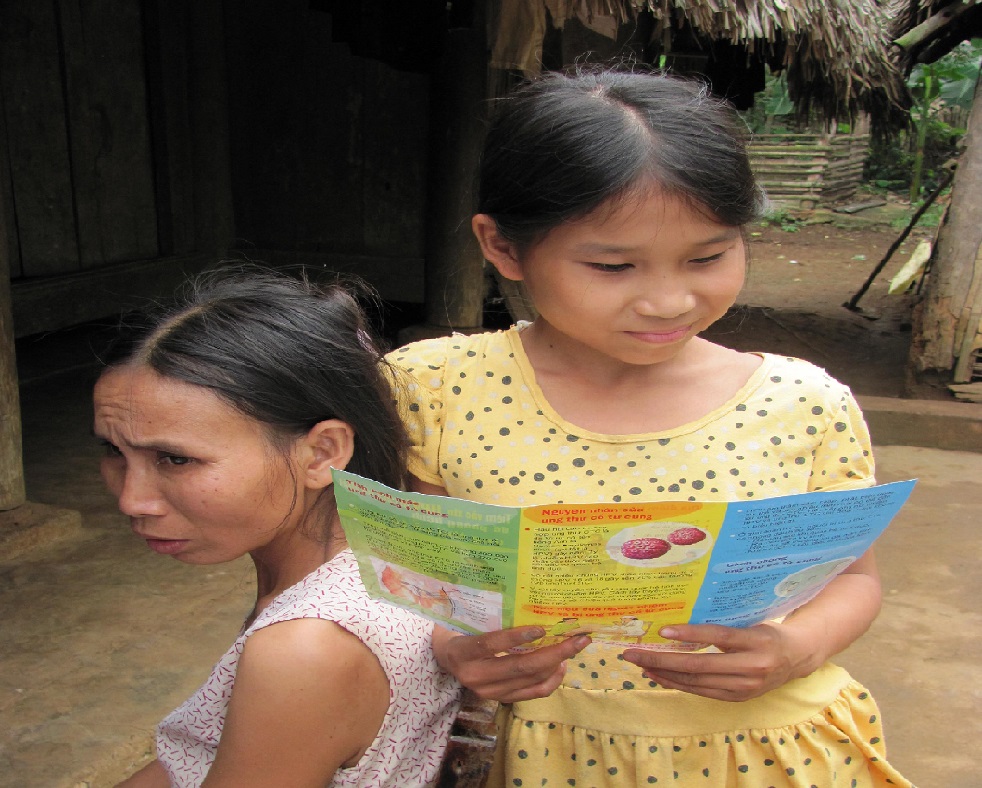
Health Education and Behavior. 2017 Oct; 44(5):738-747. doi: 10.1177/1090198117728761. Image caption/credit: A Vietnamese girl reads the leaflet provided to her before receiving the cervical cancer vaccine, as her mother anxiously awaits the procedure. © 2010 Amynah Janmohamed, Photoshare
- Log in to post comments