










































Key Actors: Research Project: Understanding Attitudes to Immunisation in Nigeria
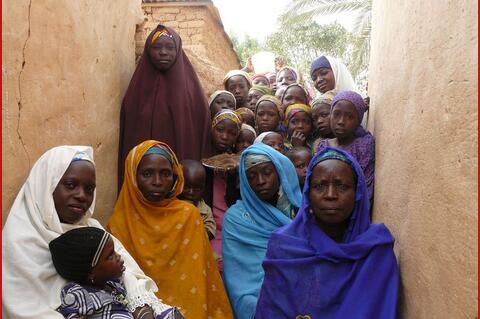
Below are the key participants in a study on polio immunisation in Nigeria conducted under the aegis of Nigerian National Primary Health Care Development Agency (NPHCDA) in consultation with the Nigerian Polio Eradication Programme partners, including: the Federal Emergency Operating Centre (EOC) and relevant state EOCs, the World Health Organization (WHO), the United Nations Children's Fund (UNICEF), the Centers for Disease Control and Prevention (CDC), and CORE. It was led by Dr. Sebastian Taylor, the Principal Investigator (PI), with field research managed by Public Health Solution Services (PHSS) and its Director, Dr. Mizan Siddiqi. The purpose of this study is to identify, quantify, and analyse the combined effects of social and material factors, at the micro-level, that appear to associate with incidence of missed children by household in a given community.
- Dr. M. Mahmud Khan is the Chair of the Department of Health Services Policy and Management at the Arnold School of Public Health, University of South Carolina (United States) and is recognised nationally and internationally for his expertise in healthcare economics and finance. Professor Khan was responsible for statistical design and guidance, analysis, and interpretation. [Contact: mkhan@mailbox.sc.edu]
- Dr. Sebastian Taylor is an institutional development and policy specialist with expertise in governance and health and experience in fragile and conflict-affected contexts and is the Head of International Operations, Royal College of Pediatrics and Health: Global. He has worked throughout East, Southeast, and South Asia as well as West and Horn of Africa. His work focuses on social equity - using health as a lens - and its relationship with social stability, conflict prevention, and socio-economic development. Between 2001 and the present, he has provided analysis and advice on socioeconomic, political, and cultural factors affecting the global polio eradication programme. [Contact: saep53@hotmail.com]
- Jhpiego is an international health organisation affiliated with The Johns Hopkins University (United States), has, as of 2014, maternal and newborn health programmes in 40 countries in Africa, Asia, and Latin America. Jhpiego partners with "ministries of health and hundreds of international and local organizations to address the barriers to use of high-quality maternal and newborn health care from the household to hospital. Our collaborations focus on an expanding range of critical technical interventions - drawing on our clinical expertise in obstetrics/gynecology, midwifery and newborn health - to increase access to skilled providers who, utilizing a framework of respectful maternity care, can deliver evidence-based interventions." [Contact: info@jhpiego.net]
- John Snow, Inc. (JSI) and JSI and its nonprofit JSI Research & Training Institute, Inc. are "public health management consulting and research organizations dedicated to improving the health of individuals and communities throughout the world....JSI is deeply committed to improving the health of individuals and communities worldwide. We work in partnership with governments, organizations, and host-country experts to improve quality, access and equity of health systems worldwide. We collaborate with government agencies, the private sector, and local nonprofit and civil society organizations to achieve change in communities and health systems." [Contact: jsinfo@jsi.com]
- The Maternal and Child Survival Program (MCSP) is a global, USAID Cooperative Agreement to introduce and support high-impact health interventions with a focus on 24 high-priority countries with the ultimate goal of ending preventable child and maternal deaths within a generation. The programme is focused on ensuring that all women, newborns, and children most in need have equitable access to quality health care services to save lives. MCSP supports programming in maternal, newborn and child health, immunisation, family planning and reproductive health, nutrition, health systems strengthening, water/sanitation/hygiene, malaria, prevention of mother-to-child transmission of HIV, and pediatric HIV care and treatment. [Contact: Pat.Taylor@mcsprogram.org]
- National Primary Health Care Development Agency (NPHCDA) is a parastatal of Nigeria's Federal Ministry of Health with a mandate to develop national primary health care (PHC) policy and to support states and Local Government Areas (LGAs) in their implementation. The stated mission of NPHCDA is to "provide leadership in the promotion and implementation of high quality, sustainable primary health care for all. To support delivery through resource mobilization, partnership, collaboration, development of community based systems and functional infrastructure." [Contact: info@nphcda.gov.ng]
- Public Health Services and Solutions (PHSS) is headquartered in Abuja, Nigeria, with 5 other offices around the world. This private consulting company is dedicated to advancing "public health and build capacity around the world. PHSS provides innovative solution to manage programs and deliver cost effective interventions. Services with Care and Solutions with Innovations are the two core principles of PHSS. Application of latest technology and evidenced based knowledge are central to its service delivery and solution. PHSS mostly support[s] government and international organizations to scale up interventions to achieve Millennium Development Goal (MDG) goals." [Contact: nigeriaphss@thephss.org]
- The Communication Initiative (The CI) is an online platform and network whose purpose is to "convene the communication and media development, social and behavioural change community for more effective local, national, and international development action." [Contact: wfeek@comminit.com]
- United States Agency for International Development (USAID) Nigeria has a history of assistance to Nigeria that dates back to 1960. USAID's "partnership with the people and government of Nigeria continues today with programs that prevent and mitigate conflict, strength government services and institutions, and improve Nigerians' livelihoods. In partnership with the Nigerian people, USAID is unleashing a new spirit of innovation and results-based development. Our success depends on listening and connecting with local leaders and communities, leveraging trust and partnership to support the vital work that remains be done." [Contact: abujainfo@usaid.gov]