










































Exploring School and Classroom Environments in Irish Primary Schools
Economic and Social Research Institute
"Within the research community, there seems to be a general consensus that knowledge about children’s interaction with, and their perceptions of, the built environment can be used to improve the design of children's settings."
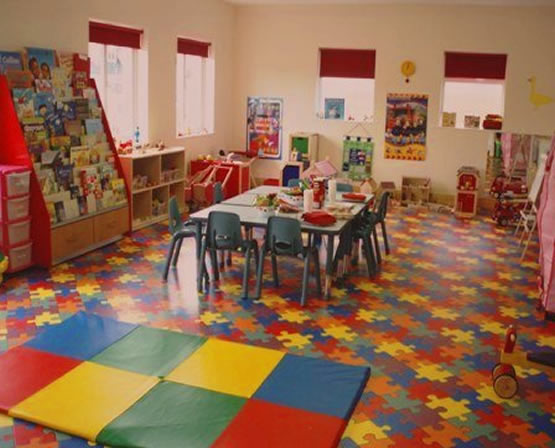
Based on teacher and pupil interviews in primary schools in the Republic of Ireland, this research focuses on the impact of school size, class size and density, and other factors such as light, noise, and heat. It was published in the journal Children, Youth and Environments.
According to the researchers: "...In reality, most 4-5 year olds attend primary school, being enrolled in the junior or senior infant classes. The comprehensive primary school phase covers years one to six and lasts until the children are approximately 11 years of age." School design, or the planning of the built environment for children, ranges in its objectives from "purpose-built" schools to those, sometimes older, buildings constructed for a population whose demographics have changed or for teaching styles that pre-date an era of modern communication technology and varied teaching methodologies.
"The aim of the study is to identify how the built environment affects the ways that teachers and students operate in school. More specifically, it discusses the strengths and weaknesses of existing primary school buildings in Ireland and seeks to identify design and environmental factors that are likely to impact on teachers’ and pupils’ experiences at school. In addition, it attempts to identify factors that may have an adverse effect on the implementation of the ideas put forward in the primary school curriculum, as originally envisaged."
Communication factors include the influence of size of both schools and classes on student and teacher engagement. The research reviewed here suggests that high schools of 600 - 900 and elementary schools of around 300 students may be optimal. "Research evidence suggests that reduced class size in the early years of primary education is positively associated with higher academic attainment and a better attendance record." Class size, as stated here, also influences teacher approaches and disadvantaged student retention in school programmes. Other factors include spatial density (the physical size of the classroom), daylight, and ambient noise, both external noise and student chatter.
Additional data for this study were gathered from six case-study schools used in a previous study of Irish primary schools. Methods included in-depth interviews with key staff members and focus groups with older primary school pupils, while data were added from younger pupils through an exercise of drawing their favourite place in the school coupled with researcher conversation about the drawings.
"The results show that, in particular, social and spatial density was a matter of concern for teachers and pupils alike....Both teachers and pupils tended to favor small or medium-sized schools, which were seen as less impersonal and enabling more attention to be given to each individual pupil....Physical size of the classroom mattered, with teachers and pupils in larger classrooms (an average floor area of 81m2 in line with recent national guidelines) being more satisfied with the space available....Approaches to teaching and learning were seen by teachers as having become more child-centered in recent years, thanks to the revised primary curriculum. However, teachers reported constraints on using the more active teaching methodologies proposed by the curriculum when they had smaller classrooms and/or large numbers of pupils....This study demonstrates that plans to erect new school buildings need to address a number of key factors that may potentially impact teaching and learning activities along with the general well-being of pupils and teachers in the school."
[Editor's note: This article is available by subscription only to Children, Youth and Environments. Those residing in a low-income country may make a request for access to to this specific article by email (see below).]
Children, Youth and Environments Journal, 22(1): 178-197, accessed August 16 2012; and email from Willem van Vliet to The Communication Initiative on December 3 2013. Image credit: Jigsaw Crèche
- Log in to post comments