










































Mama Mkubwa Psychosocial Support Programme
The programme mobilises volunteers to form community-based Mama Mkubwa committees dedicated to identifying and addressing the needs of vulnerable children and families. According to TSA, Mama Mkubwa programme strategies are in alignment with PEPFAR strategies and focus on:
- mobilising and supporting community-based responses; and
- utilising advocacy and social mobilisation to create supportive environments and reduce stigma and discrimination.
The following key activities are designed to accomplish programme goals, and are planned and implemented by community members with support from TSA field staff:
Mama Mkubwa committees
Programme implementation begins with the formation of community Mama Mkubwa committees. TSA field staff members conduct initial community mobilisation activities and facilitate Mama Mkubwa committee formation. Committee volunteers are selected by community leaders and committee size is generally dependent on village size, ranging from fewer than 10 to more than 30 members. Volunteer committee members carry out activities to reach families, children, and their community to benefit OVC and their caregivers. To strengthen committee capacity to support children and families and facilitate community mobilisation, one representative from each committee participates in a five-day regional training conducted by TSA staff. Training covers psychosocial support topics, community counselling techniques, and kids club guidance. Training attendees are expected to share knowledge and ideas from training with fellow committee members. Sub-committees are generally formed to define member responsibilities and commonly include home visiting, community counselling, kids clubs, youth/kids committee, and treasury/financial.
Kids clubs
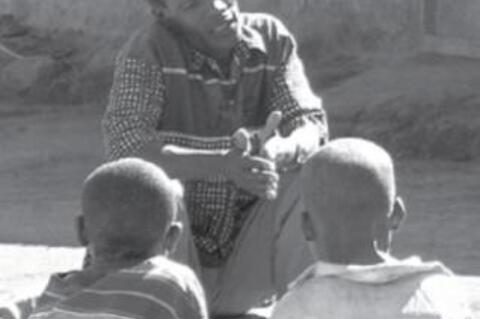
Kids clubs provide a forum to deliver psychological, social, and emotional support to OVC, and are open to all children and youth in the community. On average, kids clubs are held twice a week. Participants are generally children of primary school age (aged 8 to 14 years), however, there are no age restrictions and clubs generally serve additional participants aged 4 to 7 years and may have post-primary-school-age attendees. Each club is expected to have no more than 40 children, and therefore villages may have more than one club. Kids club activities vary widely among communities as volunteers are encouraged to form their own agendas grounded in training on foundational topics (i.e. psychosocial support, community counselling, Journey of Life, OVC needs, volunteerism). For many communities, kids clubs entail organised recreational activities. Other communities may utilise club meetings to teach children life skills, traditional games, song, dance, handicrafts, and local trades. Some volunteers divide children into small groups and facilitate discussion and collaborative problem solving.
Home visiting
Home visits to OVC and their families are conducted by Mama Mkubwa committee members and provide a mechanism for delivering psychosocial support, referral, and any material support the committee or community is able to provide. Families are identified to receive home visits by committee members based on local definitions of vulnerability. Volunteers spend initial home visits building relationships and trust with families and asking questions to assess needs. Subsequent visits provide ongoing supportive listening, encouragement, problem solving, and monitoring of the family and their needs. Volunteers are encouraged to visit a client twice a month. Whereas kids clubs focus support and attention on children and youth, the focus of home visits is typically on supporting parents or guardians. Volunteers typically inquire about the well-being of family members, and provide encouragement and problem solving.
Community counselling
Community counselling is designed to be an avenue for advocacy and resource mobilisation, and occurs through volunteer-initiated meetings with local leaders and community members. Community counselling meetings can take place as part of other community meetings, such as those led by village leaders. At these meetings, community leaders give a platform to the Mama Mkubwa committee as well as legitimacy to their cause. According to TSA, sensitisation meetings observed in Mbeya Region villages focused on the situation of vulnerable children without discussing HIV and AIDS, however other communities reportedly have a stronger focus on sensitising and mobilising the community around HIV and AIDS issues. Some committees utilise community meetings to deliver material support to families in need, such as school materials and uniforms. As most of the material support provided to OVC and their families comes from community contributions, distribution during community meetings has tended to accomplish both transparency to the community regarding usage of their contributions and reportedly engenders a sense of community support in the recipient.
Services
Services provided by Mama Mkubwa volunteers may differ depending on volunteers’ creativity, commitment, skills, knowledge, and interests, but can generally be outlined as follows:
- Psychosocial support: Services include counselling and peer support provided during kids clubs. Small group discussions may be utilised during kids clubs to foster peer support and problem solving.
- Education support: Education support is provided to the extent that communities identify it as a need and are able to provide it. School materials, uniforms and/or fees may be given to a limited number of children if mobilised and distributed by the committee.
- Health service provision: Health service provision is limited to HIV and AIDS prevention education and is provided to the extent that committees possess knowledge and are comfortable with sensitisation and community education. Where committee members are knowledgeable and comfortable, prevention education is provided during community meetings, home visits, and kids clubs.
- Family services: Family services include support and counselling to parents and guardians during home visits. Volunteers may offer advice, OVC care and support strategies and information, and encouragement to continue supporting orphans.
HIV/AIDS, Children
According to TSA, children affected by HIV and AIDS often live in households undergoing dramatic changes including intensified poverty; increased responsibilities placed on young members of the family; poor parental health that may increase emotional or physical neglect; stigma and discrimination from friends, community members, or extended family; and parental death. These changes often result in reduced household capacity to meet children’s basic needs. At the local level, many communities in Tanzania have not been sufficiently mobilised to address the needs of vulnerable children and their families. Response to the needs of OVC will require greater emphasis on strengthening community-based action mobilised through community dialogue.
The Salvation Army, United States Agency for International Development (USAID), President's Emergency Plan for AIDS Relief (PEPFAR).
AIDS-Star One website and Mama Mkubwa Psychosocial Support Program Case Study [PDF] on August 7 2012.