










































Research to Prevention (R2P)
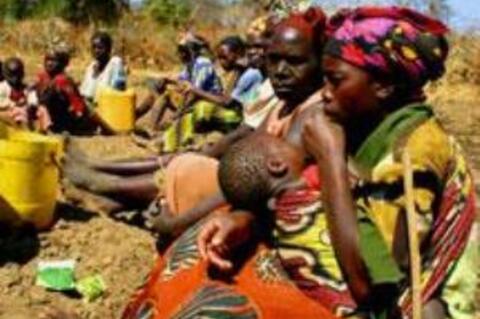
Research to Prevention (R2P) is a five-year HIV prevention project (2008-2013) funded by the United States Agency for International Development (USAID). R2P is led by the Johns Hopkins Center for Global Health and managed by Center for Communication Programs (CCP). R2P seeks to answer the question: What are the most effective interventions for preventing the spread of HIV? R2P aims to promote greater use of evidence in the design and implementation of HIV prevention programmes in countries most affected by the HIV epidemic. In partnership with organisations in developing countries, R2P conducts research to identify the most effective interventions for preventing HIV, promote increased use of data to guide programmes and policies, and build capacity for applied research among health professionals.
Through its Small Grants competition, R2P seeks to build the capacity of researchers based in the developing world to conduct applied research. The R2P grants support research costs involving staff time and training, and travel and data collection.
In addition, R2P ran a one-week training course (September 20 – 23 2010) for all Small Grant awardees in Baltimore, Maryland, United States. This course provided training on qualitative and quantitative research methods, research ethics, and translating research findings into interventions. Grant awardees also receive ongoing, on-site technical assistance from an epidemiologist with experience working with men who have sex with men (MSM) at the Johns Hopkins Bloomberg School of Public Health. At the end of the one-year grant period, the recipients of the small grants are expected to produce a final technical report on study implementation and key research findings as well as draft manuscripts for peer-reviewed publications.
Additional projects include:
- "Conducted formative research projects on sexual concurrency in Malawi, Tanzania and South Africa, and drug users in Guatemala.
- Secured Mission-supported funding for additional research projects in Botswana (alcohol and HIV risk), Mozambique (evaluation of a multiple concurrent partners campaign), and Swaziland (most at risk populations, including sex workers and men who have sex with men).
- Developed fact sheets synthesizing key research findings on six of the most used HIV prevention interventions.
- Completed three locally led research studies on alcohol and HIV in the DRC [Democratic Republic of Congo] , Ethiopia, and Vietnam. Awarded three grants to local researchers from Kenya, Senegal, and South Africa to conduct research and prepare peer-reviewed publications for studies on men who have sex with men (MSM) and HIV. The awardees attended a workshop in Baltimore in September 2010 where they presented their proposals and received feedback and additional training from R2P staff and expert JHU faculty.
- Completed final qualitative research reports on HIV and multiple concurrent partnerships in Tanzania and Malawi; and HIV and drug users in Guatemala."
HIV and AIDS
Johns Hopkins Schools of Public Health, Medicine and Nursing, Tulane University, the Medical University of South Carolina, and the University of North Carolina, and various partnership organisations in developing countries.
JHUCCP website, September 22 2011. Image © 2007 Nathaniel Segaren, Courtesy of Photoshare
- Log in to post comments