










































Project Masihambisane
Project Masihambisane seeks to assess the impact of the "mentor mother" intervention by following participants' infants for a period of 12 months after birth. All participants are enrolled from the Department of Health's PMTCT programmes. Participants in 4 standard-of-care clinics receive the Department of Health's PMTCT programme alone. In intervention clinics, the mentor/mother support programme was provided in addition to the PMTCT programme. The project was based on the hypothesis that participating mothers living with HIV will demonstrate significantly improved health-related knowledge, behaviours, and support than HIV-positive mothers who do not receive the mentor programmes.
The mentor/mother intervention uses information, mentoring, and support to help women understand their diagnosis and take control of their health and their lives. The idea is to empower women with practical knowledge and basic psychological and social support. The mentors, who are carefully chosen role models with relevant life experience and empathy, give assistance to HIV-positive mothers and their babies during pregnancy and the baby's first year. The intervention is delivered in 4 visits during pregnancy and 4 visits postpartum (similar to the regularly scheduled health care clinic visits) in a small group-based programme.
The support by the mentoring mother is intended to be practical and covers topics such as: living with HIV, disclosure, and reproductive health; reducing HIV transmission through preventative health and feeding choices and acts; and promoting caring for one's physical and mental health during pregnancy. During the postnatal period, the focus shifts to preparing for, planning for, and parenting one's baby. In addition, health information materials are delivered to all antenatal attendees in both the control and intervention clinics.
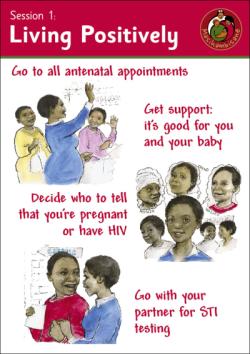
A series of simple teaching and learning materials were designed for the project. These include a pregnancy health booklet and picture-based information cards which participants can take away to remind them about the important components of their pregnancy care. Some cards inform mothers on how to apply for a child support grant, how to make a decision about breastfeeding, and how and when to take their medication. There is also a prompt card which the mother-to-be can carry with her to hospital for delivery which states that she is HIV-positive and lists the drugs she and her baby need to take to lessen the danger of the baby becoming infected.
The project also involves the collection of data from participants by means of face-to-face interviews at several points during the assessment period, with over a thousand data elements captured per participant in total. In addition to interviews, information from other clinic sources is captured, as are clinic and session attendance indicators. A team of 18 female fieldworkers collect data daily across the 8 clinics using standard Nokia handsets loaded with the Mobile Researcher application. This cellphone system allows information to be collected with minimal cost and infrastructure from participating clinics. Using cellphones and a mobile J2ME application, field staff then send the survey data through to a centralised database.
HIV/AIDS, Maternal Health, Child Health
The Human Sciences Research Council (HSRC) of South Africa supports development nationally, in the Southern African Development Community (SADC), and in Africa. It primarily conducts large-scale, policy-relevant, social-scientific projects for public-sector users, non-governmental organisations (NGOs), and international development agencies, in partnership with researchers globally, but specifically in Africa.
Center for Community Health at the University of California; and Child, Youth, Family and Social Development Program of the Human Sciences Research Council in South Africa.
Populi website, Project Masihambisane Description [PDF], and The Witness Article, January 2009 [PDF] - all accessed on January 13 2010; and Project Masihambisane website, November 2 2010.
- Log in to post comments