










































Kontax

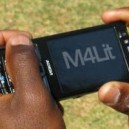
The m4Lit project works to explore whether teens are interested in reading stories on their cellphones, whether and how they write using their cellphones, and whether cellphones might be used to develop literacy skills and a love of reading. Organisers say that through Kontax, readers will be able to access a teen-focused narrative from their Wireless Application Protocol (WAP)-enabled cellphones or from their computers. Readers are invited to interact with Kontax as it unfolds on their cellphones. They can vote on and discuss the progressing plot, leave comments, download wallpapers, and submit written work as part of a competition, with airtime prizes available for winning submissions.
The story, which is about the adventures of a group of teenage graffiti writers, is published in both English and isiXhosa to increase accessibility to a broad range of South African teenagers, aged 14-16 years. In the story, artist Sbu hits it off with a girl at a party, but she suddenly disappears, leaving him with her cellphone and her first name. Who is she? Where did she go? And why doesn’t anyone on her cellphone contact list know her? Sensing she is in danger, the Kontax crew uses every idea they can think of, and all their skills and connections, to track the missing girl.
The chapters can be read online in English and isiXhosa.
According to the organisers, the Kontax strategy has advantages and disadvantages:
- Advantage: To a large extent, learners in South Africa do not read books or write, one of the reasons being a shortage of books. Kontax offers an alternative solution, based on high cellphone usage amongst youth.
- Disadvantage: One potentially negative impact of mobiles for literacy is around text speak - or "txtspk". Most written communication on cellphones doesn’t follow the traditional norms of the written language, but is rather based on emergent practices of abbreviations, shortenings, and letter-number combinations, i.e., gr8 for great. It is still questionable whether txtspk is responsible for the degradation of spelling and grammar amongst today's youth, or whether it encourages writing that is economical, inventive, and playful - and even improves phonetic awareness - thus making it a positive practice.
As part of the research component of this project, interviews with teens in Cape Town before and after the publishing of Kontax will establish to what extent this project changes South African learners' attitudes to reading and writing, what learners think about m-novels, and whether the mobile medium as a literacy tool interests or excites them.
Since the launch of Kontax a full set of research reports on the pilot phase has been published. Click here to access these reports.
By May 2010, another story had been published in the series, called Kontax 2: The Big Win on the mobisite and on MXit, a popular mobile instant messaging service based in South Africa. From launch to end of May, the following statistics apply to the two stories:
- Over 34,000 reads of the stories.
- Over 4,000 entries in the writing competitions.
- Over 4,000 comments left by readers on individual chapters.
Given the positive uptake of the project, and its demonstration that mobile phones are a viable distribution platform for longer form content, and for enabling reader participation, m4Lit is expanding the content offering to more stories under the name Yoza. Yoza will launch in August 2010 with stories in the HIV/AIDS, teen chick-lit and soccer genres, with the intention to grow the story base and develop a vibrant community of readers. Yoza will be available at here and on MXit in MXit Cares > BookMobi.
Click here to follow the M4Lit project or stay connected through Twitter.
Literacy, Youth
According to the organisers, Kontax follows the success of audience participation in story writing found in Japan, where teens have been reading and writing novels on their cellphones in this way for a number of years. They say that six out of the top 10 fiction best sellers in Japan in 2008 were m-novels, later printed in book form. The evolution of digital media has had, as stated here, a profound impact on the literacy practices of teenagers from east to west, in the United States (US), where research has shown that through their computers today's teens are reading and writing more than ever, not formally but on blogs, MySpace pages, and via instant messages. Increasingly, SMSs (text messages) and chats on cellphones also form part of the "reading" and "writing" of digital literacy.
In 2006 Steve Vosloo spent a year at Stanford University in the heart of Silicon Valley, California, US, tapping into all these developments in his research on how youth can use digital media to tell stories. Two things became apparent: young people do not only want to consume content, they also want to create, share, and remix it - characteristics of a so-called participatory culture. Secondly, digital media and information and communication technologies (ICTs), whether blogs, videos or mobile phones, are the much loved tools that empower this youth creativity.
According to organisers, the m4Lit project aims not only to explore the potential for increased reading and writing for 21st century teens through mobile phones, but also to introduce a more interactive style of story writing and publishing that holds appeal to the participatory culture of youth. The hope behind the m4Lit project is that by researching the role of cellphones in teen reading and writing, educationalists and publishers can better understand the opportunities and risk for literacy practices presented by mobile phones, ranked as the most popular communication device used by teens.
Email from Renee Conradie to Soul Beat Africa on October 1 2009.
- Log in to post comments