
























Development action with informed and engaged societies

After nearly 28 years, The Communication Initiative (The CI) Global is entering a new chapter. 

Following a period of transition, the global website has been transferred to the University of the Witwatersrand (Wits) in South Africa, where it will be administered by the Social and Behaviour Change Communication Division. Wits' commitment to social change and justice makes it a trusted steward for The CI's legacy and future. 

On the transfer, co-founder Victoria Martin expressed her pleasure to see this work continue under Wits' leadership, knowing that co-founder Warren Feek (1953–2024) would have felt deep pride in The CI Global's Africa-led direction. 

As Wits, we honour the team and partners who sustained The CI for decades and look forward building from that strong base. This includes co-founders Warren Feek (1953-2024) and Victoria Martin as well as La Iniciativa de Comunicación (CILA), which continues independently at lainiciativadecomunicacion.com with links to The CI Global site. We are also eager to forge new partnerships and entertain new ideas as we consider how best to contribute to social and behaviour change in our rapidly evolving environment.

If you are joining the International Social and Behaviour Change Communication (SBCC) Summit in Panama, please join Wits and CILA on Monday, 22 June, to share your thoughts and suggestion for the relaunch of the Communication Initiative. We will be in Pacifica 5 from 12-1:25 for the Refuel, Reflect, and Renew Lunch Series: The Communication Initiative: celebrating a driving force for Communication for Social Change and the way forward. We will reflect on the legacy of Warren Feek and family in creating the Communication Initiative, consider the contributions of CI over the years and then turn our attention towards the future in this dynamic session. 

If you are unable to join us in Panama, we still want to hear from you. Please contribute your thoughts by following this link: https://redcap.link/CommunicationInitiative2026 or reaching out to ci_surveys@commint.com

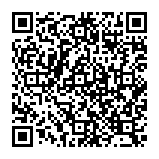
You can also follow the QR Code:

 https://redcap.link/CommunicationInitiative2026

Time to read
1 minute
Read so far

Phone Call Saved Scores of Indian Villagers from Tsunami

0 comments
Affiliation
Digital Review of Asia Pacific
Summary

In December 2004, a tsunami struck the coastal communities of several Asian countries; many of those technicians who saw the disaster approaching were, according to this article, unable to warn communities standing in harm's way - despite the purported power of their information and communication technology (ICT) systems.

However, according to this article, "This was not the case with Vijayakumar Gunasekaran, a 27-year old son of a fisherman from Nallavadu village, Pondicherry on the eastern coast of India, who works in Singapore. He had access only to a radio and television on the morning of 26 December....As the seriousness of the disaster in Aceh sank in he began to worry about the safety of his family living along the Indian coastline facing Aceh. He decided to phone home.

"...[H]is sister answered the phone. She told him that seawater was seeping into their home when he asked what was happening in Nallavadu...He asked his sister to quickly leave their home and to also warn other villagers to evacuate the village. 'Run out and shout the warning to others' he urged his sister.

"Her warning reached a couple of quick-thinking villagers who broke down the doors of the community centre set up by the M S Swaminathan Research Foundation where a public address system used routinely to announce sea conditions to the fishermen was housed. The warning from Vijayakumar, collaborated at this time by a second overseas telephone call from Gopu, another villager working abroad, was broadcast across the village using the loud-speaker system. The village's siren was sounded immediately afterwards for the people to evacuate.

"No one was killed in this village as a result of the timely warnings..."

Source

Posting to the Global Knowledge for Development (GKD) list server on January 4 2005 (click here for the archives).