











































Changing Harmful Sociocultural Norms that Promote Gender-Based Violence: Peer Education Guide for Male Champions
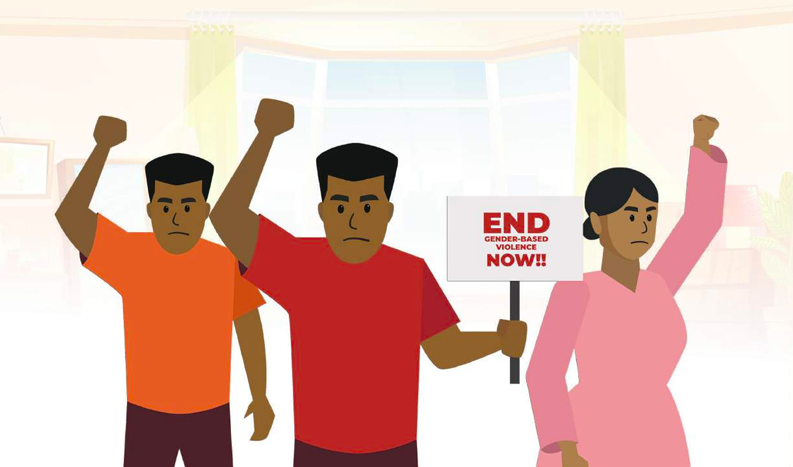
"We believe that men are key stakeholders in the fight against gender-based violence, hence, we are partnering with them to achieve this objective."
This guide is designed to be used by male peer educators to promote change in harmful socio-cultural norms and practices that promote gender-based violence at the community level. It addresses physical, sexual, psychological and economic abuse, as well as issues such as child marriage and female genital mutilation. The guide was developed by the Teenage Education and Empowerment Network (Teenage Network) in Nigeria with support from ActionAid Nigeria as part of the Strengthening Indigenous Communities to Promote Girls' Rights project.
As explained in the guide, "Violence against women and girls is real; women and girls endure different forms of violence and discriminations in every society irrespective of status and location. They face multiple, often sustained forms of verbal, physical, sexual, psychological, and economic abuse with immediate and long-term impacts such as trauma, disability and even death. In Nigeria, 3 in every 10 Nigerian women have experienced physical violence by age 15 through different forms- physical, mental, sexual assault or through early or forced marriages'. Violence against women and girls therefore remains one of the most widespread violations of women and girls' human rights. It is a hindrance to the realization of the objectives of equality, development, and peace....Addressing violence against women and girls requires us to be strategic and deliberate." Men and boys are critical actors in this strategy. While men can be perpetrators, as well as enablers and sustainers of social norms that exacerbate violence against women and girls, they can also be agents of social change - as champions of women's and girl's rights. This is especially the case at community level, where peer educators have an important role to play.
Peer educators who form part of this initiative are trained change makers and advocates against gender-based violence who hold masculinity sessions with men within their communities, sharing knowledge and resources on preventing gender-based violence, correcting harmful socio-cultural norms and beliefs, and motivating men to take action to end gender-based violence in their communities.
The peer educator sessions outlined in this guide are designed to be participatory, building upon the existing knowledge the peer educators gathered during the Men's Circle activity of the Strengthening Indigenous Communities to Promote Girls' Rights project in the previous year. In every session, the peer educator is expected to introduce the objective of the session, carry out an energiser, present the content, and go through the exercises provided in the manual. Peer educators are instructed to do a recap of the last session before continuing a new session and to encourage participants to make commitments on actions they can take after the class.
The guide is organised into the following sessions and units. The sessions represent broad topic areas and the units contain exercises, discussion questions, and reflection points for group sessions.
Session 1: Introduction to Peer Education
Session 2: Introduction to Gender Norms
Unit 1: Task Distribution in Homes
Unit 2: How Gender Norms Are Formed
Unit 3: Understanding Masculinity
Unit 4: The Concept of Being Strong
Unit 5: The Independent Man
Unit 6: Courage, a Great Virtue
Session 3: How Gender Norms Affect Men and Women Differently
Unit 7: Loved and Highly Respected
Unit 8: A Seat at the Table
Session 4: Factors that Influence Masculinity
Unit 9: Tradition and Culture
Unit 10: The Impact of Religion
Unit 11: Media, a Sensitive Tool
Unit 12: The School as a Primary Agent of Socialisation
Session 5: Understanding Gender-Based Violence
Unit 13: Introduction To Gender-Based Violence
Unit 14: Physical Violence
Unit 15: Psychological Violence
Unit 16: Sexual Violence
Unit 17: Economic Violence
Session 6: Understanding Harmful Sociocultural Norms and Practices that Promote Gender-based Violence
Unit 18: Child Betrothal
Unit 19: Child Marriage
Unit 20: Breast Ironing
Unit 21: Female Genital Mutilation
Unit 22: Harmful Widowhood Practices
Session 7: Effect of Gender-Based Violence
Unit 23: Physical, Emotional And Social Effects of Gender-Based Violence
Session 8: How The Society Promotes Gender-Based Violence
Unit 24: How the Society Promotes Gender-based Violence
Session 9: The Role of Men In Ending Gender-Based Violence
Unit 25: The Ideal Man
Unit 26: Reporting Gender-Based Violence
Unit 27: Organising For Change
Unit 28: Revision
United Nations Girls' Education Initiative (UNGEI) website on August 12 2024. Image credit: Teenage Network
- Log in to post comments