










































Creating Spaces to Take Action on Violence Against Women and Girls in the Philippines: Integrated Impact Evaluation Report
Collaborative Impact
"What I can really say is that the community learned and started reporting cases of child, early and forced marriage and violence against women and girls; I saw that change." - woman influencer
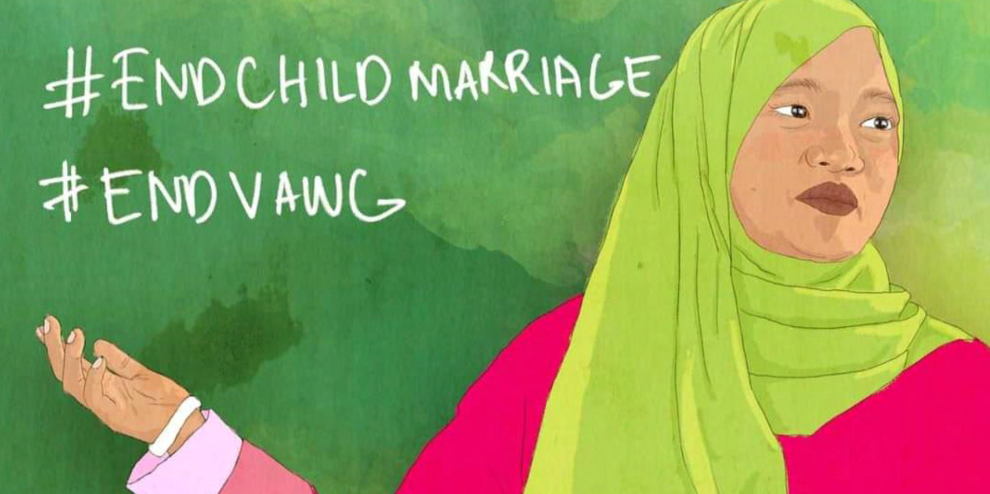
Violence against women and girls (VAWG) is prevalent in the Muslim Mindanao region of the Philippines, although it is not unique to this region nor to the practices of people with religious faith. Child marriage, a specific form of violence against girls, is a social norm across all six countries involved in Oxfam's multi-country Creating Spaces to Take Action on Violence Against Women and Girls (or Creating Spaces) project, especially in the Muslim Mindanao region. This report integrates the findings and analysis of three evaluative studies that detail the project's contribution to reducing VAWG in the Muslim Mindanao region by tackling social norm change.
Creating Spaces was a 5-year (2016-2021), multi-country initiative aimed at unsettling the resistant, structurally embedded, and widely unspoken norms that contribute to VAWG and child, early, and forced marriage (CEFM) in Bangladesh, India, Indonesia, Nepal, Pakistan, and the Philippines. In the latter country (the focus of this evaluation), the project's multi-pronged approach to social change drew on a range of strategies, including: provoking new conversations through media and public awareness campaigns; engaging women and girl survivors to build their awareness and empower them to stand up and speak out; sensitising local leaders and influencers to challenge received wisdom; supporting the emergence of youth advocacy movements; lobbying legislators to shift entitlements and protections; and partnering with local governments and service providers to strengthen the design and delivery of policies.
In these actions, Oxfam Philippines worked closely with 4 partners in the Lanao del Sur and Maguindanao provinces of Muslim Mindanao: The Al-Mujadilah Women's Association (AMWA) in Lanao del Sur and the United Youth of the Philippines - Women (UnYPhil) in Maguindanao delivered awareness-raising and capacity-building sessions with mothers and youth in their respective areas. The Philippine Business for Social Progress Foundation (PBSP) supported economic empowerment for women and girl survivors of violence through skills training and capital support, and the Philippine Legislators' Committee on Population and Development (PLCPD) lobbied at the national level for legislative change on CEFM.
The evaluation involved:
- A Year-6 Outcome Survey administered at the end of 2021 to 1,109 respondents, comprising both women and girls and community influencers. It used a "with and without" sampling method to allow for comparison of a treatment group (503 respondents) and a comparison group (606 respondents).
- A follow-up qualitative evaluative study, implemented in 2022, that involved interviews and focus group discussions as part of a "process tracing" approach to understanding cause and effect and providing evidence of the project's contribution to change.
- A qualitative Narrative Assessment that described and assessed the project's policy-influencing strategies.
The integrated impact evaluation highlighted evidence of six areas where the Creating Spaces project contributed to its goal of reducing VAWG and the prevalence of CEFM. In brief:
- Creating Spaces increased awareness and confidence among women and girls, while women leaders emerged as influencers within their communities. The project strategically identified the influencing power of mothers towards their children and families. Reportedly, women participating in AMWA's capacity-building sessions expressed greater confidence and willingness to play an influencing role in their families and in community meetings when supported by other women than when acting alone. Based on these findings, this evaluation recommends that future programming invests further in building the influencing capacity of mothers who have experienced violence, as well as with the families of these women by extending outreach to their siblings and parents. These investments should be closely tied to ongoing strategic efforts for strengthening accountability mechanisms in service provision.
- Creating Spaces contributed to local engagement by community influencers, while youth emerged as key advocates for change at both community and national levels. Project outreach led directly to an increase in dialogue on CEFM and VAWG at the community level and in schools during flag-raising ceremonies. In reaching out to young people, project partners focused on school-based activity, backed up by mobile community awareness sessions (with UnYPhil). A strategic decision was made to sidestep debates over religious interpretations of child marriage by emphasising the damaging effects of child marriage on women's physical health, mental well-being, and life opportunities. This local advocacy was reinforced and amplified by a concerted online social media campaign. "The project's strategy of supporting indigenous grassroots advocacy movements and accountable governance campaigns, notably the youth movement, proved to be a highly sustainable approach to institution building and social change." Among the recommendations based on these findings is to maximise the sustainability of project-triggered social movements, such as by working to institutionalise municipal-level coalitions. Furthermore, there is a strong case for investing further in engaging educators and religious leaders as a central element of future programming.
- Creating Spaces successfully integrated direct policy lobbying with indirect support for policy advocacy to shift national legislative and policy change on CEFM. For example, PLCPD brought government and civil society together in a dialogue on CEFM between 13 young girls, youth advocates, and legislators. Creating Spaces then supported PLCPD to launch a government-citizen alliance (#GirlDefenders), which became a nationwide movement to end child marriage. #GirlDefenders campaigned for two years (moving online during the COVID-19 pandemic) for the passage of the Girls Not Brides bill. The decision of PLCPD and partners to change the focus of policy advocacy from amending the code of Muslim personal conduct to proposing a national law was a significant strategy shift. Creating Spaces was less successful at the sub-national level of legislation and policy making. Future programming should work with embedded partners and networks at the regional level over a longer time period to advocate for progressive changes in policy direction and budget allocations, according to this evaluation.
- At the community level, Creating Spaces progressively shifted attitudes on rape, but attitudes on forced sex (rape) in marriage did not shift significantly. The project worked to increase the visibility and discussion of taboo behaviours through its support to awareness raising, voice, and influencers, backed up by a concerted social media campaign. In one notable instance, a project partner took action against a local official accused of rape, and the case went to court. Mothers emerged as key confidants and an entry point for starting a wider conversation about forced sex (rape) in marriage. There is an opportunity to target additional awareness raising and capacity building with mothers - allied with a broadened awareness-raising campaign - to name and tackle sexual violence in marriage as rape.
- Creating Spaces increased community-level access to services for women and girl survivors of violence, while strengthening oversight and social accountability among local service providers. Almost 50% of outcome survey respondents confirmed they had learned about local services through their participation in project training. In the case of local service provider-led outreach, the project strategy to mainstream awareness raising of VAWG and CEFM into regular local government service provision was reportedly successful. Creating Spaces introduced a citizen monitoring and immediate responder approach in the shape of gender-based violence watch groups, initiated by project partner UnYPhil with women and girl leaders in project communities. It is recommended that future initiatives should reinforce and expand the project-supported institutional innovations with local government and local service providers.
- Recognising that economic dependence is key to shifting norms around VAWG, Creating Spaces increased access to income-generating activities and enhanced economic independence among women and girl survivors of violence and CEFM. Among the project participants in the economic training sessions, 84% subsequently contributed financially to their households. A collective approach to economic support proved particularly effective. One of the recommendations offered in the report: Interventions adopting an integrated strategy should build the capacity of women and girl survivors of violence, while reaching out to local service providers and private-sector partners to strengthen outreach and accessibility for financial services.
In short: Creating Spaces' "strategies were effectively combined at community level to begin to shift local behaviours, while local change processes were linked to higher-level advocacy for progressive legislative and policy change at national and regional levels. Creating Spaces has successfully started to move the dial, proving change is possible with concerted, strategic and sustained effort."
Email from Oxfam Policy & Practice to The Communication Initiative on December 7 2022. Image credit: Oxfam