










































Youth: Choices and Change
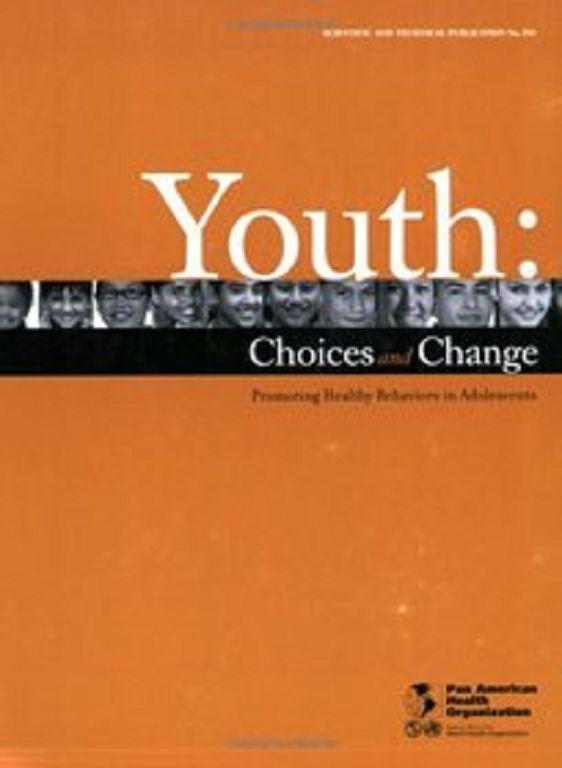
Published by the Pan American Health Organization (PAHO), the focus of this publication is how to create opportunities leading to positive and sustained behaviour change and to the conscious adoption by youth of lifelong health-promoting lifestyles.
Publisher's Description:
"This publication on adolescent health and positive behavior change ... enhances the knowledge base on this important public health issue. It presents the firstever systematic collection and reporting of the application of behavioral change theories and models specifically to adolescents. At the same time, it represents the first attempt to incorporate a developmental perspective in the conceptual analysis of these classical theoretical constructs when applied to the various stages of adolescence.
Cultural, ethnic, and gender differences are also given special consideration, as is the role of poverty and the ability of some adolescents to secure physical and emotional well-being despite circumstances of adversity.
This book additionally breaks new ground in explaining why some health promotion interventions aimed at positive adolescent behavior change produce the desired results, while others fail. The thoroughness of the analysis extends to the diversity of geographical settings cited: from Africa to the United States, Canada to Jamaica, Brazil to the Netherlands, El Salvador to Japan, and India to Mexico, to name only a few.
The experiences of the global research community presented here will undoubtedly find fertile ground among a variety of publics, including local health promoters, designers of community health promotion programs, health professionals, the academic and research community, ministries of public health and of youth affairs, those who study and those who create mass media trends, parents and teachers, school counselors, and all others who play a significant role in adolescents’ lives."
The Foreword and Introductory pages are available for free download in PDF format. The complete book can be purchased from PAHO.
The Table of Contents includes the following:
Preface
The Authors/ Acknowledgments
Foreword Paving the Way from Adolescence to a Healthy Adulthood Introduction Healthy Choices and Changes
SECTION ONE DEVELOPING EFFECTIVE HEALTH PROMOTION AND PREVENTION PROGRAMS FOR ADOLESCENTS
Introduction
Chapter One Adolescent Lifestyles in Latin America and the Caribbean: The Challenges and Their Scope
Chapter Two The Knowledge-Behavior Gap in Health Promotion
Chapter Three The Importance of Behavior Theories to Successful Adolescent Health Programs
Chapter Four Adolescents Living in a Complex Environment of Multiple Levels of Influence
Chapter Five Listening to Adolescents' Needs and Wants: A Respectful Intervention
Chapter Six The Crucial Link between Theories and Developmental Stages of Adolescence
Chapter Seven The Youth: Choices and Change Model for Designing Effective Interventions for Adolescents
SECTION TWO THEORIES AND MODELS FOR HEALTH PROMOTION AND BEHAVIOR CHANGE: THEIR APPLICATION TO ADOLESCENT
Theories and Models that Promote Change at the Individual Level
Chapter Eight The Health Belief Model
Chapter Nine The Transtheoretical Model and Stages of Change
Chapter Ten The Theory of Reasoned Action
Chapter Eleven The Theory of Planned Behavior
Chapter Twelve The Goal-Setting Theory/
Chapter Thirteen The Self-Regulation Theory
Chapter Fourteen The Sensation-Seeking Theory
Chapter Fifteen At a Glance: The Individual Level Theories and Models for Behavior Change
Theories and Models that Promote Change at the Interpersonal Level
Chapter Sixteen The Social Cognitive Theory
Chapter Seventeen The Social Networks and Social Support Theories
Chapter Eighteen The Authoritative Parenting Model
Chapter Nineteen The Resilience Theory
Chapter Twenty The Stress and Coping Theories
Chapter Twenty-one At a Glance: The Interpersonal Level Theories and Models for Behavior Change
Theories and Models that Promote Change at the Community Level
Chapter Twenty-two The Community Organization Models
Chapter Twenty-three The Diffusion of Innovations Theory, Behavior Change Communication Models, and Social Marketing - Models that Promote Change at the Policy Level
Chapter Twenty-four Models of Policy and Legislation Developmen
Chapter Twenty-five At a Glance: The Community and Policy Level Theories and Models for Behavior Change
SECTION THREE ADOLESCENT DEVELOPMENTAL CHANGES AND GOALS: THE IMPORTANCE OF EARLY INTERVENTION
Introduction
Chapter Twenty-six A New Approach to Classifying Adolescent Developmental Stages
Chapter Twenty-seven Gender Differences and Adolescent Behaviors
Chapter Twenty-eight Early Intervention during Adolescence: The Preadolescent Period
Chapter Twenty-nine Early Intervention during Adolescence: The Early Adolescent Period
SECTION FOUR CONCLUSIONS AND RECOMMENDATIONS
Introduction
Chapter Thirty The Next Decade: Perspectives for Improving Adolescent Health and Development Afterword References
Selected List of Web Resources on Adolescence and Health Behaviors
Publishers
English, Spanish
392
Email from Evelin Rodríguez (PAHO) to The Communication Initiative on February 18 2005 and the PAHO website on December 5 2012.
- Log in to post comments