










































Wontanara (We Are United)
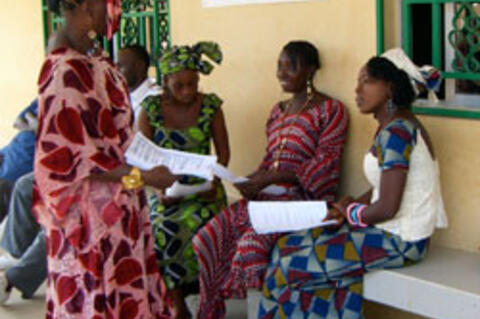
According to SFCG, many of the issues addressed by in the Wontanara soap opera are rarely discussed in Guinean media. SFCG works with local partners to find culturally appropriate means to strengthen societies' capacity to deal with conflicts constructively: to understand the differences and act on the commonalities. Each 15-minute weekly Wontanara episode is produced in French and reproduced in the area's two local languages, Malinké and Guerzé. The plot revolves around the daily lives of a group of characters who meet in a Conakry café to discuss the challenges they face and issues of importance to them. According to the producers, Wontanara takes on tough issues in an entertaining way. Accompanying Wontanara is another 15-minute weekly soap opera, Kissidougou Feu N'est Pas Incendie (A Fire Is Not Always Destructive), which addresses human rights, corruption, governance, and HIV/AIDS. The organisation has negotiated broadcast on the state national radio station as well as private stations in Conakry and rural radio stations in 6 locations around the country.
Conflict, Democracy and Governance
According to SFCG, the current political climate in Guinea is still influenced by the legacy of the general strikes and turmoil that swept the country in early 2007. In May 2007, Guinea's President Lansana Conté sacked Prime Minister Lansana Kouyaté after a government audit exposing presidential corruption leaked to the French periodical Jeune Afrique. Kouyaté's dismissal marked the end of an uneasy 15-month power-sharing agreement, which had been instituted to quell political upheaval in 2007. Kouyaté's sacking was accepted in many quarters due to his perceived ineffectiveness. However, his replacement, Ahmed Tidiane Souaré, is a long-time Conté supporter, and tensions again mounted following the announcement.
The political changes have been accompanied by troubling corruption and conflict within the police and military, SFCG explains. Increasing criminalisation of the security forces has become a problem, as they are implicated in the regional narco-trafficking boom by recent reports and a high-profile drug bust. It is believed that, as Guinea-Bissau is beginning to crack down on the drug trade, traffickers are finding fertile ground for operations in its unstable southern neighbour.
Of equal concern, per SFCG, is the fact that legislative elections that were planned for November 2008 were delayed for the fourth time in two years. In late August, the President of Guinea's Independent National Electoral Commission, the CENI, announced that the change of government in June and a lack of funding require that the elections be put on hold until 2009. Guinea's hopes of transitioning from the current uncertain period largely hang on how these elections progress.
Regarding the media environment in Guinea, research conducted by SFCG found the following:
- Overall, the Guinean state continues to monopolise public media. However, there is no official state policy regarding mass media and communication. Most notably, there is no coherent policy with respect to the promotion of the government's good governance policy and initiatives. Consequently, the burden of awareness-raising often falls to local and international non-governmental organisations (NGOs).
- Guinean journalists are rarely trained to gather information from the populace via a participatory approach and are generally not asked by their news agencies to adhere to a particular system of journalistic ethics.
- Public and media representatives alike express frustration with state-sponsored media outlets in Guinea. Frequently cited concerns include the non-responsiveness of state-run media to local stories and their failure to address topics of genuine relevance to the population.
- Old and outdated equipment also impedes effective communication between the state, civil society representatives, and the people, especially in the rural interior of the country where distribution networks are less well-developed.
Search for Common Ground website on March 10 2009.
- Log in to post comments