Development action with informed and engaged societies

After nearly 28 years, The Communication Initiative (The CI) Global is entering a new chapter. 

Following a period of transition, the global website has been transferred to the University of the Witwatersrand (Wits) in South Africa, where it will be administered by the Social and Behaviour Change Communication Division. Wits' commitment to social change and justice makes it a trusted steward for The CI's legacy and future. 

On the transfer, co-founder Victoria Martin expressed her pleasure to see this work continue under Wits' leadership, knowing that co-founder Warren Feek (1953–2024) would have felt deep pride in The CI Global's Africa-led direction. 

As Wits, we honour the team and partners who sustained The CI for decades and look forward building from that strong base. This includes co-founders Warren Feek (1953-2024) and Victoria Martin as well as La Iniciativa de Comunicación (CILA), which continues independently at lainiciativadecomunicacion.com with links to The CI Global site. We are also eager to forge new partnerships and entertain new ideas as we consider how best to contribute to social and behaviour change in our rapidly evolving environment.

If you are joining the International Social and Behaviour Change Communication (SBCC) Summit in Panama, please join Wits and CILA on Monday, 22 June, to share your thoughts and suggestion for the relaunch of the Communication Initiative. We will be in Pacifica 5 from 12-1:25 for the Refuel, Reflect, and Renew Lunch Series: The Communication Initiative: celebrating a driving force for Communication for Social Change and the way forward. We will reflect on the legacy of Warren Feek and family in creating the Communication Initiative, consider the contributions of CI over the years and then turn our attention towards the future in this dynamic session. 

If you are unable to join us in Panama, we still want to hear from you. Please contribute your thoughts by following this link: https://redcap.link/CommunicationInitiative2026 or reaching out to ci_surveys@commint.com

You can also follow the QR Code:

 https://redcap.link/CommunicationInitiative2026

Time to read
1 minute
Read so far

What Works for Women & Girls

0 comments
Image
SummaryText
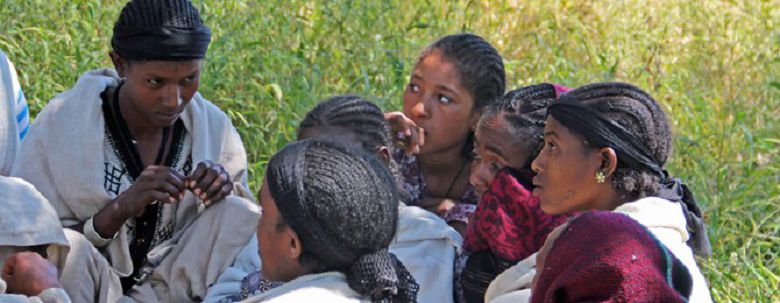
Launched at the July 2010 XVIII International AIDS Conference in Vienna, Austria, and updated periodically, this website provides strategies and evidence on a range of gender-sensitive programming for women and girls from countries around the world - with a focus on the global South.

A selection of topics that can be explored on this website:
  • Prevention for women, including condom use, partner reduction, and treating sexually transmitted infections (STIs);
  • Prevention for sex workers, drug users, prisoners, migrants, and transgendered women and men;
  • Prevention and services for adolescents and young people;
  • Prevention for young people, including encouraging behaviour change and access to services;
  • HIV testing and counselling;
  • Treatment provision, access, adherence and support;
  • Meeting the sexual and reproductive health (SRH) needs of women living with HIV;
  • Safe motherhood and prevention of vertical transmission of HIV;
  • Preventing, detecting, and treating co-infections such as tuberculosis (TB), malaria, and hepatitis;
  • Strengthening the "enabling environment", including transforming gender norms, legal norms, advancing education, reducing violence against women, promoting women's employment, reducing stigma and discrimination, and promoting women's leadership;
  • Care and support for women and girls, orphans, and vulnerable children; and
  • Structuring health services to meet women's needs.
The website is organised along the lines of 11 broad strategies. Each strategy is divided into 3 sections: an overview, a summary of available evidence of successful interventions, and a list of gaps in research, programming, or evaluation. The website also includes a selection of clinical manuals and resources for programme design and a comprehensive reference list.

This resource is designed to guide donors, policymakers, and programme managers in planning effective HIV/AIDS interventions for women and girls.
Source

Emails from Melanie Croce-Galis to The Communication Initiative on August 17 2010 and September 30 2016. Image credit: The Evidence Project