










































Visioning the Future: Exploring Youth Participatory Video and Geographical Imagination
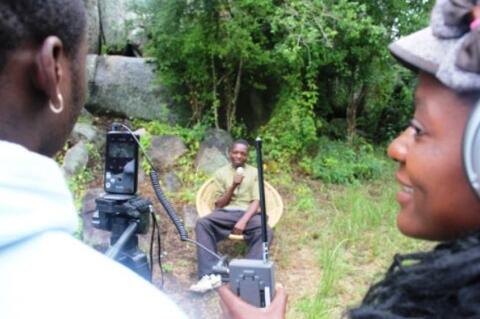
According to the organisers, the project followed a broadly ‘public geographies’ agenda. There was: strong participation of young people in the creation of 'data'; publically-minded, accessible and interactive outputs in the form of videos and a blog; institutional support for an established community-based organisation in Zimbabwe and NGO in South Africa; and valuable skills development training for 28 young participants.
At Kufunda Village in Zimbabwe youth participants were already resident on a 4 month 'youth leadership and life skills' programme. The residential status of the youth at the training centre meant that organisers could run the initial video training workshop and then set group assignments to be undertaken during the final six weeks of their programme. The programme largely involved sustainability education with training in permaculture, solar energy, herbs and health, and child development. These activities provided useful ‘visioning the future’ themes for the youth to focus their video projects on. Video production equipment was procured for Kufunda Village as the first step to establishing a long-term resource.
At the Centre for Civil Society (CCS), 10 participants were recruited through online distribution of an advert and application form. CSS had already been running community video trainings, and so had basic equipment to build up this community video resource. The young participants in this group experienced a more intense 10-day workshop, which included sustainability education activities as well as video training. During the training, they watched several documentaries such as Food Inc, Sea Change, and The Story of Stuff, to facilitate discussion of ‘visions of a sustainable future’ as well as to engage with film-making techniques.
The video courses covered all the basic skills and procedures necessary for making a video, from conceptualisation and camera skills through to editing and uploading. According to the organisers, the videos and research provided insights into the geographical imaginations of participating youth and their visions of the future. The resulting videos covered a diverse range of issues, from permaculture and herbs for health, to the experience of life as a street kid.
The project resulted in the production of nine participatory videos under the theme 'Our Vision of a Better World'. Click here to watch the videos.
A handbook was written and printed for all participants and participating institutions. Follow-up workshops were carried out to screen videos, consolidate skills, award certificates, and distribute handbooks.
Following the project, the CCS was left with better equipment for the existing community video resource centre. The project also resulted in the employment of a former youth participant as a trainee facilitator. The project fed into the Durban Community Video Collective and enabled additional meetings and support to be given, linking the youth group with the community scholars and activists who had previously participated in video production workshops. The young participants also connected with some NGOs interested in having videos made for their work and supporting them.
For Kufunda Village, a brand new video production unit was initiated, with two basic production kits purchased, plus a laptop for editing. Two young Kufunda residents, who participated in the video workshops, were designated as resident video project leaders. The video unit and training is to be integrated into Kufunda’s ongoing youth/community leadership training from 2014.
Youth
Organisers say that a group meeting and video screening session is to be held in November 2013 at the CCS, with youth participants invited to attend. Additional informal interviews (in a focus group setting) are planned to supplement the interviews, addressing youth questions, hopes, and challenges and to address any challenges experienced in developing their projects further. A participatory video methods course is being developed for University of KwaZulu-Natal (UKZN) Masters students. Funding has been granted by UKZN, and they are now awaiting course content approval from the school board.
Centre for Civil Society, Kufunda Village, Antipode Foundation Scholar-Activist Project Award
Antipode Foundation website and Visioning the Future website on October 23 2013.