










































Verified Campaign and Pause Movement
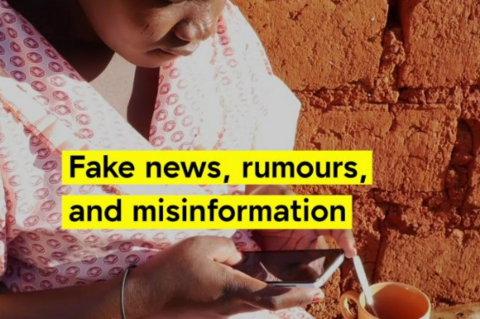
"COVID-19 is not just this century's largest public health emergency, but also a communication crisis....We need to empower everyday people to spread factual trusted information with their friends, families and social networks." - United Nations Under-Secretary-General for Global Communications, Melissa Fleming
Launched on May 21 2020 by United Nations (UN) Secretary-General António Guterres, Verified is an initiative to create a cadre of "digital first responders" who are pushing back against COVID-19-related misinformation and stigmatisation. The UN Department of Global Communications is giving people worldwide the tools they need to increase the volume and reach of trusted, accurate information surrounding the pandemic - hopefully promoting global solidarity and saving lives. As part of this campaign, on the occasion of World Social Media Day June 30 2020, the UN advanced Pause, calling on social media users to "Pause. Take care before you share."
The idea behind the campaign and movement is that, just as social distancing slows the spread of the virus, behaviour changes around sharing information will go a long way to slow the spread of misinformation. The strategy is not to issue press releases and fact sheets from organisations on high; rather, the fight against misinformation is happening on a "digital battlefield", where any individual, anywhere, can play a vital role. In short, what the UN believes is needed is a peer-to-peer effort to communicate verified, shareable content about COVID-19 through compelling methods.
Specifically, visitors to the Verified website can learn how check the advice they share when connecting online with friends, families, and networks. There, one can sign up to become an "information volunteer" who receives trustworthy content (e.g., via daily or weekly feeds) that is designed to consist in life-saving information, fact-based advice, and stories that represent the good of humanity. These "digital first responders" are provided with information around 3 themes: science - to save lives; solidarity - to promote local and global cooperation; and solutions - to advocate for support for populations that have been impacted by COVID-19. Content is optimised for sharing on social media platforms, containing simple yet compelling messaging that either directly counters misinformation with facts or fills in any gaps.
Verified partners with UN agencies and others, including influencers, civil society, and business and media organisations, to distribute this content, while also working with social media platforms to root out hate and harmful information about COVID-19.
As part of the Pause component of Verified, the UN put forth a specific call to get people thinking about misinformation and to create a new social norm for how people share content on social media. The message/hashtag encourages people to pause and take time to verify facts before sharing something online. See the #TakeCareBeforeYouShare website for videos, graphics, and colourful GIFs. Pause draws on research by psychologists, neuroscientists, and behavioural scientists that indicates that pausing to reflect before sharing can significantly help reduce the spread of unverified and misleading information. The movement challenges people to break the habit of sharing shocking or emotive content impulsively and without questioning its accuracy.
Health, Misinformation
According to the UN, purveyors of misinformation in many countries are creating storylines that are filling information voids where science has no answers, thereby impeding the public health response to COVID-19 by distorting sound scientific guidance. They offer promises of cures that have no evidence of benefit or may even be harmful. They are savvy about using narratives that link to people's fears and appeal to people's need for a scapegoat. There have been efforts to exploit the crisis to advance nativism or to target minority groups, which have stoked hate and stirred unrest.
In the algorithm-driven social media era, the popularity of a post often has more influence over who sees it than whether it is factual. A study published in the British Medical Journal concluded that over one-quarter of the most-viewed videos on YouTube about COVID-19 contained misleading information. The UN explains that this is not because factual information has not been uploaded by international institutions and government agencies; rather, the videos may just have not been appealing or entertaining enough to make people want to view or share them.
According to the Edelman Trust Barometer, people are actively searching for reliable and trusted information about the virus and its effects, but 50% of those surveyed say they are finding this kind of information difficult to find. And 67% say they worry there is a lot of fake news and false information being spread about the virus.
A range of media companies around the world, including Al Jazeera, Deutsche Welle, Euronews, France Médias Monde, MultiChoice Africa, and StarTimes, are distributing Pause content on TV channels, online, and via SMS (text message). In addition, social media platforms including Facebook, Twitter, Google (YouTube), and TikTok committed to promoting Pause, while indicating a willingness to scale up their ongoing efforts to suppress the circulation of misinformation (e.g., by taking down or warning against dubious information and directing users to the World Health Organization (WHO) and national health websites.) However, the most pernicious misinformation and conspiracy content still spreads via messaging apps, peer-to-peer.
As of June 30 2020, more than 10,000 information volunteers had signed on to Verified. These responders range from fact checkers in Colombia, to young journalists in the United Kingdom, and the number signing up is growing at a rate of about 10% per week. In mid-June 2020, more than 130 UN Member States issued a statement on the need to address the "infodemic" related to COVID-19, while welcoming the Verified initiative. "We are... concerned about the damage caused by the deliberate creation and circulation of false or manipulated information relating to the pandemic. We call on countries to take steps to counter the spread of such disinformation, in an objective manner and with due respect for citizens' freedom of expression," the statement reads.)
"United Nations Launches Global 'Pause' Campaign to Tackle Spread of Misinformation" [PDF], June 3 2020; UN Regional Information Centre for Western Europe website, June 29 2020; "UN launches new initiative to fight COVID-19 misinformation through 'digital first responders", May 21 2020; "Pause before sharing, to help stop viral spread of COVID-19 misinformation", June 30 2020; and "'Verified' initiative aims to flood digital space with facts amid COVID-19 crisis", May 28 2020 - all accessed on July 14 2020. Image credit: UN/Verified