










































Quanto Mais Cedo, Maior (The sooner, the bigger)
Summary:
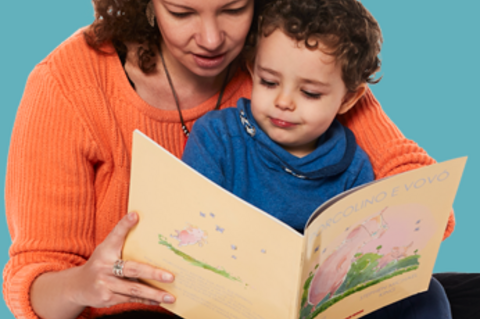
A childs brain is built via an interplay of neural connections that are shaped by their environment, connections that shape the way children grow, learn and flourish. Children in disadvantaged communities are deprived of conditions that fuel these connections i.e. appropriate nutrition, protection from abuse, responsive caregiving, quality education. Our theory of change states that building the capabilities of caregivers and strengthening the communities that together form the environment of relationships essential to childrens lifelong learning, health, and behavior, we improve their development. The webseries Quanto Mais Cedo Maior (The sooner, the bigger) simplifies contemporary scientific knowledge - typically inaccessible to low-income populations - into actionable, 10-minute videos that help parents identify development needs (cognitive, language, etc) of children. To engage the audience, the series is presented by the most famous doctor in Brazils media Dr. Drauzio Varella known for TV shows at the countrys leading television channel and currently the biggest health-related Youtube page, showcasing real stories from families and celebrities. 30s short videos will help launch and disseminate the series via private messaging. To understand and quantify impact, we will be using nudgebots, which are positive reinforcements that suggest behavior and encourage choices that promote behavior change. Using text messages, they will collect data regarding parents knowledge and practices to measure the social and behavior changes that result from this communication strategy. Users status, interactions with our nudgebots, and clustered predictions for the relevant KPIs can be monitored via dashboards that display real-time data.
Background/Objectives:
A childs brain is built via an interplay of neural connections that are shaped by their environment, connections that shape the way children grow, learn and flourish. Children in disadvantaged communities are deprived of conditions that fuel these connections i.e. appropriate nutrition, protection from abuse and responsive caregiving, quality education. Our theory of change states that building the capabilities of caregivers and strengthening the communities that together form the environment of relationships essential to childrens lifelong learning, health, and behavior, we improve their development.
Results/Lessons Learned:
Collaborative proccess with support of 5 Foundations. New technology applied to monitoring and evaluation. Official launch in October, 2019. Results to be shared first-hand at SBCC Summit 2020.
Discussion/Implications for the Field:
Measuring the impact of new technologies: how do these innovations help shape participation, political and social processes, behaviors and norms; what evidence exists to optimize the use of new technologies for SBCC; how do we use new methodologies to understand and quantify impact; what is the impact of user privacy issues on research and learning.
Abstract submitted by:
Manuela Parisi Braga - Fundação Maria Cecilia Souto Vidigal
Paula Perim - Fundação Maria Cecilia Souto Vidigal
Raquel Maldonado - Fundação Maria Cecilia Souto Vidigal
A childs brain is built via an interplay of neural connections that are shaped by their environment, connections that shape the way children grow, learn and flourish. Children in disadvantaged communities are deprived of conditions that fuel these connections i.e. appropriate nutrition, protection from abuse, responsive caregiving, quality education. Our theory of change states that building the capabilities of caregivers and strengthening the communities that together form the environment of relationships essential to childrens lifelong learning, health, and behavior, we improve their development. The webseries Quanto Mais Cedo Maior (The sooner, the bigger) simplifies contemporary scientific knowledge - typically inaccessible to low-income populations - into actionable, 10-minute videos that help parents identify development needs (cognitive, language, etc) of children. To engage the audience, the series is presented by the most famous doctor in Brazils media Dr. Drauzio Varella known for TV shows at the countrys leading television channel and currently the biggest health-related Youtube page, showcasing real stories from families and celebrities. 30s short videos will help launch and disseminate the series via private messaging. To understand and quantify impact, we will be using nudgebots, which are positive reinforcements that suggest behavior and encourage choices that promote behavior change. Using text messages, they will collect data regarding parents knowledge and practices to measure the social and behavior changes that result from this communication strategy. Users status, interactions with our nudgebots, and clustered predictions for the relevant KPIs can be monitored via dashboards that display real-time data.
Background/Objectives:
A childs brain is built via an interplay of neural connections that are shaped by their environment, connections that shape the way children grow, learn and flourish. Children in disadvantaged communities are deprived of conditions that fuel these connections i.e. appropriate nutrition, protection from abuse and responsive caregiving, quality education. Our theory of change states that building the capabilities of caregivers and strengthening the communities that together form the environment of relationships essential to childrens lifelong learning, health, and behavior, we improve their development.
Results/Lessons Learned:
Collaborative proccess with support of 5 Foundations. New technology applied to monitoring and evaluation. Official launch in October, 2019. Results to be shared first-hand at SBCC Summit 2020.
Discussion/Implications for the Field:
Measuring the impact of new technologies: how do these innovations help shape participation, political and social processes, behaviors and norms; what evidence exists to optimize the use of new technologies for SBCC; how do we use new methodologies to understand and quantify impact; what is the impact of user privacy issues on research and learning.
Abstract submitted by:
Manuela Parisi Braga - Fundação Maria Cecilia Souto Vidigal
Paula Perim - Fundação Maria Cecilia Souto Vidigal
Raquel Maldonado - Fundação Maria Cecilia Souto Vidigal
Source
Approved abstract for the postponed 2020 SBCC Summit in Marrakech, Morocco. Provided by the International Steering Committee for the Summit. Image credit: Fundação Maria Cecilia Souto Vidigal