










































Understanding Psychosocial Determinants of Malaria Behaviours in Low-transmission Settings: A Scoping Review
Breakthrough ACTION Project, Johns Hopkins Center for Communication Programs (Casella, Monroe, Toso, Hunter, Underwood, Pillai, Van Lith, Babalola); Johns Hopkins Bloomberg School of Public Health (Underwood, Hughes, Babalola); US Centers for Disease Control and Prevention (Cash, Hwang)
"The review highlights the need to deploy more consistent, comprehensive measures of psychosocial factors and the importance of reaching subpopulations at higher risk of transmission in low transmission contexts."
In addition to essential structural changes, human behaviour plays a fundamental role in the prevention, diagnosis, and treatment of malaria. Engagement in malaria behaviours depends in part on psychosocial determinants such as knowledge, perceived risk, and community norms, as articulated in the ideation model. With an eye to guiding social and behaviour change (SBC) practice, this scoping review synthesises research on psychosocial factors and malaria behaviours in low-transmission settings. Such areas are distinct from areas with moderate to high levels of transmission in several ways including: increased geographic focalisation of malaria cases; a shift toward cases among adults, particularly men; increased importance of outdoor and occupation-based exposure; and imported malaria cases.
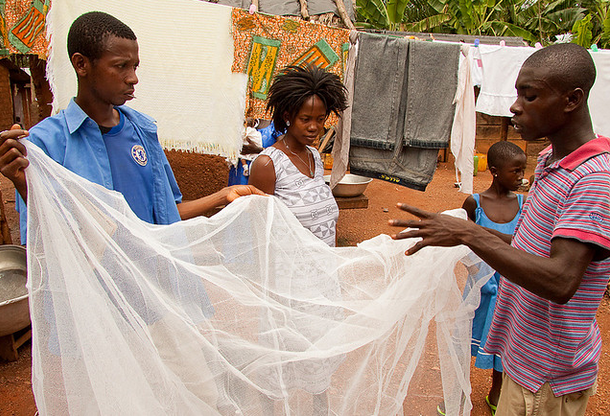
The ideation model (see Figure 1 in the paper) encompasses a broad set of psychosocial determinants of behaviour - in this case, to prevent, diagnose, and treat malaria. Examples of these behaviours include the use and appropriate care of insecticide-treated nets (ITNs), proper indoor residual spraying (IRS), and prompt care-seeking and action to take the full course of medication as prescribed. On the ideation model, whether someone engages in these behaviours may depend on factors such as their level of knowledge about malaria, attitudes towards the recommended solutions, the extent to which malaria is viewed as a threat, perceptions about how well an intervention works (i.e., perceived response-efficacy), their perceived self-efficacy to use it, and social norms around prevention and care-seeking behaviours.
The researchers conducted a systematic search of peer-reviewed literature and supplemental manual search of grey literature, identifying relevant publications from 2000-2020 in the English language. Screening of 961 publications yielded 96 for inclusion; 91 of these were included in data extraction. Nineteen of these articles collected data among subpopulations that are at increased risk of malaria exposure in low-transmission settings.
Within the articles analysed, purposive and cluster randomised sampling were common sampling approaches. Quantitative, qualitative, and mixed-methods study designs were used. Knowledge, attitudes, and perceived risk were commonly measured psychosocial factors. Perceived response-efficacy, perceived self-efficacy, and community norms were rarely measured. Thus, the study team did not conduct an assessment to identify trends in their relationship to behavioural outcomes.
Articles identified generally positive associations between one's level of knowledge about malaria (symptoms and causes) and their behaviour. (Studies generally report high rates of correct knowledge, although it is comparatively lower among studies of high-risk groups.) However, studies also largely cited a high rate of correct knowledge at the time of study, while rates of malaria-related behaviours varied. This finding suggests that knowledge alone may not be sufficient to achieve behaviour change.
There are several implications of this review for future malaria research and practice in settings of low transmission. In brief:
- Limited measurement of psychosocial factors beyond knowledge and attitudes - Potential action: Enhance research tools to include a broader range of psychosocial factors (e.g., norms, self-efficacy, interpersonal communication) in studies and surveys.
- Positive association of knowledge, perceived risk, and malaria preventive behaviours - Potential action: Strengthen community engagement programmes to reinforce the seriousness of malaria and its continued threat in low-transmission context, particularly among vulnerable groups.
- Lack of consistency in measurement of psychosocial variables across studies - Potential action: When appropriate for the study context, advocate for the use of standardised measures, and use both quantitative and qualitative approaches.
- Limited focus on high-risk subpopulations, such as forest goers, miners, and night-time workers - Potential actions: Expand research on high-risk subpopulations (research may benefit from respondent-driven and time-location sampling techniques), and identify communication channels and optimal broadcast periods for high-risk subpopulations.
In conclusion: "Programmes and research should work to better understand the psychosocial factors that have been positively associated with prevention and care-seeking behaviours, such as norms, perceived response efficacy, perceived self-efficacy, and interpersonal communication....Existing instruments and approaches are available to support more systematic collection of psychosocial determinants and improved sampling approaches and should be applied more widely. Finally, while human behaviour is critical, health systems strengthening, and structural interventions are essential to achieve malaria elimination goals."
Malaria Journal (2024) 23:15. https://doi.org/10.1186/s12936-023-04831-9. Image credit: Direct Relief via Flickr (CC BY-NC-ND 2.0 Deed)
- Log in to post comments