










































Ubumbano Lwentsha: Placing Youth at the Forefront to Improve Community Engagement in Research and Dissemination of Research Findings in Rural South Africa
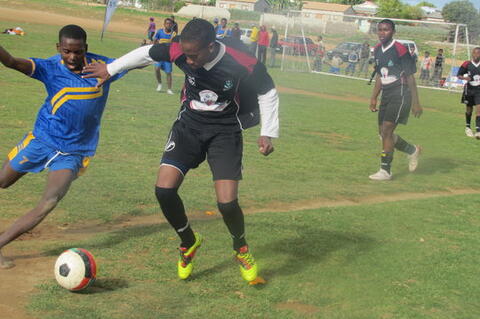
This project was a sports-based community youth mobilisation, outreach, and education strategy to strengthen community engagement in research and dissemination of research results in rural areas, geared toward the 22,788 youth aged 15-35 residing in the Africa Centre for Health and Population Studies' Demographic Surveillance Area (DSA). Objectives included increasing youth participation in health research, especially HIV-related studies, and engaging youth as agents for dissemination of research findings in the community through discussions with family and community members.
Ubumbano Lwentsha drew on the popularity of sports within the local community. In many of the Izigodi (villages), soccer and netball teams were already in existence and competing in community-based leagues. The project implementation was also very timely and managed to ride on the football/soccer passion created by South Africa's hosting of the Fédération Internationale de Football Association (FIFA) World Cup in 2010. It began with the organisation of a soccer and netball tournament of 32 teams drawn from KwaMsane township and each of the 29 Izigodi (villages) in the DSA. Run over a period of 2 years, the tournament featured HIV discussion and information dissemination sessions before, after, and/or during each match; also, rapid HIV tests were offered in mobile voluntary counselling and testing (VCT) centres. There was media coverage of the tournament in local and provincial newspapers, as well as through a community radio station.
Two one-day workshops were organised with representatives of soccer and netball teams to educate the youth about how to discuss HIV/AIDS and disseminate research findings at home and in the community. The group discussions prepared the youth as agents of community education by providing in-depth education about HIV prevention and treatment, understanding of Africa Centre research results, and the need to participate in research studies. For instance, during each workshop, results from Africa Centre studies were presented, especially on levels and determinants of HIV prevalence and incidence and the antiretroviral therapy programme, and youths' input on how to engage and involve them in HIV prevention interventions was sought. Workshop participants were then asked to train their team members to disseminate research findings to their household members.
Originally, the project aimed to setup a Youth Advisory Centre at the offices of the Mpukunyoni Traditional Authority (MTA) to provide youth with one-on-one confidential counselling as well as to educate them about HIV and to disseminate research results to their households. This did not materialise, but organisers improvised with the concept of a "mobile" youth advisory centre, where the project coordinator proactively arranged to visit and meet with youth in their neighbourhoods to conduct group discussions.
Youth, HIV/AIDS, Research
According to organisers, 1,440 youth were directly involved with the project over 2 years. Approximately 12,000 people attended the games and received HIV awareness education and Africa Centre research results. About 2,500 attended VCT sessions during the games, with 750 testing for HIV. In addition, 288 community-based group discussions were held with youth across the 32 Izigodi (villages) at an average of 12 per group, mostly drawn from the soccer and netball teams.
An evaluation of project coverage through the population-based HIV surveillance programme in 2010 shows that 28% (4,115/14,959) of the people living in the DSA aged 15 years and above heard about the project, and 11% (1,656/14,959) attended at least one of the sports games from about 26% (1,146/4,436) of the households. Consent rates to giving a blood specimen for HIV analysis increased from 8,167 adult resident individuals in 2009 to 10,539 in 2010, although this increase might also have been influenced by other operational changes and interventions to increase consent rates. Based on an average of 8 people per household, organisers estimate that a total of 20,800 people had Africa Centre research results disseminated to them, were educated on the need for health research, and received some HIV prevention (including regular VCT) and HIV treatment and care information.
Funded by the Wellcome Trust.
"International Engagement Awards: Projects funded in 2010" [PDF]; and email from Tinofa Mutevedzi to The Communication Initiative on November 6 2012. Image credit: Global Giving
- Log in to post comments