











































Time to read
less than1 minute
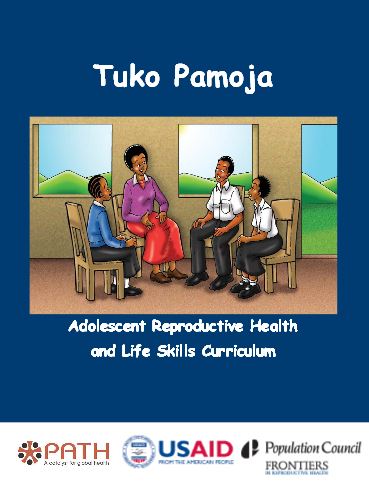
Tuko Pamoja: Adolescent Reproductive Health and Life Skills Curriculum
Image
SummaryText
This 184-page guide, published by PATH and the Population Council, is designed to help facilitate dialogue between adults and young people on issues related to adolescent reproductive health. It is intended for teachers; community, religious, and youth group leaders; health care professionals; and anyone working with young people.
The curriculum, designed for young people between the ages of 10 and 19, has three main objectives:
The guide contains 30 sessions, and each session has learning objectives that are addressed through participatory activities. For each session, the guide outlines what materials are needed, what activities should be done, and roughly how long each activity should take. It includes games, handouts, background notes, as well as possible questions to ask learners. It also gives practical information and tips about facilitation techniques, including talking about difficult or sensitive issues, working with parents, and the value of participatory activities versus lecture-style facilitation.
Session topics cover a wide range of issues including:
The curriculum, designed for young people between the ages of 10 and 19, has three main objectives:
- to increase adolescents’ knowledge of reproductive health and sexuality;
- to reinforce and promote attitudes and behaviours that will lead to a better quality of life for young people; and
- to give young people the skills they need to overcome the challenges of growing up, including communication, decision-making, and resisting peer pressure.
The guide contains 30 sessions, and each session has learning objectives that are addressed through participatory activities. For each session, the guide outlines what materials are needed, what activities should be done, and roughly how long each activity should take. It includes games, handouts, background notes, as well as possible questions to ask learners. It also gives practical information and tips about facilitation techniques, including talking about difficult or sensitive issues, working with parents, and the value of participatory activities versus lecture-style facilitation.
Session topics cover a wide range of issues including:
- communication, healthy relationships, and managing stress;
- self esteem, assertiveness, and decision-making;
- peer pressure, drug use, and gender violence;
- teenage pregnancy, abortion, and parenthood; and
- HIV/AIDS and sexually transmitted infections (STIs), voluntary counselling and testing, and supporting people with HIV.
Publishers
Publication Date
Languages
English
Number of Pages
184
Source
PATH website on July 28 2008 and February 10 2009.
- Log in to post comments