










































#TheRealTest: Anti-Stigma COVID-19 Campaign
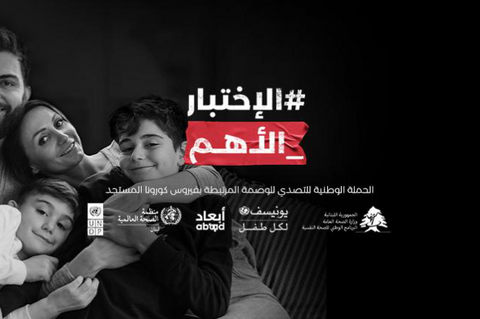
A national campaign to break the stigma associated with the novel coronavirus (COVID-19) was launched in Lebanon in June 2020. Initiated by the Ministry of Public Health (MOPH) through the National Mental Health Programme, ABAAD Resource Center for Gender Equality, the United Nations Development Programme (UNDP), United Nations Children's Fund (UNICEF) and the World Health Organization (WHO), the campaign is designed to promote empathy and solidarity in the face of COVID-19. It is being run under the slogan "#TheRealTest" and is reaching the public through television, social media, and the involvement of celebrities and municipalities in Lebanon.
The slogan #TheRealTest seeks to highlight the fact that testing positive or negative for COVID-19 is not the only test. The real test is not to turn fear for one's health into fear of each other, and to see the human, not the virus. By highlighting this "real test", the campaign encourages people to stand together and show kindness towards one another.
In collaboration with several TV outlets, the campaign was kicked off through simultaneous primetime news introductions, during which news anchors read the campaign's manifesto and lent their voices to amplify the message included in the campaign's main film (click here to view it on Facebook).
Launched in line with the national action plan for the mental health response to COVID-19, the campaign also aims to provide a platform to showcase stories of solidarity and empathy for one another. Tackling stigma and supporting persons and communities through encouraging solidarity and acts of kindness are envisioned as supportive of both physical and mental health.
Using digital platforms, people across Lebanon, including celebrities and key opinion leaders, are being engaged to share their own messages of hope and local stories of solidarity. In addition, municipalities and other outlets will be involved in spreading messages of solidarity throughout the streets of Lebanon.
The campaign also includes a media component. To support the media in their response to COVID-19, which includes increasing awareness, decreasing stigma. and helping people cope with stress, a guide with tips on how to report on COVID-19-related news will be shared with media professionals.
Gender, Children, Discrimination, Stigmatisation, COVID-19
As campaign organisers explain, fear of the virus has provoked social stigma and discriminatory behaviours against anyone perceived to have been exposed to the virus. Stigma is defined as "a negative association linked to a person or a group of persons who might share certain characteristics or a certain disease, in this case, the coronavirus. This means that people are being labelled, stereotyped and subject to discrimination because of a potential exposure to the virus. Stigma and discrimination can make an already stressful situation far more difficult and detrimental to the mental health of affected persons and their families."
Stigma also affects society's efforts to curb the outbreak, as it prevents people who exhibit the symptoms from seeking care for fear of being subject to discrimination. In particular, the social stigma associated with COVID-19 is affecting women and girls, especially in vulnerable communities, causing them to hide the illness and avoid seeking health care in an effort to avoid discrimination and risk of violence and femicide. It also affects children, as they are at risk of stigma and discrimination if a member of their family or community tests positive. This is in addition to the fear and loneliness they experience when they are isolated because a relative has tested positive.
UNICEF Press Release accessed on September 22 2020.
- Log in to post comments