










































Theories of Change and Evaluation of Malaysian Rural Internet Centers
Universiti Teknologi MARA (Alias, Jamaludin, Ismail), Aminudin Baki Institute (Hashim), Pusa Secondary School (Suhaili)
The work described in this paper was carried under the Amy Mahan Research Fellowship Program at the University Pompeu Fabra through the support of Canada's International Development Research Centre (IDRC). It analyses the differences among Malaysian information and communication technology (ICT) centres. From the Abstract: "The paper describes the early phase of a research conducted to evaluate the impact of utilization of Malaysian Rural Internet Centers (RICs) on user’s sense of social connectedness and empowerment. It employs a theory of change approach to study the outcomes brought about by the RICs. Initial findings however, suggest that the RICs have evolved individually and are unique from each other, thus requiring a revised evaluation framework based on each RIC’s role and functions. Interviews, observations and document analysis conducted at six RICs imply three main models: (1) The Cybercafé model, (2) The community service centre model and (3) The entrepreneurial centre model. Three theories of change are subsequently proposed to address each model and further aid the evaluation of the RICs in each category."
The authors explain the importance of ICT as:
- ICT paves the way for the efficient transfer of information, e-services, social networking, and knowledge sharing.
- Communication through ICT can create a sense of connectedness through exchanges that allow people to be aware of each other and to maintain social relationships, as well as seek information, exchange advice, and find support for making decisions.
- E-government initiatives allow two-way information exchange and give greater access to the rural population, an aspect of ICT usage that can result in empowerment.
This paper reports a research in progress. The paper proposes 3 “theory of change” frameworks on the current RIC roles and functions.
Findings from this stage of the research include:
- "Malaysian RICs tend to evolve differently depending on its location, users and the management. Hence, it is not quite right to generalize the findings in one RIC to all the Malaysian RICs . Each RIC is thus, treated as a unique case. However, similar characteristics persist among certain RICs, thus making it possible to categorize them accordingly.
- Local context, culture, politics and community support are strong determinants of RIC activities and outcomes.
- Location influences the functionality of the RIC. Those situated in locales with other public access centers such as cyber cafes and broadband centers tend to cater to mature users and older adults who are less comfortable with the younger group who frequent the other mentioned centers.
- Most RIC managers respond to the local clientèle, thus providing services and developing activities that fit the needs and characteristics of the users.
- Community users influence RIC managers' personal development: a. Managers who hail from the same community tend to be socially connected to the community of users; b. Managers develop their skills and ICT expertise according to the local needs."
Three models are illustrated in figures 3-5 on pages 4 and 5 of the document that address the varying context and needs of each community. "Each RIC has to be treated as a case on its own due to the differences in the way they operate, the profile of users and the support they receive from the community. The prevailing political party in the prospective areas also plays a role in assuring the smooth operation of the RIC and success of its activities.... The cyber café model, the community service center model and the entrepreneurial center models come into being via years of local community needs and influence. The uniqueness of each model will be further studied and the theory of change assigned to it will aid the researcher to evaluate the outcomes of RICs in the category. It is imperative that connectedness and empowerment are redefined according to each theory of change."
Email from Raymond Hyma and Nor Aziah Alias to The Communication Initiative on December 3 2010 and July 27 2011, respectively.
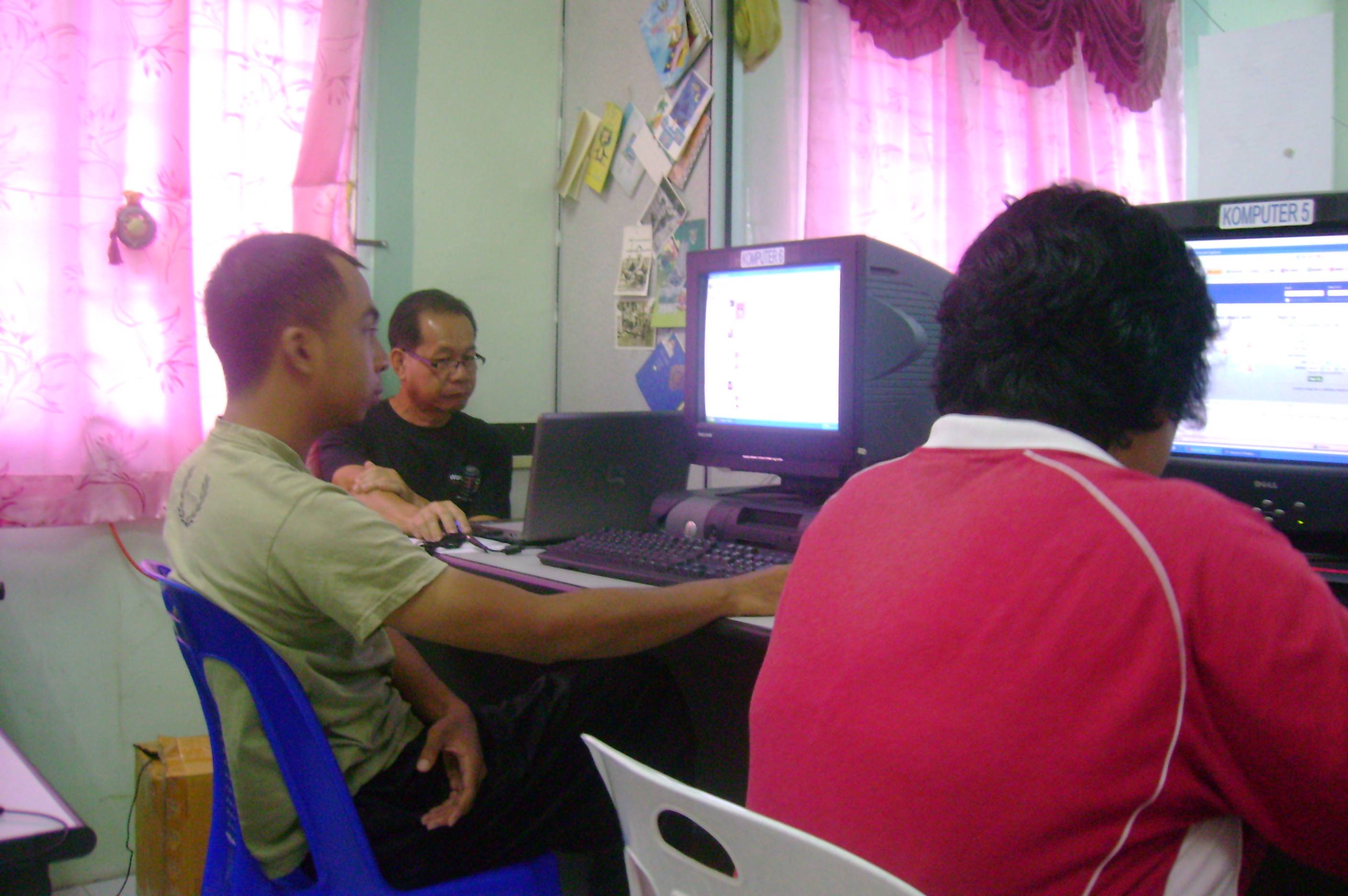
Image source: Prof. Madya Dr. Nor Aziah Alias.
Comments

Malaysian Rural Internet Centers
A good attempt at profiling Malaysian RIC. Unfortunately the sample size is small. Functional mechanism and usage of centers for communities' development, social interaction, education are not dwelt here. A follow-up longitudinal study over an extended time span, to validate changes, with larger sample size is recommended. Nevertheless congratulation for successfully completing this small study. Syed TSH, Malaysia.
RIC research
Yes indeed..the evolution of RICs warrants a long term study..This article reports our initial findings in 2010. We have since collected data from 300 users of 16 RICs. and we found the RICs to be promising eventhough the development is still at a slow pace. Nor Aziah, Malaysia
- Log in to post comments