










































Technology and Interactive Media as Tools in Early Childhood Programs Serving Children from Birth through Age 8
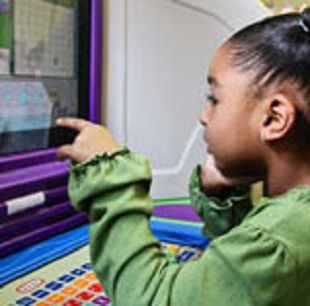
"When used intentionally and appropriately, technology and interactive media are effective tools to support learning and development...[K]eeping screen time recommendations in mind, technology and interactive media have the potential to enhance, without replacing, creative play, exploration, physical activity, outdoor experiences, conversation, and social interactions."
This joint position statement from two United States (US)-based organisations, the National Association for the Education of Young Children (NAEYC) and the Fred Rogers Center for Early Learning and Children's Media at Saint Vincent College, provides research-based guidance to early childhood programmes on the effective use of technology and interactive media. The statement focuses on their use in schools, centres, and family child care serving children from birth through age 8. In this position statement, the definition of technology tools encompasses a broad range of digital devices such as computers, tablets, multitouch screens, interactive whiteboards, mobile devices, cameras, DVD and music players, audio recorders, electronic toys, games, e-book readers, and older analog devices still being used such as tape recorders, VCRs, VHS tapes, record and cassette players, light tables, projectors, and microscopes.
Key messages from the position statement include:
- The effectiveness of technology and interactive media depends on their being used in the right ways, under the right circumstances, by those skilled in their use. Within the framework of developmentally appropriate practice, this means recognising children as unique individuals, being attuned to their age and developmental level, and being responsive to the social and cultural contexts in which they live. Effective uses of technology and media: (i) are active, hands-on, engaging, and empowering; (ii) give the child control; (iii) provide adaptive scaffolds to help children progress in skills development at their individual rates; and (iv) are used as one of many options to support children's learning. Technology and interactive media should expand children's access to new content and new skills. When truly integrated, uses of technology and media become routine and transparent - the child or the educator is focused on the activity or exploration itself and not on the technology.
- Early childhood teachers and administrators must have information and resources in order to help them decide whether specific goals - both for individual children and the programme as a whole - can be more effectively achieved using traditional classroom materials, or whether the use of particular technology and interactive media tools actually extends the opportunities for young children's cognitive, social, emotional, physical, and linguistic development. Examples of these opportunities include: helping to better meet the needs of individual children (e.g., assistive technologies that improve children's ability to learn, move, communicate, and create); supporting enhanced communication with families (e.g., digital portfolios documenting children's progress); and providing children new opportunities for exploration and mastery (e.g., making a book of scanned images of children's artwork and dictations). When making decisions about technology, programme administrators must consider the allocation of limited resources and cost effectiveness.
- The statement recommends carefully considering the screen time recommendations from public health organisations for children from birth through age 5 when determining appropriate limits on technology and media use in early childhood settings. Screen time estimates should include time spent in front of a screen at the early childhood programme and, with input from parents and families, at home and elsewhere. Technology should never be used in ways that are emotionally damaging, physically harmful, disrespectful, degrading, dangerous, exploitative, or intimidating to children.
- Special considerations must be given to the use of technology with infants and toddlers. The statement recommends prohibiting the passive use of television, videos, DVDs, and other non-interactive technologies and media in early childhood programmes for children younger than 2 years of age, and it discourages passive and non-interactive uses with children ages 2 through 5. Any uses of technology and interactive media in programmes for children younger than 2 years of age should be limited to those that appropriately support responsive interactions between caregivers and children and strengthen adult-child relationships.
- Teachers and administrators in early childhood programmes have a responsibility to help children learn to ask questions and think critically about the technologies and media they use. Digital citizenship is defined here as developmentally appropriate and active uses of digital tools, media, and methods of communication and learning in safe, healthy, acceptable, responsible, and socially positive ways. It also means working to assure equitable access to technology and interactive media experiences.
- Teachers and administrators need information and resources to effectively select, use, integrate, and evaluate technology and interactive media tools. Preservice and professional development should include: in-depth, hands-on technology experiences, ongoing support, and access to the latest technology and interactive media. Ongoing research is needed to better understand how young children use and learn with technology and interactive media and to better understand any short- and long-term effects. Examples of successful integrations of technology and interactive media in early childhood programmes - those that extend and supporting children's active, hands-on, creative, and authentic engagement with those around them and with their world - should be compiled and shared.
NAEYC website, May 7 2012.
- Log in to post comments