










































Syria Lifeline
Image
SummaryText
Syria Lifeline is BBC Media Action's communication project for Syrian refugees whose purpose is to communicate with people who have lost their normal media channels along with their homes. It consists of a library of video content and other resources which are freely available to non-governmental organisations (NGOs) and all humanitarian agencies working in this field.
Using what is intended to be an engaging mix of documentary, drama, and music to provide practical help and guidance on a wide range of vital issues, the videos explore health, hygiene, nutrition, education, legal status, family breakdown, and social cohesion. One series includes four light-hearted mini-dramas featuring a Lebanese man and his Syrian refugee friend dealing with issues such as legal status, vocational training, and self-help. Having learned that of concern to refugees were social cohesion issues, BBC Media Action has brought these issues to life through the two characters by the same name, though pronounced differently depending on the Syrian or Lebanese Arabic accents. In one episode, the Syrian character Gassem learns from Assem that he could call an information line to (anonymously) learn about residency requirements.
The Syria Lifeline website also offers suggestions in the form of a discussion guide [PDF] about how to use the material to stimulate discussion in community meetings. One suggestion for facilitators: "Make sure you are well briefed about the subject or subjects to be discussed and know where to direct people to get help and more information." There are also discussion questions offered in tandem with each video offered for viewing online and/or download.
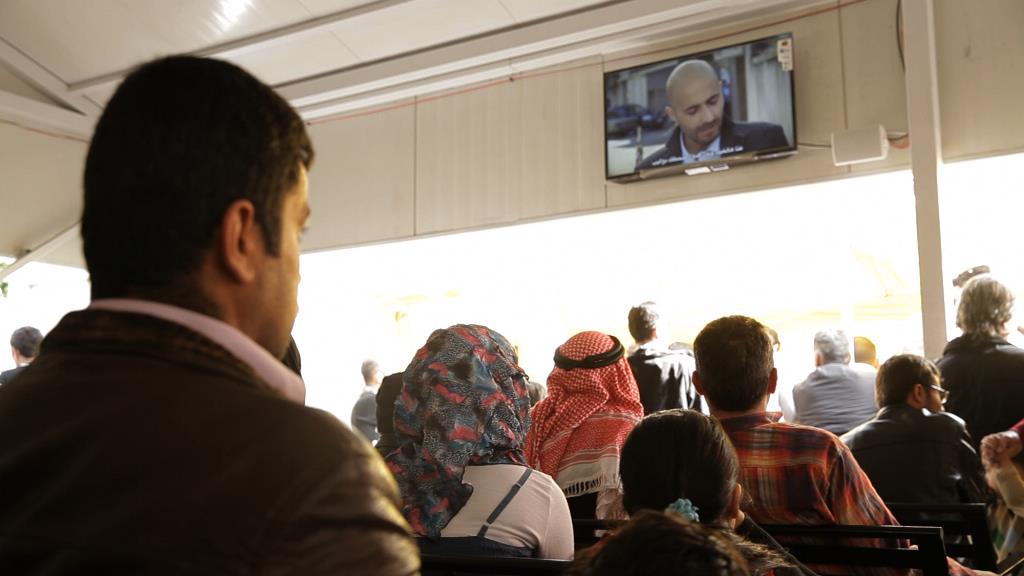
According to BBC Media Action, hundreds of thousands of Syrian refugees have watched Syria Lifeline videos at United Nations High Commissioner for Refugees (UNHCR) reception centres in Lebanon and Jordan, at community centres and clinics, and at a network of specially organised drop-in centres (known in Arabic as Dawaween). Together with an aid partner in Lebanon, Relief International, BBC Media Action has opened this network of centres in areas where refugees are concentrated. They are meant to be safe, welcoming spaces equipped with free phone charging facilities and WiFi, where refugees and local residents can access information, consult trained staff, and attend film screenings, debates, and other events. There is also a Syria Lifeline mobile app created for those who cannot make it to the centres.
In 2016, BBC Media Action is launching a radio drama and discussion programme to be broadcast in Syria and to Syrian refugees in neighbouring countries.
Using what is intended to be an engaging mix of documentary, drama, and music to provide practical help and guidance on a wide range of vital issues, the videos explore health, hygiene, nutrition, education, legal status, family breakdown, and social cohesion. One series includes four light-hearted mini-dramas featuring a Lebanese man and his Syrian refugee friend dealing with issues such as legal status, vocational training, and self-help. Having learned that of concern to refugees were social cohesion issues, BBC Media Action has brought these issues to life through the two characters by the same name, though pronounced differently depending on the Syrian or Lebanese Arabic accents. In one episode, the Syrian character Gassem learns from Assem that he could call an information line to (anonymously) learn about residency requirements.
The Syria Lifeline website also offers suggestions in the form of a discussion guide [PDF] about how to use the material to stimulate discussion in community meetings. One suggestion for facilitators: "Make sure you are well briefed about the subject or subjects to be discussed and know where to direct people to get help and more information." There are also discussion questions offered in tandem with each video offered for viewing online and/or download.
According to BBC Media Action, hundreds of thousands of Syrian refugees have watched Syria Lifeline videos at United Nations High Commissioner for Refugees (UNHCR) reception centres in Lebanon and Jordan, at community centres and clinics, and at a network of specially organised drop-in centres (known in Arabic as Dawaween). Together with an aid partner in Lebanon, Relief International, BBC Media Action has opened this network of centres in areas where refugees are concentrated. They are meant to be safe, welcoming spaces equipped with free phone charging facilities and WiFi, where refugees and local residents can access information, consult trained staff, and attend film screenings, debates, and other events. There is also a Syria Lifeline mobile app created for those who cannot make it to the centres.
In 2016, BBC Media Action is launching a radio drama and discussion programme to be broadcast in Syria and to Syrian refugees in neighbouring countries.
Publishers
Source
Email from Alexandra Buccianti to The Communication Initiative on July 18 2016.
- Log in to post comments