










































Strategies for Sustained Empowerment of Community Health Workers: A Qualitative Analysis of the Comprehensive Rural Health Project in Jamkhed, India
University of Maryland Capital Region Health (Kaysin); Brooklyn College of the City University of New York (Antoniello); Johns Hopkins Bloomberg School of Public Health (Agarwal, Perry)
"Women's empowerment can serve as a gateway to sustainable community development and health improvements. Ingredients for this process already exist in most communities..."
Research has shown that health and development programmes that emphasise empowerment principles can activate individuals and groups to access the knowledge and tools that enable leadership, support decision-making capacity, and engage in meaningful collective action on issues of local importance. For example, empowerment among community health workers (CHWs) in South Asian communities can enable women to make strategic life choices leading to collective actions that produce social change and realign these power dynamics in favour of the historically marginalised. To understand the core aspects of an empowerment-based CHW training programme, this article looks at the Comprehensive Rural Health Project (CRHP) in Jamkhed, India. It provides a structured framework for programme planners and researchers to further study and design health and development ecosystems that support the empowerment, retention, and long-term effectiveness of CHWs through baseline training and key supportive structures and processes.
The CRHP is a non-governmental organisation (NGO) founded in 1970 in a remote and drought-prone region of Maharashtra, India. It has been recognised for reducing child and infant mortality, malnutrition, and maternal mortality and for facilitating positive social change through interventions to reduce caste violence and women's oppression. This work takes place within poverty-stricken rural communities, starting with local women who train as CHWs, locally known as village health workers (VHWs).
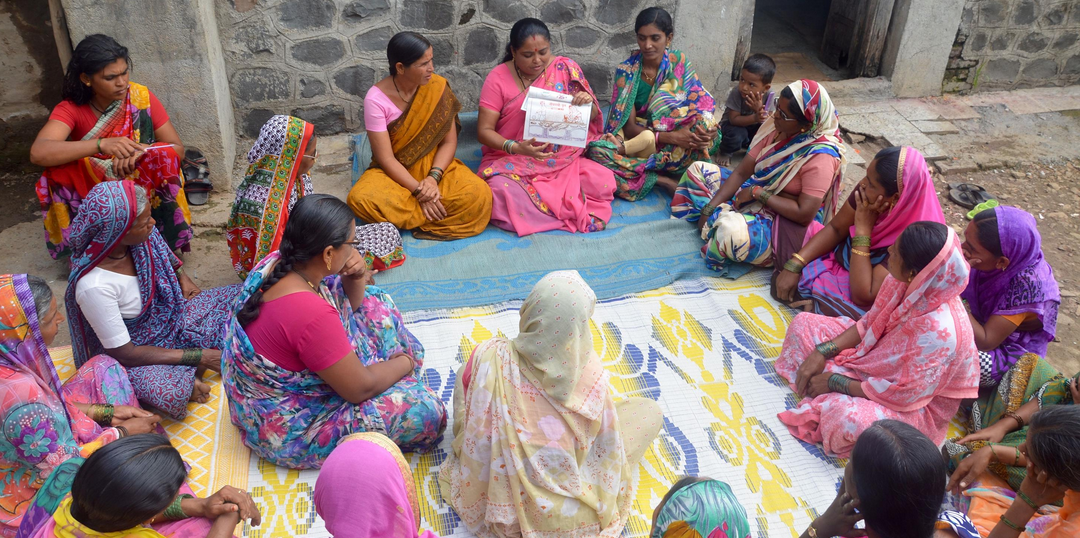
The strategy developed by the CRHP relies on stakeholder development and long-term partnerships with local leaders and community groups. Health and development priorities are generated and mutually enacted by village leaders and the programme staff who facilitate and provide technical support. With the CRHP's assistance, village elders are tasked with the initial selection of VHWs, who are sent to the CRHP centre for intensive training. The goals and competencies of CRHP's training programme includes 3 underlying themes - building relevant health knowledge, skills, and personal development - including leadership coaching. All VHWs receive supportive services, including field training, referral care, and health surveillance. Weekly follow-up training is organised at the CRHP training centre for established VHWs who gather to engage in collective problem-solving activities and skill building.
This study defines empowerment as a means by which individuals gain health and development-related skills and knowledge to facilitate positive change within their lives and communities. Using VHW training observations and semi-structured interviews with health workers and senior trainers, 6 themes were developed and applied in 4 focus group sessions with 18 multigenerational VHWs trained by the CRHP. Transcripts were qualitatively analysed under 6 themes:
- Selection: qualities and qualifications for community acceptance of VHWs - Focus group participants reflected on qualities that resulted in their selection and acceptance as VHWs by the community. A consistent set of values and qualities were perceived important in providing health care and mobilising people around common interests. Prem and maya, meaning love and affection (toward the community), respectively, were often expressed. The CRHP model enables a critical consciousness to develop among VHWs, similar in approach to Freire's critical pedaegogy, which facilitates VHWs to examine the social, political, and economic contradictions that lead to oppression of women and untouchables, eventually leading to social change.
- Baseline training: effective learning methods and settings - Participants in all groups described experiential field learning with guidance and support by the mobile health team as the most effective method of understanding health concepts. The CRHP espouses that iterative, experiential, and visual learning methods are effective educational strategies for low-literacy adult learners. Empowerment of VHWs was found to be an intentional process involving the creation of safe and supportive environments conducive to long-term participatory and experiential learning with professionals who facilitate and mentor.
- Continuing education and support: developing trusted sources of knowledge - The impact of the baseline training is maintained through ongoing programme-VHW interactions and knowledge reinforcement. A major benefit of providing longitudinal training for the VHWs both at the training centre and in the field is that consistent information is provided by different individuals at multiple levels, facilitating the VHWs' learning process and reinforcing their trust in this knowledge.
- Community participation: critical assessment and community diagnosis - Community participation was found to be of key importance starting at the selection phase. An integral component of the VHW training programme is the development of a sustainable process of critical assessment of local health and development issues, which includes facilitated community self-diagnosis. This process is possible because "the VHWs are integral members of their communities and are well positioned to gradually chip away at inequity and injustice in a sustained and less threatening manner, which is a concern whenever existing paternalistic power structures become threatened." All focus group participants discussed how their training empowered them for a lifelong process of critical assessment. "Empowered VHWs gained a strong sense of ownership and pride in organizing health and development programs, especially those dealing with water and sanitation, that enabled communities to tackle the root causes of illness."
- Community empowerment: defeating stigmatisation of illness and social division - Health education offered through the CRHP's empowerment-based training respects people's knowledge, beliefs, and sacred values, while reframing these illnesses in a more positive perspective with emphasis placed on treatability, prevention, and etiology. Training and ongoing support encourages a discourse regarding local norms and health information in a culturally sensitive and judgment-free environment. All VHWs emphasised the value and importance of showing love and affection for people with stigmatised illnesses to enable rehabilitation. Downstream effectiveness of community empowerment on health outcomes is demonstrated through indicators such as access to safe deliveries, declining child malnutrition rates, high vaccination rates, and reductions in stigmatisation of illness and caste discrimination.
- Commitment and longevity: motivation to serve - Participants described how the responsibility of being a VHW, combined with respect, trust, and support from the community as well as from the CRHP, provided the energy and motivation to serve. "Despite the limited literacy of many VHWs, strong confidence is displayed in their ability to carry out the work. Buttressed by ongoing peer mentorship with staff support, VHWs assimilate evidence-based information and apply it in a practical manner. Indeed, the lack of an educational prerequisite enables more equitable participation of women from lower socioeconomic and caste groups who might otherwise be excluded from recruitment." Notably, all 18 focus group participants described having one or more local leadership roles, including as Sarpanch or mayor of the village, providing a platform to further spread awareness about health and social concerns.
Reflecting on the implications of the findings, the researchers note, in part, that the results may support the development and scale-up of effective CHW programmes with the aim of furthering the Sustainable Development Goals (SDGs). The fifth SDG seeks to achieve gender equality and the empowerment of women. "Empowering CHWs is one important step in achieving this goal as empowered CHWs interact with adolescent girls and other women and thereby serve an influential and mentoring role. These results are consistent with the body of evidence surrounding recommendations for the implementation of CHW programs in terms of supervision and support, reducing hierarchical structures, fostering community engagement and mobilization skills among CHWs..."
In conclusion: "Empowerment-centered training connects the learners' open-ended life experiences with a systematic curriculum that gets molded to the health and development needs of each community....With time and ongoing skill acquisition, CHWs transition into leadership roles within their communities - further facilitating social change that promotes equity and cohesion. This includes increasing women's status, breaking down caste discrimination and mobilizing community members to tackle long-standing health and social challenges through collective action."
INQUIRY: The Journal of Health Care Organization, Provision, and Financing. Volume 61: 1-12. https://doi.org/10.1177/00469580241235059. Image credit: CRHP via Facebook