










































On "Shrinking Space": A Framing Paper
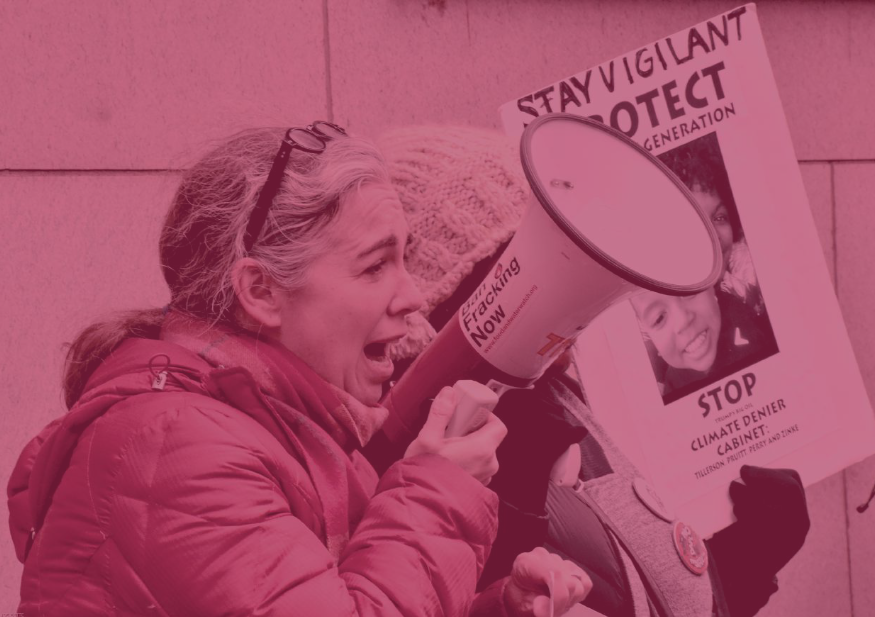
"The 'shrinking space' dilemma is by its very nature characterized by groups which in practice face little more than 'first world problems' speaking on behalf of those activists who never had any space to begin with - groups whose very existence has always been premised on carving out that space in the face of tremendous adversity and repression..."
This Transnational Institute (TNI) paper considers the efforts of civil society organisations (CSOs) to mobilise to understand and counter "shrinking space", or restrictions on political struggle - who is affected and why, where is the trend headed, and what are some of the problems inherent in the concept?
TNI defines "shrinking space" as "a concept or framework that captures the dynamic relationship between repressive methods and political struggle, including the ways in which political struggle responds to these methods to reclaim space, and the impact this response has upon how political struggles relate to one another." What of the meaning of "space"? This concept itself has different definitions: Some understand it as limited to space to influence policy (a seat at the table), while others define it as political space to organise, operate, have a legitimate voice, protest, and dissent. These distinctions concerning how "space" is conceived shape the type of response warranted, with implications for who engages in that space and how.
TNI observes that, across the world, in both democratic and non-democratic states, many activists and social justice organisations face an increasingly repressive and securitised environment as well as attacks on their legitimacy and security. Within the "shrinking space" discourse, there are 10, often interrelated, trends outlined in the paper that constrain the political space in which CSOs operate. To cite only 2 examples: (i) the criminalisation, stigmatisation, and de-legitimisation of so-called human rights defenders (HRDs) (a term that encompasses all actors engaged in non-violent advocacy for human rights and social justice), as well as the criminalisation of refugees' solidarity; and (ii) the restriction of freedom of expression in general as well as online, directly through censorship and intimidation, and indirectly through "mass surveillance".
The paper goes on to ask: Space for whom? Central to understanding and evaluating the usefulness of the "shrinking space" framework/discourse is understanding how "civil society" is defined in the first place. It is not a monolithic or homogenous entity. As noted here, it is grass-roots, community-based, and issue-based social, economic, political, and environmental justice movements that appear to be bearing the brunt of the crackdowns by authoritarian governments, violent non-state actors, and even democratic governments. Therefore, when evaluating the "shrinking space" framework, it is advisable to begin by acknowledging that that there is not and never has been one single space in which everyone participates on an equal footing. Along these lines, TNI argues that "the effects of the shrinking space discourse are "problematic and directly harmful to certain segments of civil society." Under that rubric, for example, governments of the Global North have been able to profess support for "civic space" and HRD initiatives in the Global South while adopting domestic policies and promoting collusion with corporations that contribute to "shrinking space", ignoring the abuses meted out by their client states and multinational corporations.
Also described here is use of "shrinking space" as a political tool in a way that pits different forms of civil society organising against one another while seeking to break the bonds of solidarity that form the backbone of struggles for fundamental rights and social justice. Furthermore, it is argued that, even in countries where new, restrictive civil society laws have caused most concern - India and Israel, for example - it is not civil society writ large that is suffering, but CSOs with particular aims and objectives. Only where civil society faces complete subjugation under the law, as is the direction of travel in the likes of Egypt and Russia, can we identify something approaching an apolitical form of "shrinking space". Elsewhere, and without exception, the means of "shrinking space" in the government toolbox are applied selectively to suit political ends.
To understand "shrinking space", the paper also consider trends within the "civil society" sector. One example: the focus on the individual rather than the struggle, as can be seen in: the HRD discourse, the idea of civil society champions, and talk of "women and girls" in place of women's rights and gender equality.
TNI contends that, rather than simply looking to the powerful to understand and counter "shrinking space", we should be looking to the voices and experiences of those on the margins whose political space is being obviously and radically restricted. The paper cites several examples from around the world, such as what is happening to the Boycott, Divestment, Sanctions (BDS) movement, launched in July 2005 by Palestinian civil society, the attempts to suppress Black Lives Matter in the United States (US), the assassination of Honduran activist Berta Cáceres, and the criminalisation of environmental activists throughout the world who pursue radical action against extractivism.
The paper concludes that, if we are to tackle the problem of "shrinking space" and its effects on civil society, we need to:
- "understand the distinct politics of the clampdown and its relationship to neoliberalism, authoritarianism, insecure bastions of power trying to regain control, and the global economic crisis (how does civil society relate to systems of power, or the 1%, or the 99%).
- ...better define the problem in a way that speaks to the political, legal, physical and ideological battles at the heart of the 'shrinking space' dilemma.
- ...focus on the actors mobilising collectively, who are genuinely challenging power and who face the most serious threats - and understand their 'shrinking space' with respect to those whose space is increasing.
- ...do so within a framework that recognizes that activists, and the wider social movements that they are part of, experience different levels of oppression and violence as a result of their particular identities and the wider struggles which they represent, such as combating white supremacy or violent misogyny.
- ...take seriously the proposition that 'civil society' may not be the appropriate lens to look at the wider repression of social movements, and that securitization instrumentalizes CSOs to such an extent that it may one day permanently close the door on the spaces where real change is made.
- ...put the complicity of governments and corporations front-and-centre of the fight-back...[and]
- ...rediscover genuine solidarity that resurrects the principle that injustice anywhere is a threat to justice everywhere, and give visibility to those whose struggles are being repressed to the ultimate detriment of us all."
C4D Network Twitter Trawl: 10 - 16 April 2017 and TNI website, April 19 2017. Image credit: Joe Piette on Flickr
- Log in to post comments