










































Researcher Attitudes and Behaviour Towards the 'Openness' of Research Outputs in Agriculture and Related Fields
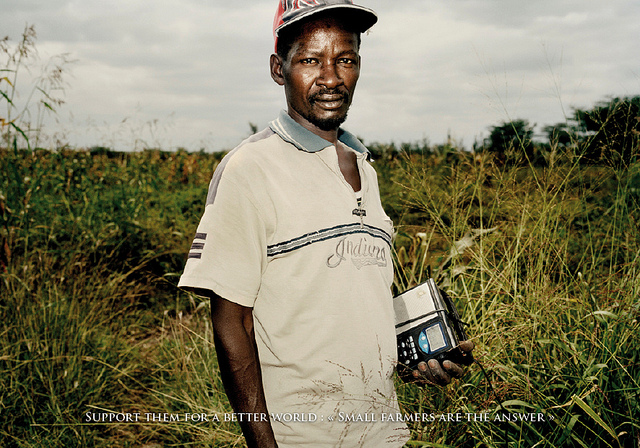
Food and Agriculture Organization of the United Nations, or FAO (Edge, Martin, Rudgard); CGIAR (Manning-Thomas)
"Agricultural researchers in developing countries are keen to communicate their research to non-experts, but often feel hampered by institutional barriers and a lack of support..."
Published in Agricultural Information Worldwide, this paper shares the details of an online worldwide survey of researchers in agriculture and related fields that sought to gain greater understanding of researcher behaviours and attitudes in relation to communicating research outputs and making such outputs open and accessible to all. It was carried out in March 2011 by CGIAR, FAO, and Global Forum on Agricultural Research (GFAR) on behalf of the CIARD movement. CIARD aims to stimulate the openness of all types of research output, including theses, images, data, grey material, and so on. Furthermore, CIARD aims to stimulate innovative pathways for the sharing of research outputs.
There were almost 1,500 responses to the survey, with 50% of respondents identifying that they worked in Latin America and 33% in Africa. Some 80% of respondents in all regions considered "contributing to alleviating hunger and poverty" to be a key driving factor for communication, and there was an overwhelming preference for open access, no- or low-cost routes for research publishing. The survey analysis shows that, although researchers are driven in their work by these types of different and interacting motivations, institutional/organisational factors are very important and have much influence over individuals' behaviour. Often, making a research output freely and openly available can be in the hands of the individual, and some will act in this way. However, for many others there are perceived barriers to this, such as the lack of required resources and of institutional policies to drive these activities.
In developing countries, particularly French-speaking ones, traditional channels - including journals, books, and conferences - were still the most widely used platforms for disseminating research findings. However, researchers also expressed a desire for training in the use of digital communication platforms and social media, citing a "lack of workplace incentives" as the main reason for the low uptake of digital platforms.
The authors of the study say that, to improve science communication, senior research managers should revise their policies to encourage individuals to change their behaviour. In the words of one author, Franz Martin: "There must be enabling frameworks for change; if you don't provide enabling environments, you are not going to change the way researchers share their information. According to Martin, CIARD is collecting information on the communication policies of research organisations in developed and developing countries, with the aim of using these to highlight good practice. Martin added that researchers must be encouraged to choose digital platforms to disseminate their research in order to reach intended audiences so that the research can have a maximal impact.
"Agricultural Research Communication 'Needs More Support'", by Imogen Mathers, SciDev.net, August 10 2012; and email from Stephen Rudgard to The Communication Initiative on June 22 2013. Image credit: Flickr/COLEACP PIP/Aurélien Chauvaud
- Log in to post comments