










































Reflections on the 18th IMB Report: Communication Themes and Priorities
"[T]he IMB report underscores the urgent need to answer the question of what will be the programme's 'new normal'."
The 18th report of the Independent Monitoring Board (IMB) of the Global Polio Eradication Initiative (GPEI) was written in July 2020, at a time when the polio programme had been largely suspended to focus polio resources on the worldwide response to the COVID-19 pandemic. Designed as a catalyst for discussion, this document captures reflections from The Communication Initiative (The CI) on the main communication themes and recommendations raised by the IMB's 18th report (see Related Summaries, below).
In the document, The CI begins by observing that the polio programme was already facing significant issues and questions well before COVID-19 arrived on the global scene. Namely, "Since the Nigeria boycott of 2003, or even before, the GPEI has seen its neutrality erode. What should be the simplest of health interventions - delivery of a safe oral polio vaccine [OPV] - has become complex. It has been politicised and turned into a bargaining chip for various geopolitical interests, on the one hand, and communities advocating for other services or wishing to express frustration with government, on the other."
Thus, what The CI deems "the big question" posed by the IMB in its 18th report is whether it is time to shift from a communication focus that centres around persuading people to vaccinate their children against polio to a more integrated approach that embeds polio vaccination within a range of related services in high demand by the often-deprived communities it seeks to reach - for example, collaboration with other partners to provide ancillary services related to polio such as water, sanitation, and hygiene (WASH). Otherwise, we risk continuing to see "the growth of refusal, anger, and frustration directed at polio workers, the spread of rumours and disinformation, and low levels of demand and uptake."
The spinoff questions The CI outlines take on fresh urgency in the context of COVID-19, which has seen the polio programme's largely positive contribution to the pandemic response. However, the IMB worries that it is unclear how pandemic work has impacted other essential polio functions, including communication; plans and strategies should have accounted for the dual roles many polio staff will continue to play as the pandemic rages. Per the IMB, the GPEI should have also set forth exactly how it plans to systematically monitor how communities are reacting to OPV campaigns during COVID-19 so that communication can be tailored accordingly.
COVID-19 is also relevant to IMB's discussion of the complex vaccine environment, which forces countries not only to strategically prepare for communication around an eventual SARS-CoV-2 vaccine but also to grapple with questions around the 5 polio vaccines that are currently available. "The main communication questions here are linked to the fact that the foreseeable vaccine environment will demand the programme be prepared for the risks and potential fallout from the use of a variety of vaccines....Have the communication issues related to this vaccine environment been adequately thought through, and are plans in place to respond?"
Considering the IMB's overarching worry that the polio programme has not yet grasped the full dimensions of the communication challenges it faces, The CI looks at communication strategy and insight as applied to specific contexts, including:
- Pakistan: In this polio-endemic country, where COVID-19 has had a deep impact, misconception-related polio vaccine refusals persist, indicating the continuing need for trust-building activities. In this context, the IMB raises concern about the decision to scale down the community-based vaccinator (CBV) programme, noting that, while this was based, for example, their limited ability to conduct between-campaign community engagement and trust-building activities, there are considerable risks with replacing them with campaign-based mobile teams. Furthermore, attempts to engage Pashtun communities in the polio effort "cannot be siloed and will require a range of communication approaches informed by Pashtun culture and led by Pashtun staff with a genuine understanding of local conditions, health seeking behaviours, and influential social networks."
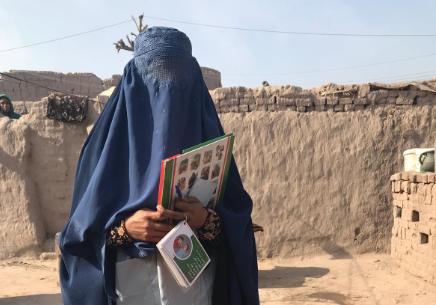
- Afghanistan: The IMB also stresses the need for better community engagement to reduce growing numbers of refusals and still-missed children in this polio-endemic context. Among the additional communication challenges in Afghanistan is denial of access by vaccinators to anti-government element (AGE)-controlled areas, which will require different negotiation approaches and alternative ways of vaccinating children. The 18th report lays out the basic arguments for and against the engagement of a third party (e.g., a non-governmental organisation) to deliver polio vaccination, in the event that trust cannot be rebuilt between AGE and the polio programme, and urges the programme to make a decision. The IMB also stresses the need to address the fact that, in accessible areas, refusals continue to grow.
- Nigeria: In light of Nigeria's August 25 2020 certification as free of wild poliovirus (WPV), communication imperatives include: planning now for funding and resource scale-down; retaining the ability to respond quickly if needed to any outbreaks of circulating vaccine-derived poliovirus (cVDPV); communicating to the public the ongoing risk of cVDPV; and sustaining political momentum for continued vigilance.
In light of The CI's analysis of the 18th IMB report and the lacunae identified there, one recommendation going forward might be to engage communication experts from outside the polio programme in strategic planning. They might be well positioned not only to incorporate more culturally embedded knowledge (e.g., when designing trust-building activities) but also to create feedback loops that "speak truth to power". Such experts could draw on newer approaches such as use of social media, human-centred design (HCD), and activities incorporating behavioural insights. Per The CI: "It may be time to ask how these perspectives and skills can be brought more directly to bear on the development of global, national, and local communication strategies and activities."
Image credit: Chris Morry
- Log in to post comments