










































Project HEPA: Communicating Indigenous Voices of Southern Madagascar
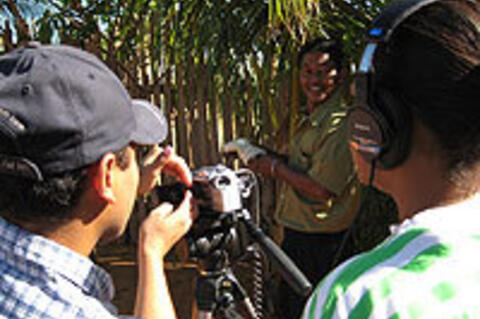
In November 2007, 8 men and women from 4 Antanosy communities, together with 4 ALT staff, developed their oral testimony interviewing skills during a 6-day workshop. Training included strengthening questioning skills, using recording equipment, and developing interview relationships. Role-plays, drawings, and other experiential methodologies were used to ensure that low literacy levels were not a barrier to full participation. Participants gave the project the name Project HEPA – an acronym from a Malagasy phrase meaning "Proclaim what is in your heart".
Most of the oral testimony work was carried out in the Anosy and Androy regions. From a total of 54 interviews, 40 have been translated into English. Click here to read 4 transcribed and edited life stories from Androy.
All participants have kept their recording equipment and are planning to record more interviews in the future. ALT is also producing a series of radio programmes based on the life stories for audiences across southern Madagascar.
The films were produced in April 2008 in the coastal community of Faux Cap, Androy. Over 10 days, 8 men and women were trained and supported by Living Lens to plan, shoot, and contribute to the editing of the films. Participants worked in groups related to the issues they wanted to address - animal husbandry, dunes, fishing, and agriculture - and produced a total of six 10-15 minute films. Once edited, the films were shared with the wider community at a screening event attended by over 500 people.
The ALT is also currently organising a screening event in Ambovombe, the region's capital, to show the films to regional decision makers and elders from the Androy community. It is hoped the films will catalyse debate about the challenges facing the Antandroy and inform future development activities.
Click here to view a selection of the 3-minute films.
In addition to communicating the films and life stories to local and regional audiences via radio and community events, the project also plans to reach national audiences through a Malagasy and French publication, as well as through television and print media coverage. Panos London is also using the internet to reach international audiences.
Environment, Climate Change, Rural Poverty
This project is funded by the International Fund for Agricultural Development (IFAD).
Panos-London, ALT, and Living Lens - with IFAD funding.
Email received from Valentina Baú, Panos London, to Soul Beat Africa on August 13 2008; and Panos website on August 29 2008.
- Log in to post comments