










































Pink Is the Colour of Resilience
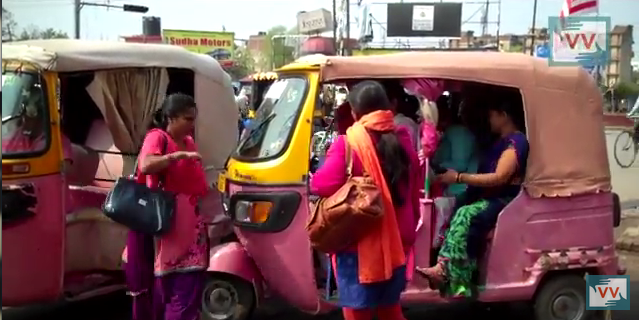
"Pink is not readily associated with grit, determination and courage. But this is the story of Shanti Lakra, one of 200 female auto drivers in Ranchi...Watch how she negotiates the roads, life and dreams of putting her two daughters through school as a single mother."
This video tells the story of Shanti Lakra, one of the women who have been trained to drive rickshaws to make a living in Ranchi, Jharkhand, India. The pink autos were introduced in Ranchi in 2013 after the gang rape of Jyothi Singh in Delhi as a means of ensuring safer public transport for women. It is just one of a series of videos created by the India-based international community media organisation Video Volunteers, or VV (see Related Summaries, below).
The videos emerged from VV's Dismantle Patriarchy Campaign, called #KhelBadal: The idea is that, to "reverse the stranglehold of patriarchal status quo in our society we need a game (Khel) changing (Badal) strategy. #KhelBadal is all about having conversations that invite all of us, irrespective of our gender, sexuality, class and ethnicity, to reflect on our own, subconsciously internalised sexism and challenging it. Launched in November 2016, the 1-year campaign is taking on patriarchy, conceived as the root cause of all gender discrimination, through stories of women and men who face, negotiate, and challenge patriarchy in everyday life - at home, at work, at school, and in cultural and public spaces. To that end, VV trained 63 Gender Correspondents across 16 states to make films that capture the nuances of routine, normalised gender discrimination and to run Gender Discussion Clubs where lively, introspective conversations are happening. Simultaneously, they are generating online discussions with their staff and online followers and encouraging them to share their stories. "We're bridging the digital divide and enabling urban and rural women to exchange experiences and learn from each other."
Specifically, this video shows the viewer that scepticism about women's ability to drive was no deterrent to Shanti Lakra, who is the sole breadwinner for her small family (having been "abandoned by her husband"). The training camp for female auto drivers was held close to her daughters' school. "Even though people around her expressed skepticism about her ability to drive or even the utility of learning to drive for a housewife, Shanti pushed on. Today her determination has borne fruit. She is putting her daughters through school and hopes to see them as successful self-reliant women. The autos have not only ensured safer public transport for women but also pushed individuals like her into what was essentially a male dominated profession, dismantling gender stereotypes."
VV believes that, as this video series is meant to demonstrate: "Gender discrimination is normalised and perpetuated through our families and unless we are able to transform our private spaces to more gender equal ones, we can never end sexism and discrimination in public arenas."
Posting from Sangeeta Rane to the India Network on The CI's Development Groups space (log in and click here to join) on November 30 2016, and Video Volunteers website and YouTube, both accessed on December 12 2016.