










































Phukusi la Moyo (Bag of Life)
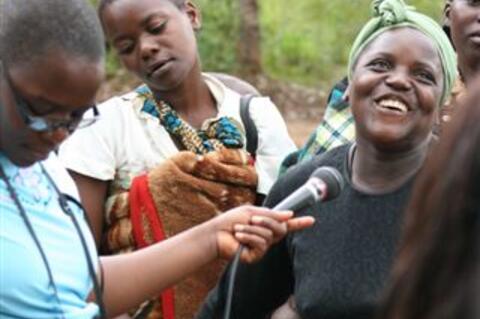
Phukusi la Moyo is a weekly 30-minute mother and child health radio show broadcast by Mudzi Wathu Community Radio in Mchinji District. According to the producers, it was developed in response to a need for education about maternal and child health in Mchinji District.
One of the programme's objectives is to move beyond "messaging" and a one-way "pushing content" approach towards more interactive and engaged models for local educational programming. Training for existing women's groups draws on the experience of both Mudzi Wathu radio and MaiMwana Project. Three representatives from each of the 200 groups are being trained in the skills necessary to facilitate: discussions about the programmes; the application of what women are learning to their own situations; and group-based learning activities and skills development. The groups were established by MaiMwana in 2005 and have been engaging in a community mobilisation action cycle in relation to mother and child health. This has involved meeting on a regular basis to:
- identify mother and child health problems;
- explore the causes of these problems and the ways to prevent and manage them;
- develop locally feasible strategies to address these problems;
- implement these strategies; and
- evaluate the results of these strategies on mother and child health.
Two representatives from Mudzi Wathu Community Radio Station, two from the District Hospital, two from MaiMwana Project, and three from communities in Mchinji participated in the workshop, which was supported financially by the Commonwealth of Learning with major in-kind contributions from all parties. The workshop stimulated the development of the following:
- a list of maternal and child health issues on which to focus the programme's core messages;
- a message matrix listing, in relation to each identified issue: 1) negative behaviours/practices; 2) possible consequences of the negative behaviours; 3) positive/expected behaviours; and 4) the benefits of practicing the positive/expected behaviours;
- a programme matrix listing each programme in the series, including: the theme or the issue under discussion, the communication objectives (expected outcomes), the intended audience, and likely interviewees;
- a format for the programme - in this case, a magazine featuring interviews, debates, vox pops (voice of the people), drama, listeners' letters, quizzes, poetry, and human interest stories;
- a set of programme success factors, including the roles and responsibilities of each partner; and
- a strategy for the role of listening groups in the programme.
The Phukusi la Moyo programme is designed to allow community members to participate in all aspects of the programme. The programmes include field recording and live interaction. Organisers say that the programme is participatory in design and draws on local voices together with local and national knowledge organisations for the formulation and contextualisation of learning objectives. Building on MaiMwana Project's community-based approach, the organisation say there is already a sense of ownership for the programme among the communities, which arises from their engagement in the process.
Envisioned to run for about three years, the programme incorporates off-air elements and complementary media for learner support. Community activities are facilitated by trained local women who use visual aids such as picture cards and participatory rural appraisal (PRA) methods to stimulate discussions.
Children, Maternal Health
Malawi's maternal and child mortality rates are amongst the highest in the world. In Malawi, only about half (57%) of women deliver in a health facility, only 57% of women attend the recommended four antenatal care sessions, and only one-third (31%) of women and children receive postnatal care.
The decision to use community radio came out of the lessons learned from MaiMwana Project's first five years working in Mchinji district and the explicitly expressed needs of women in Mchinji for more information and education about mother and child health issues. Data suggest that there is potential for 80% of households in Mchinji District to listen to Phukusi la Moyo. In parallel to this coverage of individual households, the MaiMwana Project aims to scale up the number of groups/listening clubs in Mchinji gradually over the next few years, with approximately 500 groups running by early 2010 (covering half the district) and approximately 1,000 groups by early 2011 (covering the entire district).
MaiMwana Project, Mudzi Wathu Community Radio station, Story Workshop, Commonwealth of Learning
Email from Sarah Ball to Soul Beat Africa on June 16 2009; and Wikieducator website on June 25 2009 and May 6 2010.
