










































The People in the Pictures - Vital Perspectives on Save the Children's Image Making
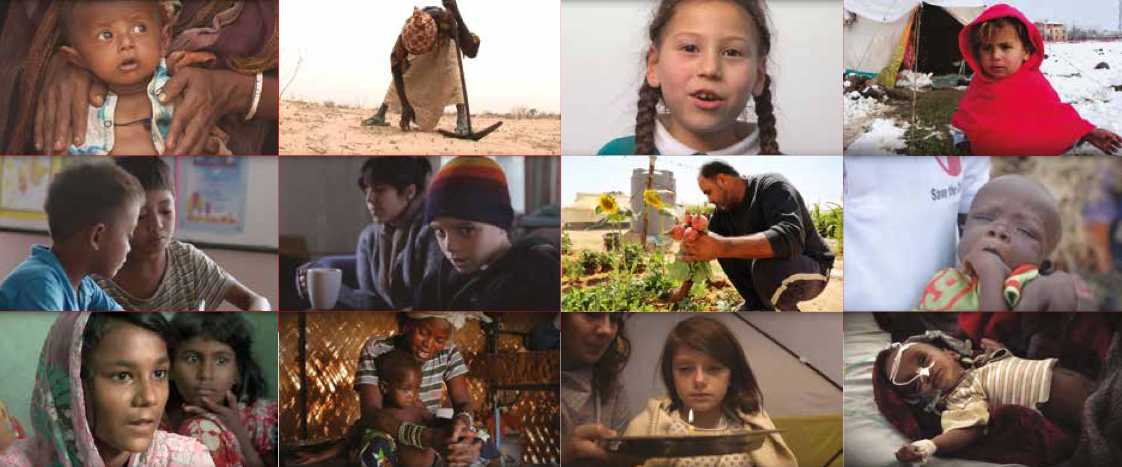
“Debates about the visual representations of global poverty have been going on for many years, yet the experiences and views of those featured have been notably absent.”
This report shares the findings of a research project conducted by Save the Children that sought to to give voice to and understand those who contribute their images and stories to Save the Children for fundraising, campaigning, and/or awareness raising purposes. The research, which was conducted in the United Kingdom (UK), Jordan, Bangladesh, and Niger, sought to explore: What motivated people to agree to Save the Children filming or photographing themselves or their children? How did people experience and perceive the image-making process? How did people feel about their portrayal in the resulting Save the Children communications? And what were the consequences (real and anticipated), positive and negative, in agreeing to contribute? Save the Children hopes that by sharing the findings, they will catalyse new conversations and contribute new perspectives to the long-running discussions on representations of global poverty and international non-governmental organisation (INGO) communications.
As explained in the report, “[D]iscussions about human dignity have long focused on the image itself, with much of what is considered ‘famine’ imagery, such as images of children suffering from malnutrition, being regarded as undignified. While it is important to consider different ways of visually representing suffering, we must not rely on this to resolve the dignity problem. Instead, the site for addressing dignity must move beyond the image to the image-making process and towards recognition of the contributor as a stakeholder in that process. For contributors, having a choice in how they are represented and a clear understanding of the purpose and value of sharing their image and story is dignified. It is this notion of dignity which has informed, and is reinforced by, this research.”
The research involved a total of 39 interviews and 21 focus groups, using inclusive and participatory methods. In each research site, participants reviewed and discussed a range of Save the Children communications, including TV adverts, short films, media features, and fundraising materials, all translated into relevant languages. There were 202 research participants: 69 women, 50 men, and 83 children. Of these 202, 53 were contributors (men, women, and children who featured in finished content), 19 were staff members, and 130 were members of contributors’ communities who did not feature in the finished content (referred to as non-contributors).
Overall, the research has highlighted many areas of good practice, as well as some concerns and challenges. The findings are grouped into three main themes: motivations, process, and portrayal.
Motivations
The contributors’ decisions to be photographed or filmed by Save the Children were informed by a range of factors and motivations, including:
- a desire to raise awareness of an issue and help others
- a desire to have a voice and be heard by others
- a belief that it could lead to assistance for their child
- an existing relationship with Save the Children.
Process
- Good process matters for both contributors and Save the Children staff. When contributors felt they were treated with sensitivity and respect, they felt valued and good about their contribution.
- The use of consent forms was universal, but in Jordan, Bangladesh, and Niger, contributors appeared to have only a limited understanding of why Save the Children wanted to film or photograph them and how their image and story would be used.
- Feedback and follow-up after image-gathering were valued by both contributors and Save the Children staff, but were only standard practice in the UK.
- Children have strong views on image making. The children who participated in this research talked about the need for image makers to always seek permission to film or photograph children. The children in Jordan who had participated in a Save the Children photography project talked positively about the opportunity and the importance of creating images themselves.
Portrayal
- Most contributors were satisfied with their portrayal. For those in Jordan, Bangladesh, and Niger, the interview for this research was the first time they’d seen the Save the Children communications featuring themselves or their children.
- Media access influenced views on portrayal. Research participants with greater access to visual media, in the UK and Jordan, were more concerned with the potential negative consequences of their image and story being published.
- Research participants understood the need for the use of images of suffering for fundraising purposes.
- Research participants expressed their preferences for balance in portrayal – for images and stories that show resilience and solutions alongside those that show needs and problems.
- Research participants preferred content in which contributors are able to speak for themselves.
The recommendations emerging out of the research findings support improved image making that is responsible, accountable, and respectful of the rights and priorities of contributors. Although the research demonstrated that much of this happens already, it is not happening everywhere, and not all the time. For this reason, Save the Children needs to put in place changes to guidelines, policy, and procedures to work towards responsible image making becoming a reality for all contributors all the time.
Specifically, Save the Children should find ways to recognise contributors as stakeholders, and therefore should ensure that contributors:
- have knowledge and understanding of the purpose of the image making;
- experience genuine choice about whether to be portrayed or not;
- are able to share any preferences and concerns about their portrayal;
- have opportunities to express themselves and tell the stories that are important to them; and
- receive copies of the images taken and content they contributed to.
Overall, recommendations can be summarised as follows:
- Invest in creative and collaborative approaches to image making.
- Uphold contributors’ rights and fulfil the duty of care.
- Understand informed consent as an essential process.
- Commit to sensitive and effective communication before, during, and after image gathering.
- Ensure that human dignity is upheld in the image-making process, not just in the image itself.
Save the Children website on July 10 2017.
- Log in to post comments