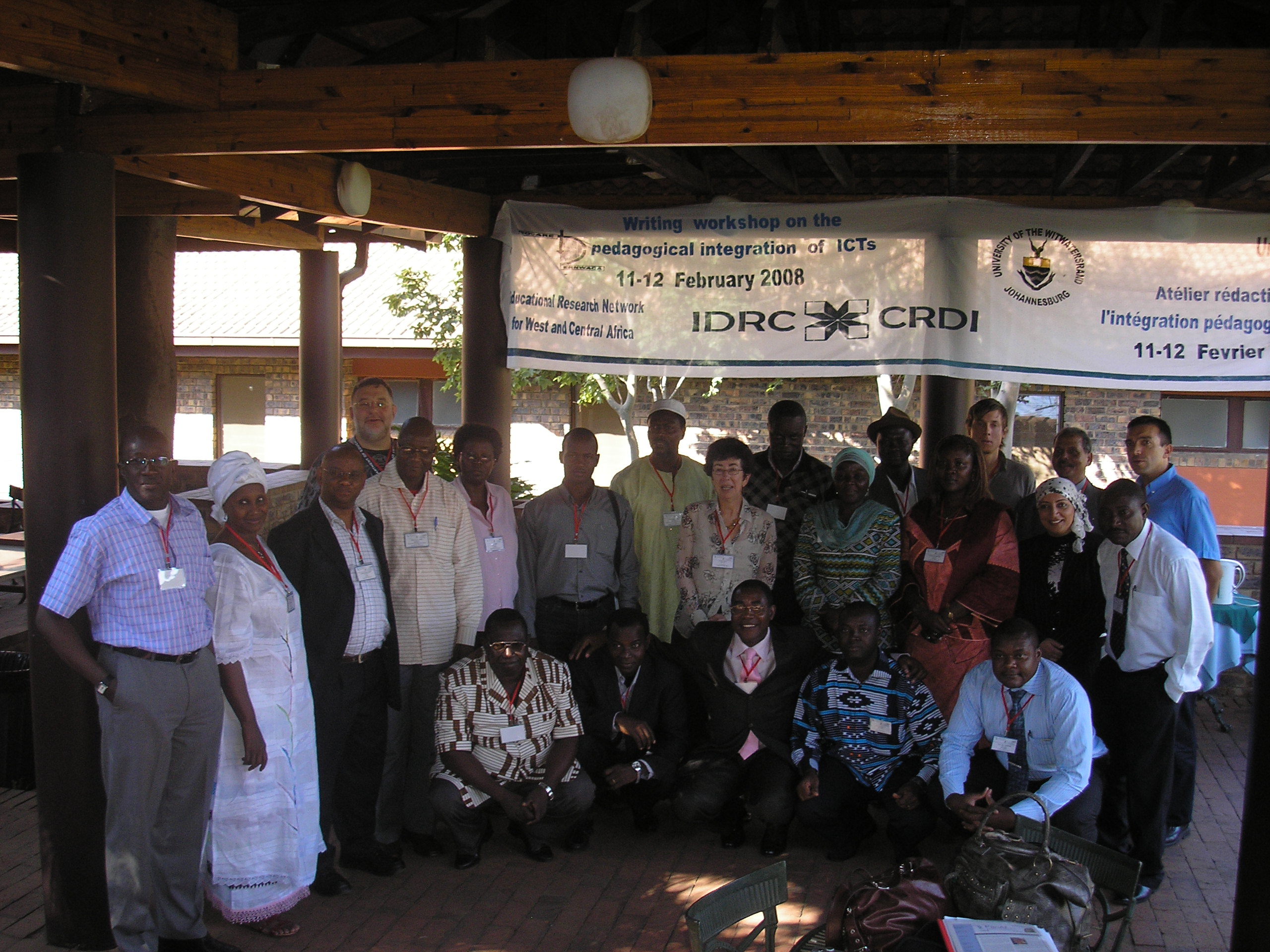
Pan-African Research Agenda on the Pedagogical Integration of ICTs

PanAf seeks to encourage knowledge networking by those interested in improving education outcomes in Africa through a learner-centred and evidence-based integration of ICTs. In addition, PanAf hopes to give a voice to African researchers, development practitioners, school leaders, educators, and learners, and to enable them to share their knowledge globally.
The project has been divided into two phases. The first phase (2007–2009) includes:
- establishing research teams in 13 sub-Saharan African countries;
- creating an open, online Observatory where researchers share approximately 20,000 data points for over 180 indicators along 12 themes, from over 100 African schools (including hundreds of downloadable raw data files in the form of policy documents, recorded interviews, scanned questionnaires, and examples of ICTs in teaching in learning);
- providing an open-access mapping of current data, intended to create a space for African researchers and educational institutions to share information that reflects their actual experiences with the paedagogical integration of ICTs; and
- initiating processes to encourage academic and practical publications by participating African researchers.
Following Phase 1 of the project, PanAf produced national reports of the participating countries in the project. Click here to download the reports.
The second phase of the PanAf project includes improving teaching and learning through the integration of ICTs by developing and communicating recommendations and solutions for education policy-makers and practitioners.
Education, Information and Communication Technologies (ICTs)
The general objective of the project is to enable an effective and substantial paedagogical integration of ICTs for the improvement of the quality and efficiency of teaching and learning at all levels of African education systems. Other objectives of the project include:
- promoting policies and strategies supporting embedded and systematic ICT practices in education;
- promoting an ICT-inclusive paedagogy by introducing the needed changes in curricula and instructions at different levels of African education systems;
- evaluating the impacts of an ICT-inclusive paedagogy on student and teacher knowledge, skills, attitudes, and performances;
- providing teachers, students, and researchers with practical guides and handbooks for an effective paedagogical integration of ICTs; and
- consolidating the PanAf network and its extension to new member countries and new partner organisations.
Département de Sciences de l’Education, Ecole Normale Supérieure, Université de Yaoundé I, Cameroun; École Normale Supérieure, Congo; École Normale Supérieure, Côte d'Ivoire; University College of Education, Ghana; School of Continuing and Distance Education, University of Nairobi, Kenya; Département des Sciences de l’Éducation, Institut Supérieur de Formation et de Recherche Appliquée (ISFRA), Mali; Department of Evaluation and Research, National Institute for Education Development (INDE), Mozambique; École Normale Supérieure; République Centrafricaine Faculté des Sciences et Technologies de l’Éducation et de la Formation (FASTEF), Université Cheikh Anta Diop de Dakar (UCAD), Sénégal; School of Education, University of the Witwatersrand (Wits), South Africa; Ecole Nationale d’Ingénieurs de Tunis (ENIT), Université de Tunis, Tunis; School of Adult Education and Communication Studies, Makerere University, Uganda; and School of Education, University of Zambia (UNZA), Department of Library & Information Studies.
Email from Dramane Darave to Soul Beat Africa on June 26 2009; PanAf website on July 1 2009; and email from Dramane Darave to The Communication Initiative on July 15 2009 and March 16 2010.