










































Nourishing Millions: Stories of Change in Nutrition
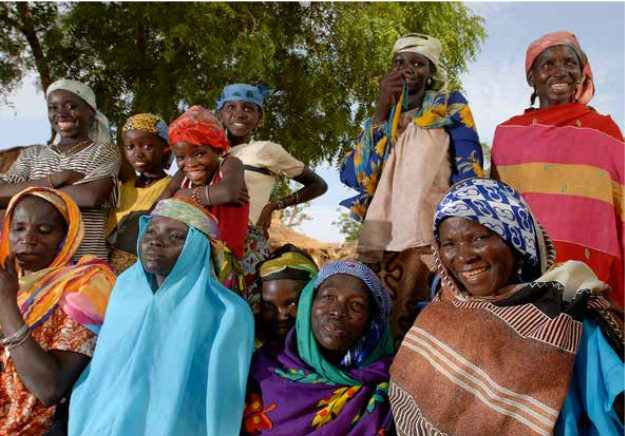
"Statistics are important in fighting global hunger and malnutrition, but it's critical that we don't forget the names, faces, and stories of those who feel it firsthand." - Stuart Gillespie, IFPRI senior research fellow
The International Food Policy Research Institute's (IFPRI) Nourishing Millions: Stories of Change in Nutrition project brings together several narratives of change - of country-level progress, of successful programmes and interventions, and of stories of individual leaders and nutrition champions - in an effort to guide the work of policymakers, development practitioners, donors, educators, students, and researchers. The project complements and links with the Stories of Change project coordinated by Transform Nutrition, a consortium of 5 international research and development partners using research-based evidence to inspire effective action to address undernutrition.
The book offers case studies of particular successes in nutrition security involving a wide range of actors and approaches, culling out the lessons that their stories offer. It focuses on stories of national, regional, and community/organisational-level programmes, policies, investments, and individuals that have made an impact on nutrition. For example, "[t]hrough an approach that included maternal education, increased sanitation services, and a tighter focus on maternal and child healthcare, coupled with rapid economic growth, Brazil reduced by more than two-thirds the under-five mortality rate, more than halved the proportion of people living on less than [US]$1 a day, and reduced socioeconomic inequality in malnutrition." Behaviour change communication (BCC) strategies are one example of communication approaches that are highlighted throughout the book.
The stories in this book are divided into 3 sections, which correspond to the levels of response to malnutrition as shown in the Lancet framework for actions to achieve optimum fetal and child nutrition and development (see the figure on page 13). The first section - "Transforming Nutrition Interventions" - focuses on nutrition-specific interventions and programmes that directly address malnutrition and target its immediate causes. For instance, one chapter in this section focuses on community-led programming. Section 2, "Transforming Sectoral Actions", covers nutrition-sensitive programmes and approaches that address the underlying determinants of malnutrition. The third section - "Transforming National Policy and Programming" - focuses on how stories of change in nutrition play out at the country level. This highlights the role of the enabling environment and shows how the different levels of policy and practice come together, in different contexts and at different times, to drive change. Case studies have been developed for Thailand, Brazil, Bangladesh, Nepal, Peru, Vietnam, Ethiopia and the state of Odisha in India (Chapters 10–17). These all represent contexts in which a significant political commitment emerged, and actions were taken, to address a high burden of undernutrition. A final chapter is devoted to understanding the pivotal and transformational issue of leadership, highlighting stories of individuals who have successfully championed the cause of nutrition in different countries.
Along these lines, the stories emphasise the lesson that success in nutrition depends on the cooperation of various stakeholders from government, regional and international organisations, academia, civil society, and the private sector, and from a range of sectors including education, health, agriculture, social protection, water and sanitation, and finance. Furthermore, changes in nutrition can only occur, and be scaled up and sustained, within an enabling environment. Enabling environments begin with a political commitment to improving nutrition, and translating political commitment to nutrition into action on the ground requires incentives, accountability, evidence on what works, leadership, institutional capacity, and adequate financing. Ultimately, the book's message is that success in nutrition depends on committed people with vision working within supportive organisations to advocate for and realise a shared vision of nutritional wellbeing.
Visit the Nourishing Millions: Stories of Change in Nutrition website to access the book, a synopsis, videos, a 100-slide powerpoint, a nutrition quiz, and other resources. If you have questions or comments, please feel free to contact: IFPRI-NourishingMillions@cgiar.org
236
Email from Marcia MacNeil to The Communication Initiative on July 15 2015; and Nourishing Millions: Stories of Change in Nutrition website and Transform Nutrition, both accessed on July 25 2016. Image caption/credit: community-driven nutrition programmes aim to empower marginalised people. Panos/D. Rose
- Log in to post comments